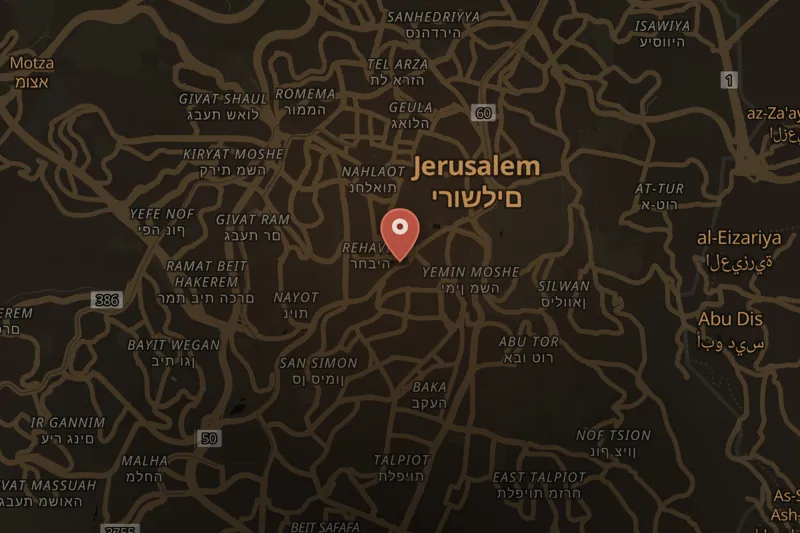
On the morning of January 29, 2004, shortly before 9:00 AM, a Palestinian suicide bomber detonated an explosive belt inside an Egged bus traveling route #19 between the two campuses of Hadassah Medical Center. The attack occurred at the corner of Gaza Street and Arlozorov Street in Jerusalem, near the official residence of the Prime Minister of Israel. The explosion tore the bus apart, blowing its roof into the air and shattering all of its windows.
The bombing killed 11 passengers and injured more than 50 others, with 13 of the wounded described as being in serious condition.
Two organizations, the Al Aqsa Martyrs' Brigades and Hamas, both claimed responsibility for the attack. It took place less than 24 hours after an Israeli army raid on the outskirts of Gaza that killed eight Palestinians. The bomber was named as Ali Yusuf Jaara, a 24-year-old Palestinian policeman from Bethlehem.
In the aftermath, the wrecked bus was initially maintained and stored in Jerusalem by ZAKA, an Israeli emergency response organization. The Jerusalem Connection, International, a Christian Zionist organization, was invited by ZAKA to bring the bus to the United States. Before that, the wreck was displayed at The Hague during International Court of Justice hearings concerning the Israeli West Bank barrier. The Jerusalem Connection subsequently brought the bus to the United States, where, with the cosponsorship of numerous Jewish and Christian organizations, churches, and synagogues, it was exhibited in several cities and at various American universities. The bus is now permanently located at Camp Shoresh in Adamstown, Maryland.
This case is documented through a Wikipedia article that itself references contemporaneous news coverage from BBC News and The Guardian, published on the day of the attack.