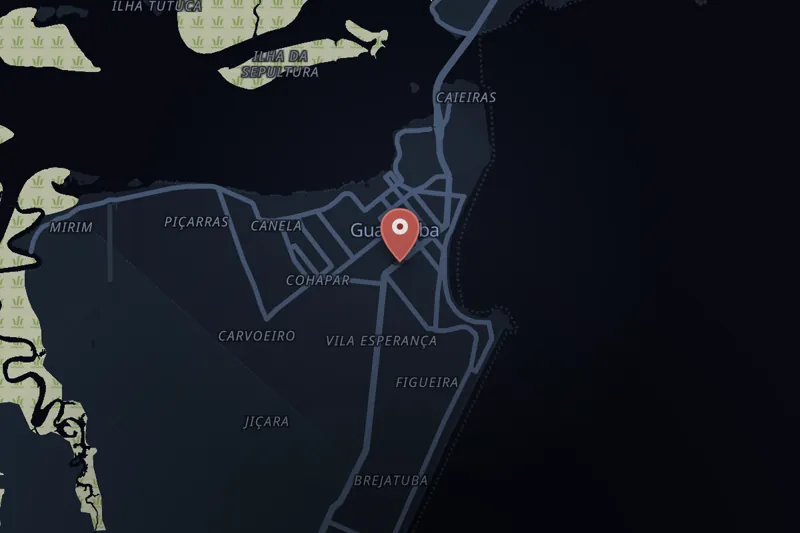
On April 6, 1992, six-year-old Evandro Ramos Caetano disappeared while walking home from school in Guaratuba, Brazil. Five days later, his body was found in a thicket. The body showed extensive evidence of violence and mutilation, including the removal of body parts and organs. For years, questions persisted over whether the recovered body was actually Evandro's, a matter eventually addressed through DNA and dental arch testing.
The public prosecutor's office of Paraná indicted Celina Abagge, the wife of Guaratuba's mayor, and her daughter, Beatriz Cordeiro Abbagge, alleging they had requested the kidnapping and murder of Evandro with the intent of using the corpse in a human sacrifice ritual. A pai-de-santo (a religious leader in Afro-Brazilian traditions), Oswaldo Marcineiro, along with a painter, Vicente de Paula Ferreira, and an artisan, Davi dos Santos Soares, were indicted for allegedly performing the ritual. Francisco Sérgio Cristofolini and Airton Bardelli dos Santos were also indicted for participation in the crime.
Some of those indicted reportedly confessed to involvement in the kidnapping of another child, eight-year-old Leandro Bossi, which led to speculation about possible connections to the disappearances of six to eight other children in Guaratuba that same year. Police at the time stated they had no evidence to support such connections.
The case became known for numerous complicating factors, including a rivalry between military and civil police forces, allegations of confessions obtained under torture, allegations of kidnapping tied to the investigation, and claims of political interference in the legal proceedings.
On March 23, 1998, Beatriz and Celina were tried for the first time, in what became the longest jury trial in Brazilian legal history, lasting 34 days; both were found not guilty. In 1999, that verdict was invalidated, and a new trial began in May 2011. In this second trial, Beatriz was found guilty and sentenced to 21 years in prison. In 2016, her sentence was legally forgiven on the grounds that she was the mother of a minor child.
Separately, Osvaldo Marcineiro, Vicente de Paula Ferreira, and Davi dos Santos Soares were convicted in 2004 in connection with the case, while Francisco Sérgio Cristofolini and Airton Bardelli dos Santos were acquitted in 2005.
By 2016, the case's official archive reportedly comprised 60 volumes and more than twenty thousand pages, reflecting its status as one of the longest-running legal cases in Brazil. The case later drew renewed public attention through the audio documentary Projeto Humanos and a 2021 Globoplay docuseries.

 SOLVEDListen