Nell Alma Tirtschke, a 12-year-old schoolgirl known as Alma, was born on 14 March 1909 in Western Australia. After her mother's death and her father's inability to care for her, Alma and her younger sister Viola were raised by their grandparents in Jolimont, Melbourne, under the strict supervision of their grandmother. Alma was described by family as studious, shy, and reserved, with limited social contact outside her immediate family.
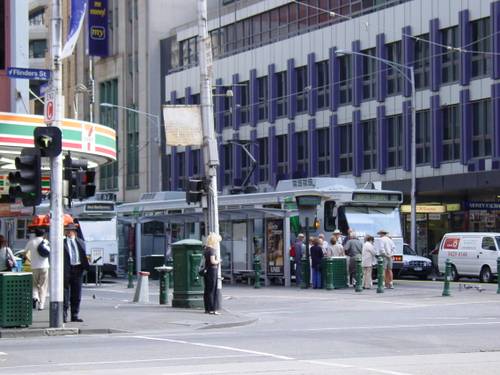
On 30 December 1921, Alma was sent on an errand from her grandmother's home to a butcher on Swanston Street and an aunt's home on Collins Street. Witnesses reported that she took longer than usual, appeared apprehensive, and was seen being followed by a man. She was last seen alive around 3 pm near Alfred Place and Little Collins Street, close to the Australian Wine Saloon in the Eastern Arcade. Her naked body was discovered the next morning in a lane off Gun Alley; she had apparently been strangled with a cord.
Colin Campbell Ross, the 29-year-old owner of the Australian Wine Saloon, was charged with her rape and murder. The prosecution's case relied on testimony from two witnesses—Ivy Matthews, a barmaid recently dismissed by Ross, and Julia Gibson, a fortune teller boarding with Matthews—along with forensic evidence of strands of red hair said to link Ross to the victim. Both witnesses received a £1000 reward for their information. Ross maintained his innocence throughout and was able to account for his movements at the relevant times. He was convicted and hanged at Melbourne Gaol on 24 April 1922. His lawyer, Thomas Brennan, believed in his innocence and unsuccessfully sought to appeal the case to the Privy Council.
Decades later, forensic re-examination in the 1990s of the hair evidence—the only substantive physical evidence in the original case—found it did not support the connection to Ross. Following a formal 2006 inquiry conducted by three judges, Ross was granted a posthumous pardon, signed by the Victorian governor on 22 May 2008 and publicly announced on 27 May 2008. This is described as the first, and to date only, pardon issued for a judicially executed person in Australia.
Author Kevin Morgan, whose research contributed to the pardon, identified in his book a man he described as the probable killer: a returned soldier connected to the Tirtschke family by marriage, who was mistrusted by both Alma and her sister Viola. This individual was not charged in connection with the crime.
The case remains a notable example of wrongful conviction in Australian legal history, highlighting the dangers of relying on unreliable witness testimony and later-discredited forensic evidence.


 Credit: No machine-readable author provided. Dysprosia~commonswiki assumed (based on copyright…Editorial useSourceSOLVEDListen