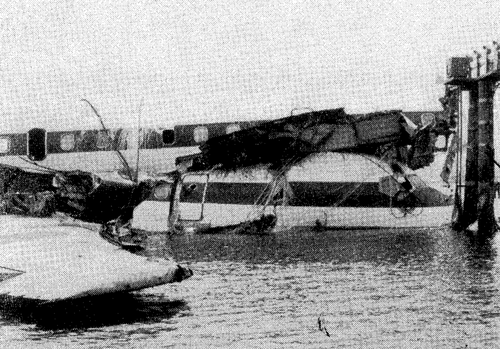
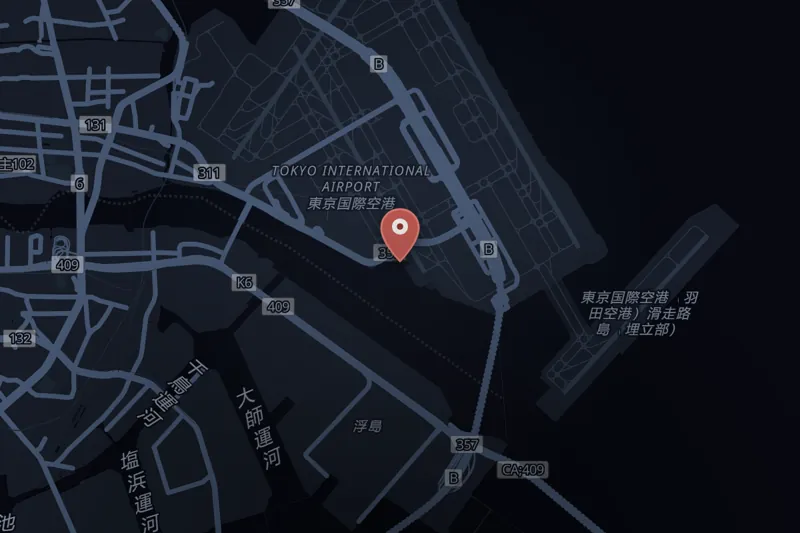
Japan Air Lines Flight 350 was a scheduled domestic passenger flight from Fukuoka to Tokyo. On 9 February 1982, the McDonnell Douglas DC-8-61 operating the route, registered JA8061, crashed into shallow water in Tokyo Bay approximately 510 meters short of runway 33R at Haneda Airport while on final approach. The aircraft carried 166 passengers and 8 crew; 24 people died in the crash. It was the first crash for Japan Air Lines in the 1980s.
The flight departed Fukuoka at 07:34 and proceeded normally, reaching a cruising altitude of 29,000 feet before beginning descent toward Haneda at 08:19. As the aircraft was cleared for an ILS approach to runway 33R and configured for landing, the cockpit voice recorder captured Captain Seiji Katagiri crying out, indicating an abnormal mental state. At 08:44, at an altitude of 164 feet and a speed of 130 knots, Katagiri disengaged the autopilot, pushed the yoke forward, pulled the throttles to idle, and engaged thrust-reversers on the inboard engines. First Officer Yoshifumi Ishikawa attempted to counter these actions by pulling back on his own control yoke, while flight engineer Yoshimi Ozaki tried to return the thrust reversers to idle and physically restrained Katagiri. Despite this struggle, the descent could not be arrested and the aircraft crashed into the bay, with the cockpit section separating from the rest of the fuselage.
All three cockpit crew members survived, though injured; Ozaki remained unconscious for roughly 40 minutes until rescued by a fishing boat. After the crash, Katagiri changed out of his uniform and left the scene without immediately identifying himself as the captain, which led to initial police reports listing him among the dead until he was later located and identified.
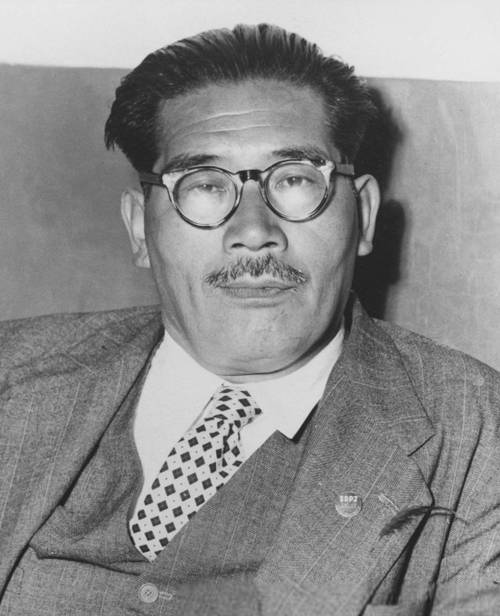
The subsequent Japanese government investigation found that Katagiri had paranoid schizophrenia predating the flight, and he was ruled not guilty by reason of insanity. Investigators traced a history of abnormal behavior, hallucinations, and delusions dating back to 1976, including a temporary removal from flight duties in November 1980 following an erratic flight, a period of mental health leave, and reinstatement as captain in November 1981 after doctors cleared him despite his wife's continuing concerns about his behavior. On the day of the crash, Ishikawa observed Katagiri in a "state of delusion," expressing fear of being captured and killed by an "enemy," reflecting paranoid beliefs about a Soviet plot against Japan. Investigators concluded the crash resulted from auditory hallucinations Katagiri experienced during the flight combined with inadequate medical screening that had allowed him to continue flying despite his ongoing psychiatric condition. Katagiri has since been released from psychiatric care.

 SOLVEDListen