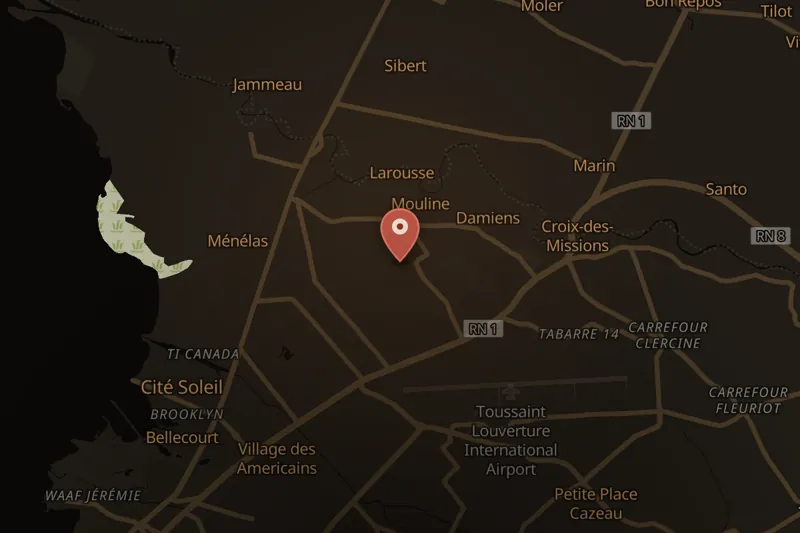
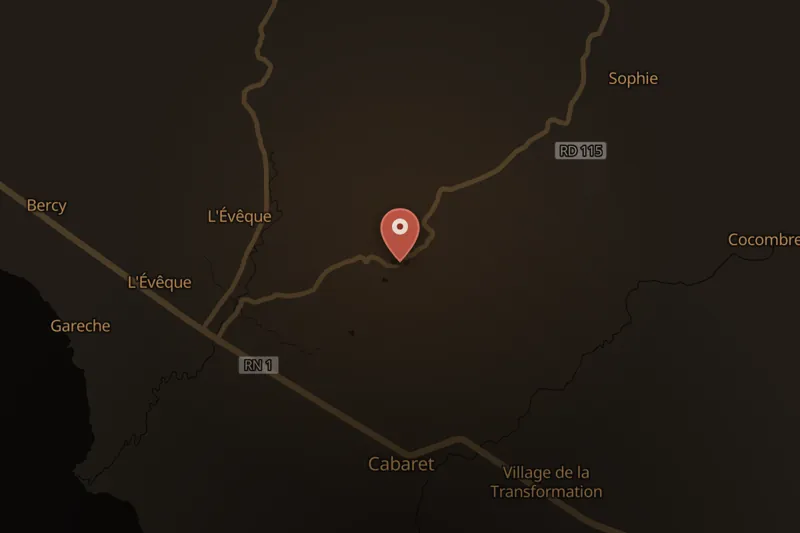
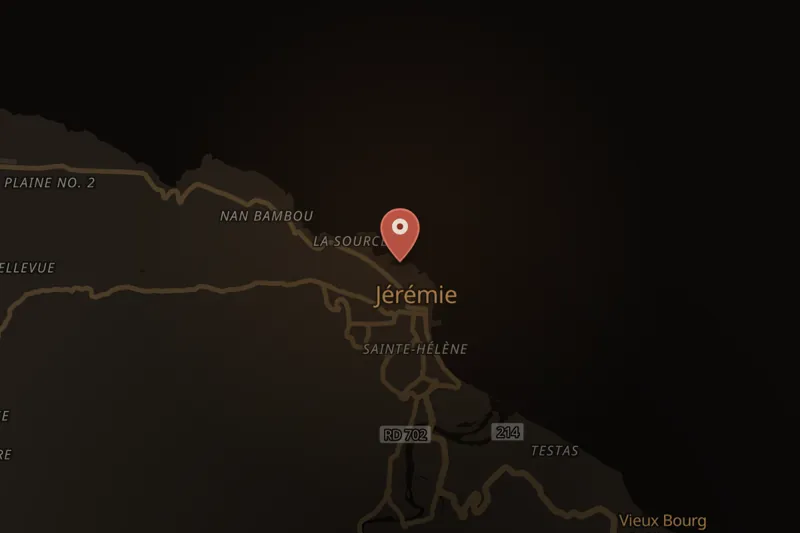
In August–November 1964, Haitian government forces killed 27 relatives of members of the "Jeune Haiti" resistance group in and around Jérémie, Haiti, after the group landed to try to overthrow the Duvalier regime; the two surviving Jeune Haiti members were later publicly executed.
Key facts
Year
1964
Place
Jérémie, Haiti
Status
SOLVEDSolved
Victims
Fernande Villedrouin, Frantz Villedrouin, Pierre Sansaricq, Louise Degraff and Fred Sansaricq and 25 more
Outcome
No conviction on file
The coverage index
Where to watch & listen
No one's coverage is attached to this file yet.
Know great coverage of this case?
A documentary, a podcast episode, a careful long-form video. Suggest it and an editor will review it before it appears here.
In August 1964, a group of 13 young Haitian exiles calling themselves "Jeune Haiti" landed at Petite-Rivière-de-Dame-Marie on August 6, 1964, intending to overthrow the government of François "Papa Doc" Duvalier. Over the following two months, the Haitian Army fought the group in the hills near Jérémie, killing members of Jeune Haiti one by one. The last two survivors, Louis Drouin and Marcel Numa, were eventually captured alive, taken to Port-au-Prince, and shot in public against a cemetery wall on November 12, 1964.
During the period the army and the resistance fought in the hills, the Duvalier regime ordered the arrest and killing of family members of Jeune Haiti fighters in Jérémie. This set of killings became known as the "Jérémie Vespers," a name derived from the "vesper" picnic excursions for which the affected families were remembered. In total, 27 people were murdered as part of this campaign, ranging in age from 85-year-old Mrs. Chenier Villedrouin (née Corinne Sansaricq) to 2-year-old Régine Sansaricq.
The victims named in the historical record include members of the Drouin, Villedrouin, Sansaricq, and Bazile families — among them Louis Drouin Sr. and his wife Louise Degraff; their children Guy Drouin and Alice Drouin; Alice's husband Gérard Guilbaud; Corinne Sansaricq Villedrouin and her children Victor and Guy Villedrouin and their relatives; Pierre Sansaricq, his wife Louise Laforest, and multiple of their children and grandchildren, including young children Jean-Pierre, Stéphane, and Régine Sansaricq; and Alphonze Bazile, among others. One of the victims, Adeline Chassagne, was the aunt of musician Régine Chassagne of the band Arcade Fire. Bishop Guy Sansaricq, a Catholic bishop who opposed the Duvalier regime, is noted as a cousin of some of the victims.
The killings are remembered as part of the broader record of state violence under the Duvalier government, alongside other sites and institutions associated with repression in Haiti during this period, such as Fort Dimanche and the Volontaires de la Sécurité Nationale (the Haitian secret police, commonly known as the Tontons Macoutes).
4 dated entries · 1964
Timeline
Thirteen members of "Jeune Haiti" land at Petite-Rivière-de-Dame-Marie intending to overthrow the government of François 'Papa Doc' Duvalier.
Fighting begins between the Haitian Army and Jeune Haiti; the regime begins ordering the arrest and killing of Jeune Haiti members' families in Jérémie.
By the end of this period, 27 relatives of Jeune Haiti members have been killed in and around Jérémie in what became known as the Jérémie Vespers.
The last two surviving Jeune Haiti members, Louis Drouin and Marcel Numa, are shot in public against a cemetery wall in Port-au-Prince.
30 named in this file
People
Victims first. Every legal label is set from public records and court outcomes, not from the prose.
Adeline Chassagne
VICTIM
Wife of Victor Villedrouin and aunt of musician Régine Chassagne of Arcade Fire; killed during the Jérémie Vespers.[3]
Alice Drouin
VICTIM
Sister of Louis Drouin Jr., killed during the Jérémie Vespers.[3]
Alphonze Bazile
VICTIM
Son of Pierre and Vesta Bazile, killed during the Jérémie Vespers.[3]
Edith Laforest
VICTIM
Sister of Louise Laforest, killed during the Jérémie Vespers.[3]
Fernande Villedrouin
VICTIM
Sister of Guy and Victor Villedrouin, killed during the Jérémie Vespers.[3]
Frantz Villedrouin
VICTIM
16-year-old son of Victor Villedrouin and Adeline Chassagne, killed during the Jérémie Vespers.[3]
Fred Sansaricq
VICTIM
Son of Pierre Sansaricq, killed during the Jérémie Vespers.[3]
Gérard Guilbaud
VICTIM
Husband of Alice Drouin, killed during the Jérémie Vespers.[3]
Graziela Sansaricq
VICTIM
Wife of Jean-Claude Sansaricq, killed during the Jérémie Vespers.[3]
Guy Drouin
VICTIM
Brother of Louis Drouin Jr., killed during the Jérémie Vespers.[3]
Guy Villedrouin
VICTIM
Brother of Victor Villedrouin, killed during the Jérémie Vespers.[3]
Hubert Sansaricq
VICTIM
Son of Pierre Sansaricq, killed during the Jérémie Vespers.[3]
Jean-Claude Sansaricq
VICTIM
Son of Pierre and Louise Sansaricq, killed during the Jérémie Vespers.[3]
Jean-Pierre Sansaricq
VICTIM
6-year-old son of Jean-Claude and Graziela Sansaricq, killed during the Jérémie Vespers.[3]
Lily Sansaricq
VICTIM
Sister of Pierre Sansaricq, killed during the Jérémie Vespers.[3]
Lisa Villedrouin
VICTIM
18-year-old daughter of Victor Villedrouin and Adeline Chassagne, killed during the Jérémie Vespers.[3]
Louis Drouin
VICTIM
Member of Jeune Haiti; captured alive after the group's fight against the Haitian Army and shot in public in Port-au-Prince on November 12, 1964.[3]
Louis Drouin Sr.
VICTIM
Father of Louis Drouin Jr., killed during the Jérémie Vespers.[3]
Louise Degraff
VICTIM
Wife of Louis Drouin Sr., killed during the Jérémie Vespers.[3]
Louise Laforest
VICTIM
Wife of Pierre Sansaricq, killed during the Jérémie Vespers.[3]
Marcel Numa
VICTIM
Member of Jeune Haiti; captured alive after the group's fight against the Haitian Army and shot in public in Port-au-Prince on November 12, 1964.[3]
Marie-Catherine Sansaricq
VICTIM
10-year-old daughter of Pierre Sansaricq, killed during the Jérémie Vespers.[3]
Mrs. Chenier Villedrouin
VICTIM
85-year-old victim (née Corinne Sansaricq), mother of Guy and Victor Villedrouin, killed during the Jérémie Vespers.[3]
A series of targeted assassinations by unidentified gunmen in Negros Oriental and Negros Occidental, Philippines, beginning in the late 2010s and continuing into the 2020s, killed farmers, activists, local officials, police, and others, with responsibility disputed between state forces, paramilitaries, and communist rebels.
Credit: LEVE KANPE POU HAITI·CC BY 3.0·SourceONGOINGListen
Pèlerin 5, Pétion-Ville, Port-au-Prince, Haiti · 2021
Haitian President Jovenel Moïse was shot to death at his Port-au-Prince residence on 7 July 2021 by a group of mostly Colombian mercenaries hired through a Florida-based network; First Lady Martine Moïse was wounded in the same attack, and a years-long investigation in Haiti and the United States led to numerous arrests, guilty pleas, and a 2026 Miami jury conviction of four men, though those who ultimately ordered and financed the killing remain undetermined.
Between January 10 and 26, 2023, eighteen Haitian police officers were killed by the Gan Grif gang in and around Port-au-Prince, triggering riots by police officers and the police-affiliated group Fantom 509 and drawing international condemnation.

 Credit: Kej Andrés (Ryomaandres)CC BY-SA 4.0SourceUNSOLVEDListen