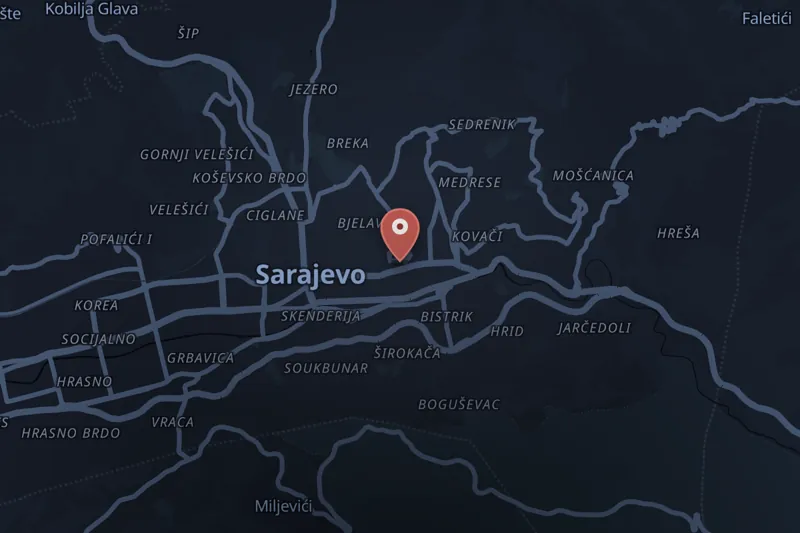
During the Bosnian War siege of Sarajevo, a number of predominantly ethnic Serb residents of the besieged city were murdered by forces under the command of Mušan Topalović, known as "Caco," who led the 10th Mountain Brigade of the Army of the Republic of Bosnia and Herzegovina. Topalović, a pre-war rock musician and gangster, along with fellow paramilitary commander Ramiz Delalić, controlled large parts of the besieged capital, exercising authority over neighborhoods, black market activity, forced recruitment, kidnapping for ransom, and reportedly organized rapes. His forces are alleged to have executed more than 400 Serb fighters and civilians. Victims were rounded up, beaten, and killed — often by having their throats slit or being decapitated — before their bodies were pushed into the Kazani pit, located on Mount Trebević roughly 1.5 kilometers south of the city center.
Jovan Divjak, an ethnic Serb general in the Bosnian army, informed Bosnian president Alija Izetbegović of these crimes in a five-page letter dated May 27, 1993, listing more than a dozen victims who had been abducted and killed. The magazine Dani was among the first publications to report on Topalović's crimes against Sarajevo's Serbs, publishing a January 1993 article documenting 22 incidents in which 39 people were confirmed killed.
On October 26, 1993, Bosnian authorities launched "Operation Trebević 2," targeting renegade paramilitary units including Topalović's brigade. Police disbanded the group, arrested 16 soldiers, and killed Topalović during the operation. Accomplices were later tried at the Sarajevo Military Court and received what have been described as minimal sentences: four men — Esad Tucaković, Zijo Kubat, Refik Čolak and Mevludin Selak — were convicted and sentenced to six years each, while eight others received ten-month sentences for failing to report crimes. In total, 14 soldiers were convicted of various atrocities, most serving only a few months. During his trial, Tucaković described killing a couple, Vasilij and Ana Lavriv, by slitting Vasilij's throat and decapitating Ana before disposing of her body in the pit.
An exhumation of the mass graves recovered 29 bodies before it was halted by order of the Interior Ministry, according to former Sarajevo police chief Munir Alibabić, who oversaw the investigation and suspected the halt was politically motivated. Of 15 identified victims, 10 were Serbs, two Ukrainian, two Croat, and one Bosniak. Overall death toll estimates range from a few dozen to several hundred; Federation of Bosnia and Herzegovina officials have estimated at least 150 Serb civilians were killed in Sarajevo during this period. Public commemorations began in 2014, and a monument was installed at the site in November 2021, though victims' families and advocacy groups objected to the omission of perpetrators' names from the memorial plaque.

Key facts
- Victims
- Ana Lavriv, Vasilij Lavriv
- Date
- 1992
- Location
- Kazani pit, Mount Trebević, Sarajevo
- Case status
- solved
Case timeline
1992
Siege of Sarajevo begins; paramilitary commander Mušan Topalović's 10th Mountain Brigade gains control of parts of the besieged city, with killings of Serb civilians and fighters reported beginning this year.
1993-01-29
Magazine Dani publishes an article documenting 22 incidents in which 39 people, mostly Serbs, were confirmed killed.
1993-05-27
General Jovan Divjak sends a five-page letter to President Alija Izetbegović detailing killings of Serb civilians and listing more than a dozen victims.
1993-10-26
Bosnian government launches 'Operation Trebević 2' against Topalović's and Ramiz Delalić's paramilitary brigades; 16 soldiers arrested and Topalović killed during the operation.
1996-12
Topalović is given a large public funeral organized by the Green Berets, attracting an estimated 10,000 people.
2014
First public commemoration for Kazani victims organized by NGO UDIK in Sarajevo.
2016
Bosniak politician Bakir Izetbegović visits the Kazani pit and lays flowers in tribute to Sarajevo Serb war victims.
2020-12
Sarajevo City Council includes a memorial to Kazani victims in its plan of monuments to be built in 2021.
2021-11-12
Sarajevo City Administration erects a monument at the Kazani site.
2021-11-15
Monument unveiled by Benjamina Karić, Milan Dunović and High Representative Christian Schmidt; UDIK and victims' families boycott the event over omission of perpetrators' names.
Best coverage
No approved coverage links are attached yet.
People
Ana Lavriv
VICTIMKilled and decapitated; body pushed into the Kazani pit.
Zijo Kubat
CONVICTEDConvicted at the Sarajevo Military Court and sentenced to six years.
Refik Čolak
CONVICTEDConvicted at the Sarajevo Military Court and sentenced to six years.
Munir Alibabić
LAW ENFORCEMENTSarajevo police chief who oversaw the exhumation of the Kazani mass grave until it was halted.
Vasilij Lavriv
VICTIMKilled by having his throat slit; body pushed into the Kazani pit.
Esad Tucaković
CONVICTEDConvicted at the Sarajevo Military Court and sentenced to six years for atrocities including the killing of Vasilij and Ana Lavriv.
Jovan Divjak
LAW ENFORCEMENTEthnic Serb general in the Army of the Republic of Bosnia and Herzegovina who reported the killings to President Izetbegović.
Mušan Topalović
CHARGEDCommander of the 10th Mountain Brigade alleged to have directed killings of Serb civilians and fighters at Kazani; killed during a 1993 police operation before facing trial.
Mevludin Selak
CONVICTEDConvicted at the Sarajevo Military Court and sentenced to six years.
Roles reflect public records and court outcomes at the time of writing — supporting citations are on file under Sources.
Places
Common questions
- What happened to the victim?
- During the Siege of Sarajevo, forces under paramilitary commander Mušan "Caco" Topalović killed a number of predominantly ethnic Serb civilians and fighters, disposing of many bodies in the Kazani pit on Mount Trebević.
- Where did the killings happen?
- Kazani pit, Mount Trebević, Sarajevo.
- Who was convicted?
- Zijo Kubat (Convicted at the Sarajevo Military Court and sentenced to six years.), Refik Čolak (Convicted at the Sarajevo Military Court and sentenced to six years.), Esad Tucaković (Convicted at the Sarajevo Military Court and sentenced to six years for atrocities including the killing of Vasilij and Ana Lavriv.), and Mevludin Selak (Convicted at the Sarajevo Military Court and sentenced to six years.).
- What is the current status of the case?
- Status: solved.
Sources
- ENCYCLOPEDICKazani pit killingsWikipedia · 2026-07-10
- PRESSContemporaneous coverage — Los Angeles TimesLos Angeles Times · 2026-07-10
- PRESSContemporaneous coverage — The New York TimesThe New York Times · 2026-07-10