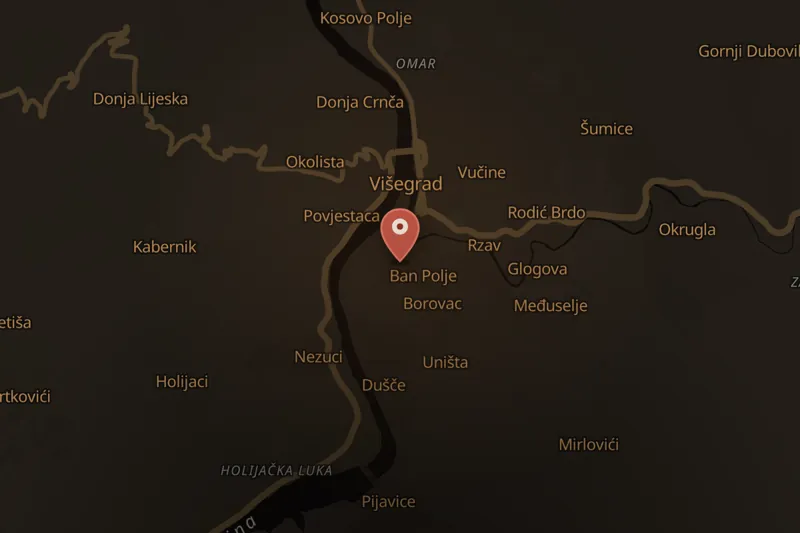
On 27 June 1992, during the ethnic cleansing of the Drina Valley by Bosnian Serb forces, a group of approximately 70 Bosniak civilians — predominantly women and children, along with some elderly men and women — were forced by forces under the command of Milan Lukić into a single room of a house in the Bikavac settlement near Višegrad, eastern Bosnia. The captives were robbed before the house was set on fire and the occupants left to burn alive. The International Criminal Tribunal for the former Yugoslavia (ICTY) Trial Chamber found that at least 60 Bosniak civilians were killed in the fire.
According to the testimony of survivor Zehra Turjačanin, many children were among those trapped, the youngest less than a year old. Most of the victims were young women with children. Serb soldiers broke the windows of the house, threw hand grenades inside, and fired shots at the people trapped within before setting the structure alight. Turjačanin and one of her sisters attempted to escape through the door, but a heavy iron garage door had been placed against it from the outside. Turjačanin managed to squeeze through a small gap, while her sister remained inside and did not survive. Outside, Serb soldiers reportedly lay on the grass drinking as the house burned.
The Bikavac fire was tried alongside the Pionirska Street fire, a related incident that occurred on 14 June 1992 in Višegrad in which 59 Bosniak civilians were killed after being locked into one room of a house that was then set on fire. On 20 July 2009, the ICTY sentenced Milan Lukić to life imprisonment and his cousin Sredoje Lukić to 30 years imprisonment for crimes including both the Bikavac and Pionirska Street fires.
In summarizing the Tribunal's findings, presiding Judge Patrick Robinson stated that among the long history of atrocities committed by people against one another, the Pionirska Street and Bikavac fires "must rank high," citing the viciousness of the attacks, the evident premeditation and calculation involved, the callousness and brutality of herding, trapping, and locking victims inside the two houses, and the degree of pain and suffering inflicted on victims as they were burned alive.

 Credit: Cornelius BechtlerCC BY-SA 3.0SourceSOLVEDListen


