On the night of November 9, 1914, Edward Sherman, a 55-year-old photographer and land developer, was shot and killed in his bed at his home on what would become Wildwood Gardens, an isolated real estate development on St. Petersburg's outskirts. His wife, Mary Sherman, said a Black man held her at gunpoint and demanded money, and that a second Black man dragged her outside, beat her, and tore her clothing. She did not explicitly state she was raped, though contemporaneous newspaper coverage implied it. She later told police she believed she recognized the voice of John Evans, a Black man from Dunnellon who had recently worked for Sherman as a chauffeur before being fired three days before the killing.
Evans was initially detained but released after Mary Sherman failed to identify him in person. A citywide manhunt followed, during which hundreds of Black men were detained and questioned, some were mistreated, and many Black residents fled the city by train, on foot, or by boat. A second man, Ebenezer B. Tobin, was also arrested and held in the Clearwater jail, with authorities keeping the arrest quiet to avoid provoking mob action.
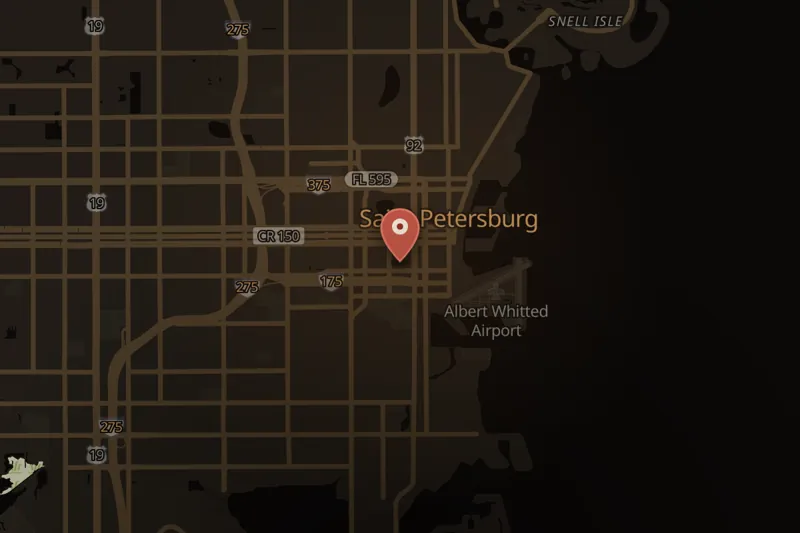
On November 12, a posse searching Evans's former residence found a bloodstained shirt and shoes reportedly identified as his by a resident who later recanted. Evans was located working for another Black man in the city, nearly lynched on the spot, and instead tortured for hours in an attempt to extract a confession. He was again brought before Mary Sherman, who again could not identify him. He was returned to the city jail, where a mob estimated at 1,500 people gathered, tore down part of the jail wall, and dragged Evans into the street with a noose around his neck. He was hanged from a light post at Ninth Street South and Second Avenue; an unidentified white woman in a nearby car shot him once, and the crowd continued firing at his body until they ran out of ammunition.
A coroner's jury of 15 white men ruled that Evans had died at the hands of "unknown" persons; only one juror, Williams Dishman, dissented and was not reelected. St. Petersburg police chief A. J. Easters and his officers were reported to have made little effort to protect Evans and to have encouraged the mob's actions. Roughly a year later, Ebenezer Tobin was tried for Sherman's murder, convicted, and executed in late October 1915 in Pinellas County's only legal hanging on record.
Local newspapers, including the St. Petersburg Independent and St. Petersburg Daily Times, published sensationalized coverage emphasizing the sexual element of the attack on Mary Sherman, while the Tampa Tribune and Clearwater Sun were more critical of the lynching. No investigation was ever made into who actually killed Edward Sherman. Historian Jon Wilson, researching the case decades later, found many residents reluctant to discuss it, and some who believed the actual assailants had been white men in blackface. A playwright who later wrote about the case, Lily Bangert — daughter of dissenting juror Williams Dishman — was killed by her husband before her work could be staged.

 Credit: Pinellas County Sheriff's OfficePublic domainSourceSOLVEDListen