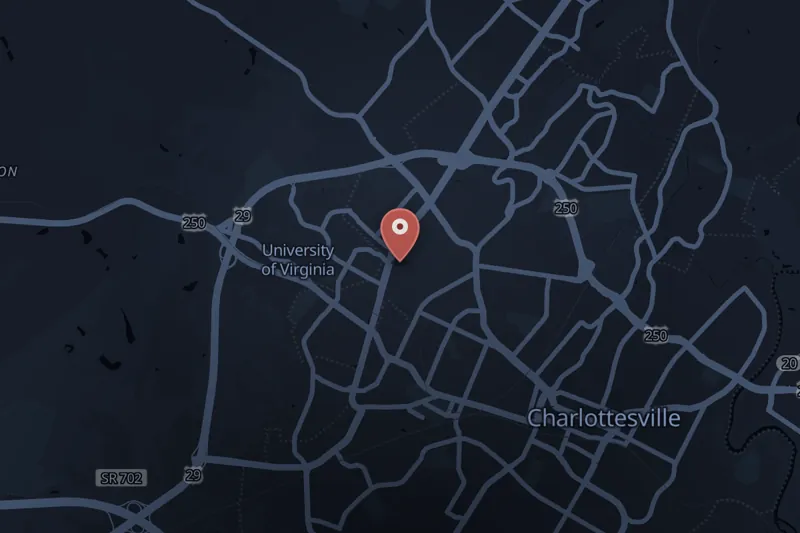
John Henry James was an African-American man who had lived in Charlottesville, Virginia, for five or six years, working as an ice cream seller. Little else is documented about his life; he is not known to have had family in the area.
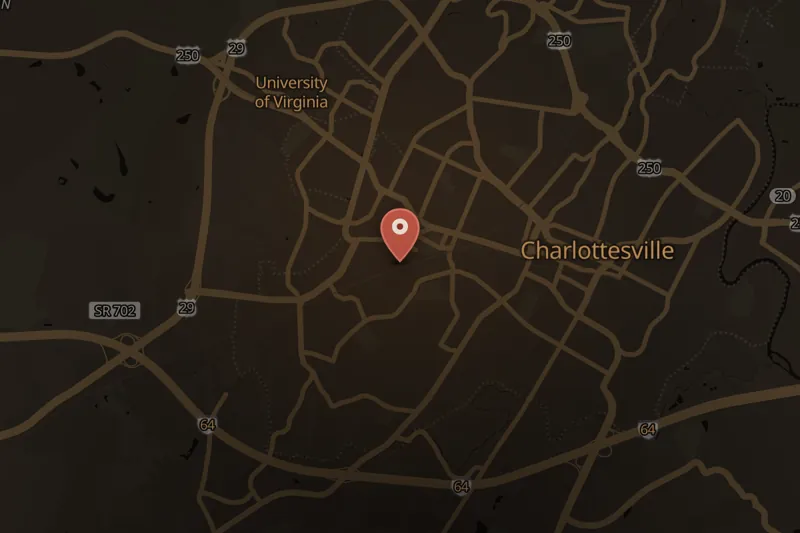
On the morning of July 11, 1898, Julia Hotopp, a 20-year-old woman from a prominent white family, reported that she had been assaulted by a Black man. Commonwealth's Attorney Captain Micajah Woods described the alleged assault as extremely serious. James was arrested shortly afterward and identified by Hotopp; no surviving record indicates whether he matched her description or whether he bore any marks consistent with her account of having scratched her attacker. He was reportedly taken to the crime scene, where his shoes were said to match tracks found there. As a crowd gathered in Charlottesville amid talk of lynching, authorities secretly moved James out of the jail and by train to Staunton, Virginia, roughly 40 miles away, for his safety overnight. A grand jury was convened to consider his case the next morning.
On July 12, 1898, as James was being transported back to Charlottesville by train for a hearing, a crowd estimated at 150 people gathered at the Wood's Crossing station, about four miles west of Charlottesville. When the train stopped there, unmasked members of the crowd overpowered the police chief and sheriff escorting James and seized him. He was hanged from a nearby tree; after he was hanged, members of the mob shot his body, with Hotopp's brother reportedly firing all the rounds from his pistol into it. James was struck by an estimated 40 bullets. Some in the crowd took pieces of his clothing as souvenirs. Accounts differ as to why the train stopped at a location where a mob was waiting, including claims that it was flagged down.
At the time of the lynching, the grand jury had decided to indict James for rape, though the paperwork had not been completed. After the court was informed of the lynching, it later reconvened and formally indicted the dead man. A coroner's jury the following day found that James "came to his death by the hands of persons unknown to the jury." Despite the mob's members not concealing their identities, no one was ever charged in connection with his killing. The only individual named in connection with the mob was Carl Hotopp, Julia Hotopp's brother, who died in 1901 after falling from a moving train under circumstances described as highly unusual.
In 2018, nearly 120 years after the lynching, community members, local officials, clergy, and racial-justice activists held a memorial at the lynching site and later traveled to Montgomery, Alabama, to deliver soil from the site to the Equal Justice Initiative's National Memorial for Peace and Justice.

 Credit: Bio at VirginiaSports.comEditorial useSourceSOLVEDListen