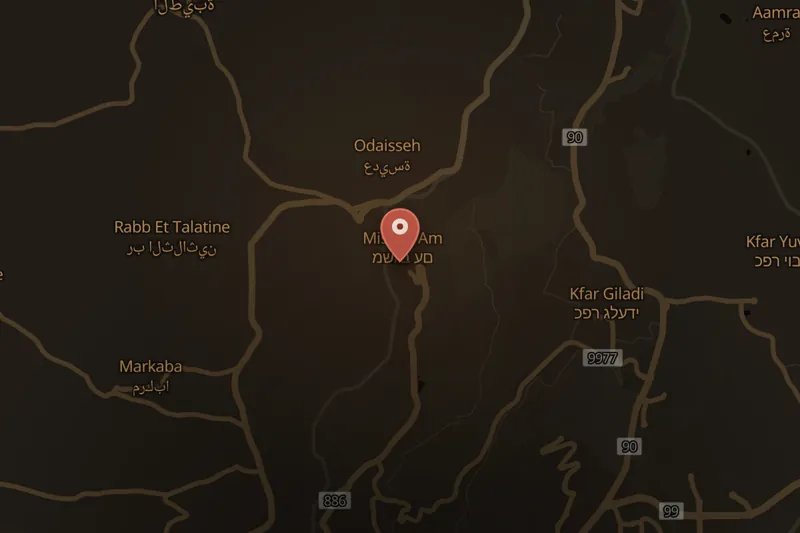
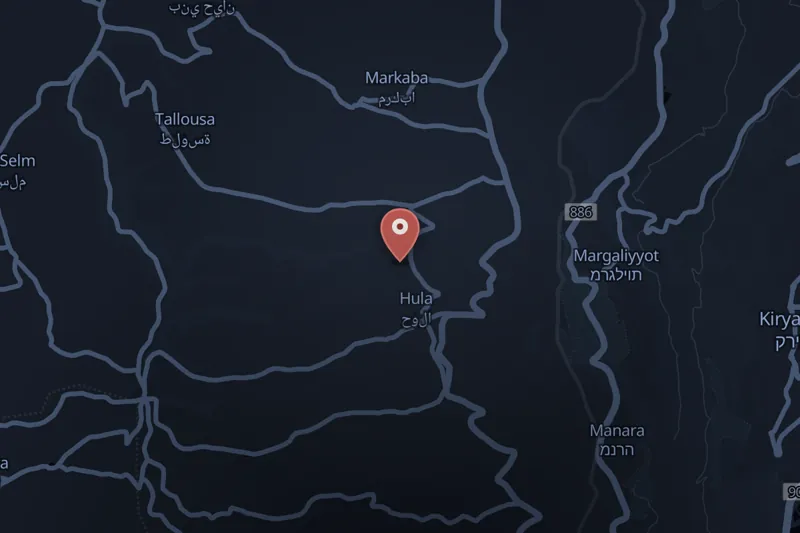
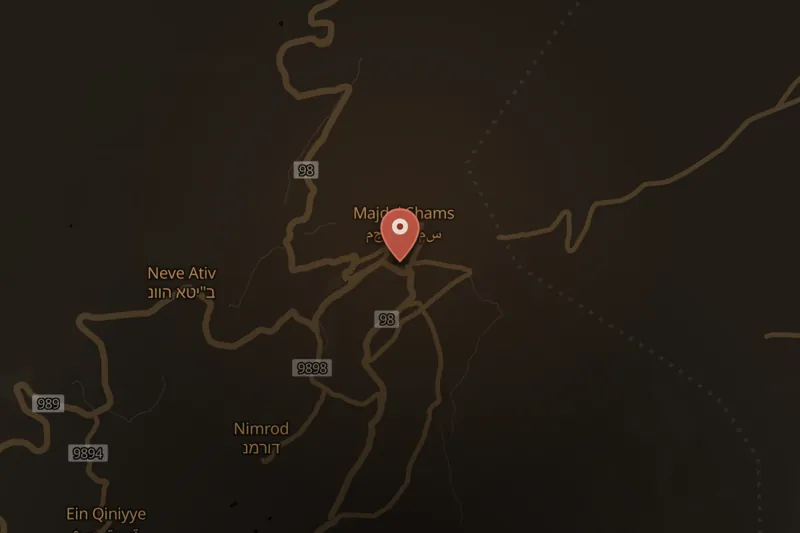
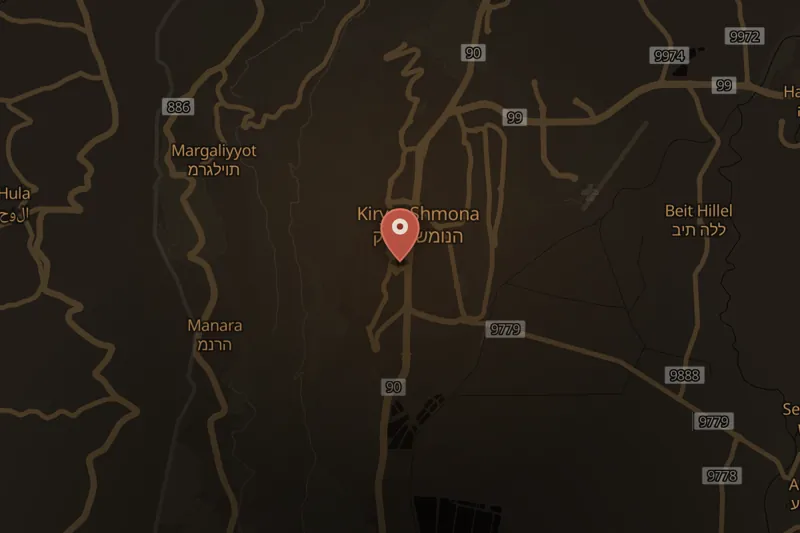
On the evening of 27 July 2024, at approximately 6:18 pm, air raid sirens sounded in Majdal Shams, a predominantly Druze town in the Israeli-occupied Golan Heights, shortly before a projectile struck a football pitch near a playground. The explosion killed 12 children and teenagers, aged between ten and sixteen, and injured at least 42 others. None of those killed held Israeli citizenship; at the time, about 75% of Majdal Shams residents had rejected Israeli citizenship and identified as Syrian. Residents said the warning siren sounded only seconds before impact, leaving no time to seek shelter.
The Israeli military stated it had assessed that Hezbollah was responsible, identifying the weapon as an Iranian-made Falaq-1 rocket with a warhead reported by the IDF at either 50 or 53 kilograms. The IDF released images of what it said was Falaq-1 shrapnel recovered from the scene, though without photographs showing the shrapnel in situ. A Hezbollah spokesperson denied responsibility, saying the group had targeted a nearby military base and that the football pitch was instead struck by an errant Israeli Iron Dome interceptor fired to counter Hezbollah rocket fire. Iranian and Qatari state media, and the Hezbollah-linked outlet Al-Mayadeen, echoed or supported this account; Al-Mayadeen was subsequently banned from operating inside Israel by the Israeli government.
Independent analysis produced mixed findings. According to US intelligence, there was no doubt Hezbollah was responsible, though it remained unclear whether the strike was intentional or a misfire. Associated Press reporting found that sirens had sounded less than a minute before the explosion, which left a two-meter-wide crater; AP reporters found no ordnance debris at the site and could not independently verify the provenance of rocket fragments shown in Israeli-released images, though weapons experts they consulted said the evidence pointed to a rocket fired from Lebanon. Human Rights Watch's Richard Weir said damage was consistent with a Falaq-type rocket, possibly one that overshot a military target on Mount Hermon due to human error or mechanical fault. Weapons expert Chris Cobb-Smith said the crater's shape suggested the rocket came from the north but that responsibility could not be proven without independent verification of weapon remains.
The attack occurred amid the Israel–Hezbollah conflict ongoing since October 2023. In its aftermath, Israel struck Hezbollah weapons infrastructure across multiple locations in Lebanon and, on 30 July, killed senior Hezbollah adviser Fuad Shukr in a strike on Beirut that also killed three civilians, including two children. A Hezbollah rocket attack on 30 July killed one Israeli citizen in kibbutz HaGoshrim. Local Druze residents of Majdal Shams publicly rejected calls for retaliation and objected to the presence of Israeli government ministers at the funeral, seeking to keep the event non-political. The incident drew international condemnation, with several governments including the United States, Canada, and the European Union attributing the attack to Hezbollah, while the EU's Josep Borrell called for an independent international investigation. In February 2026, victims' families reportedly filed an 80 million shekel lawsuit against Hezbollah.


 SOLVEDListen