Background and disappearance
Céline Figard was born on 23 May 1976 in Besançon, France, and was studying accountancy in Montbéliard at the time of her death. She had visited the United Kingdom repeatedly since 1990 and spent the summer of 1995 working at a hotel in Fordingbridge, Hampshire, where her cousin was head waiter. She planned to return to the UK in December 1995 for a further two-week visit.
On 18–19 December 1995, Figard travelled from France to Ashford, Kent, before being driven to Chieveley Services near Newbury, Berkshire, by a lorry driver named Roger Bouvier. After a misdialed phone call to her cousin, she accepted a lift from a different driver, of a white Mercedes lorry, at around 4:30 pm on 19 December. She never arrived at her intended destination of Salisbury and was reported missing. Police issued a photofit of the driver but could not identify him. By 25–26 December, investigators believed she had been abducted and subsequently murdered.
Discovery and post-mortem
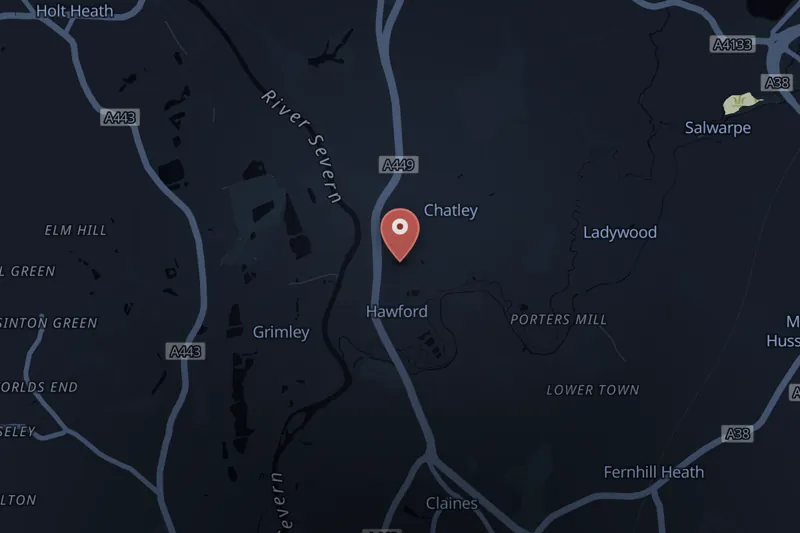
On the morning of 29 December 1995, a motorist discovered a naked body in a lay-by on the A449 near Hawford, Worcestershire. It was confirmed the following day to be Figard. A post-mortem determined she had been strangled and bludgeoned with a heavy implement, though the fatal act was not established. While there were "no obvious signs" of sexual assault, examiners concluded intercourse had occurred shortly before death and detectives believed it was non-consensual. Investigators believed her body had lain at the location for about 24 hours and that she may have been held captive before being killed.
Investigation and arrest
The investigation, led by DCS John McCammont of West Mercia Police, involved more than 100 detectives across three police forces. Concerns that the killing might be linked to other unsolved murders in the Midlands, dubbed by police a "Midlands Ripper" theory, were publicly ruled out by McCammont on 4 January 1996. On 12 January 1996, police launched the UK's first national DNA screening programme to identify a suspect, testing around 5,000 drivers of vehicles similar to the Mercedes involved. On 19–20 February 1996, a suspect was arrested in Poole, Dorset, in a joint operation between West Mercia and Dorset Police, later identified as lorry driver Stuart Morgan, after a colleague recognised him from the photofit.
Trial and conviction
Morgan's trial began on 2 October 1996 at Worcester Crown Court. Prosecutors said he had raped, strangled and bludgeoned Figard, then kept her body in his lorry's cab for up to ten days before disposing of it. Belongings of Figard's were found at his home. On 16 October 1996, a jury convicted Morgan of murder; he was sentenced to life imprisonment with a minimum term later set at twenty years.
Appeals and later developments
Morgan's 1998 appeal against conviction and his 2009 High Court application to review his minimum term were both rejected. A further 2016 challenge concerning his prisoner category and parole hearing was also dismissed. As of 2022, reporting indicated Morgan remained imprisoned at HM Prison Frankland after a further parole application was rejected.
Memorials
Figard was buried in Scey-sur-Saône-et-Saint-Albin, France, in January 1996. A memorial garden was established at St Andrew's Church in Ombersley, Worcestershire, opened in June 1997, and the Hawford lay-by where she was found became known locally as "Le Jardin de Céline."

 Credit: David Buttery (Loganberry (Talk))Public domainSourceUNSOLVEDListen