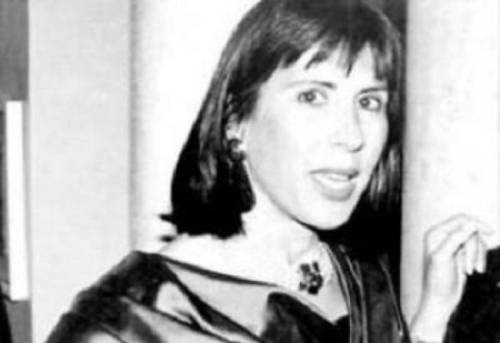
Elisa Claps was a 16-year-old secondary-school student in Potenza, in the Basilicata region of southern Italy, when she disappeared on 12 September 1993. The daughter of a tobacconist and a clerk, and the youngest of three children, she was described by those who knew her as a happy, devoutly Catholic teenager who hoped to become a physician and work with Médecins Sans Frontières.
In the weeks before she disappeared, Claps had received unwanted attention from an acquaintance, Danilo Restivo, whose advances her brother said had frustrated her. Claps had written in her journal about Restivo's odd behaviour and was aware of rumours that he had a fetish for cutting hair. On 11 September 1993, Restivo telephoned her and arranged to meet the next day, saying he had a gift for her. On 12 September, Claps and a friend set out for Mass at the Chiesa della Santissima Trinità in central Potenza; instead, Claps met Restivo inside the church at around 11:30 a.m. and did not return home. That same day, a relative saw Restivo agitated and sweating, with a small, freshly bandaged cut on his hand and blood-soaked clothing he attributed to a fall; he later changed his clothes despite the warm weather. Separately, the priest who held the only key to the church's upper storey left the city for several days shortly after Claps vanished and later opposed a police search of the building, which was not thoroughly searched at the time.
In statements to police on 13 and 21 September 1993, Restivo said he had spent about fifteen minutes with Claps at the church before she left, and he later told a television reporter that she had seemed frightened and said she had been harassed by a boy earlier that day. The inquiry was hampered by false leads, including unsubstantiated theories that Claps had been trafficked to Albania or had run away, and it was relocated from Potenza to Salerno amid allegations from her brother that deference to prominent local figures had slowed the investigation.
Restivo was not immediately charged over the disappearance itself. In June 1994 a magistrate declined to issue a warrant for his arrest on a charge of giving false information to investigators, though he was taken into custody about four months later. In 1996 he was convicted of giving false statements in connection with the case and sentenced to twenty months' imprisonment; because the sentence was suspended under Italian law he remained free, and he subsequently left Italy for the United Kingdom.
In Bournemouth, England, Restivo's neighbour, Heather Barnett, was murdered in her home on 12 November 2002. Investigators' suspicion that Restivo was also responsible for Barnett's killing was heightened by his earlier connection to the Claps case. In 2010, Claps's body was discovered, and examiners identified similarities in the ritualistic placing of cut hair on Barnett's and Claps's bodies. Restivo was subsequently found guilty of murdering Barnett in an English court and was later convicted of murdering Claps by an Italian court.