
Start here
Mark David Chapman (John Lennon Murder) | Mental Health & Personality
Dr. Todd Grande's 18-minute overview: the quickest complete way into the case.
Watch on YouTubeSolved case · 1980
Also known as Killing of John Lennon
 John LennonCredit: Bob Gruen / Capitol Records (1974 promotional press photo)Public domainSource
The short answer
On 8 December 1980, musician John Lennon was fatally shot outside his Manhattan home, The Dakota, by Mark David Chapman, who was later sentenced to 20 years to life after pleading guilty to second-degree murder.
Mark David Chapman (John Lennon Murder) | Mental Health & PersonalityDr. Todd Grande · 18 min1 piece from 1 creator: ranked, with duplicates removed and short clips set aside.
Start here
Dr. Todd Grande's 18-minute overview: the quickest complete way into the case.
Watch on YouTubeTitles and descriptions are the creators’ own and may not reflect current legal status. The sourced facts are in the file below. Players load only when you press play. Suggest coverage we’re missing.
On the night of 8 December 1980, English musician John Lennon, formerly of the Beatles, was shot in the archway of The Dakota, his residence in Manhattan, New York City. The shooter, Mark David Chapman, was a Beatles fan who was, according to his own statements, envious and enraged by Lennon's lifestyle and inspired by the character Holden Caulfield from J. D. Salinger's novel The Catcher in the Rye.
Chapman planned the shooting over several months. Earlier that day he had met Lennon, who signed his copy of the album Double Fantasy as Lennon and his wife, Yoko Ono, left for a recording session at the Record Plant. When the couple returned to the Dakota around 10:50 p.m., Chapman was waiting at the building's entrance. As Lennon passed him, Chapman drew a .38 Special revolver and fired five hollow-point bullets, four of which struck Lennon in the back and shoulder from a distance of roughly nine to ten feet. Lennon staggered into the lobby before collapsing. The doorman, José Perdomo, disarmed Chapman, and concierge Jay Hastings attended to Lennon before police arrived. Officers drove Lennon directly to Roosevelt Hospital rather than waiting for an ambulance. Despite resuscitation efforts by hospital staff, Lennon was pronounced dead on arrival at 11:15 p.m. His death certificate listed the cause of death as hypovolemic shock from multiple gunshot wounds that damaged his lung, subclavian artery, and aorta.
Chapman remained at the scene reading The Catcher in the Rye until his arrest. He was taken to the NYPD's 20th Precinct for questioning, then remanded to Bellevue Hospital for psychiatric evaluation. He was charged with second-degree murder, as New York law at the time did not permit a first-degree charge based on premeditation alone. Against his lawyers' advice to pursue an insanity defense, Chapman pleaded guilty, stating his plea reflected the will of God. He was sentenced to 20 years to life imprisonment, with parole eligibility beginning in 2000. As of the most recent reporting, he has been denied parole multiple times and remains incarcerated.
The murder prompted a global outpouring of grief. Crowds gathered outside Roosevelt Hospital and the Dakota, and at least three Beatles fans died by suicide in its aftermath. Lennon was cremated the following day at Ferncliff Cemetery in Hartsdale, New York; in lieu of a funeral, Ono requested ten minutes of silence worldwide on 14 December, observed by large crowds including in Lennon's birthplace of Liverpool and in New York's Central Park. Lennon's album Double Fantasy, released weeks before his death, subsequently became a commercial success and won the Grammy Award for Album of the Year.
The case has also attracted various conspiracy theories alleging CIA involvement or disputing Chapman's role, none of which have been substantiated in court proceedings or official findings.
Mark David Chapman purchased a .38 Special revolver in Honolulu.
Chapman flew back to New York City and checked into a YMCA before moving to a Sheraton hotel.
Chapman waited outside the Dakota, obtained Lennon's autograph on a Double Fantasy album earlier in the day, and fatally shot Lennon around 10:50 p.m. as he returned home; Lennon was pronounced dead at Roosevelt Hospital at 11:15 p.m.
Lennon was cremated at Ferncliff Cemetery in Hartsdale, New York.
A worldwide ten minutes of silence was observed at Yoko Ono's request.
Ono's open letter 'In Gratitude' was published in The New York Times and The Washington Post.
Chapman pleaded guilty to second-degree murder and was sentenced to 20 years to life imprisonment.
Chapman became eligible for parole.
Victims first. Every legal label is set from public records and court outcomes, not from the prose.
From the record
Coverage is not a source: every fact in this file rests on the records below.
Are you family of someone named in this file? Corrections and removal requests from victims’ families are prioritized.
 SOLVEDListen
57 West 75th Street, Upper West Side, Manhattan, New York City · 2010s
Lucia (6) and Leo (2) Krim were fatally stabbed by their nanny Yoselyn Ortega in their Upper West Side Manhattan apartment on October 25, 2012. Ortega was convicted in 2018 of first-degree and second-degree murder and sentenced to life without parole.
 SOLVEDListen
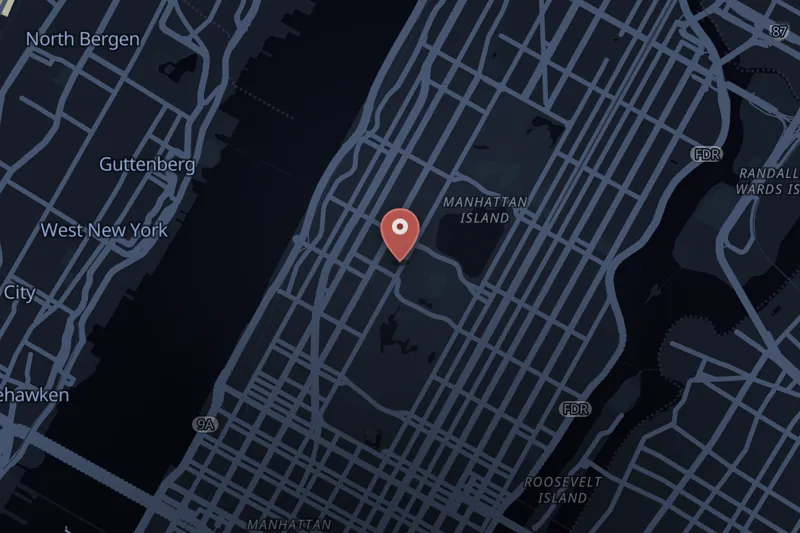
Manhattan, New York City · 2010s
Rock music manager and real estate broker Linda Stein was found dead in her Manhattan apartment on October 30, 2007; a coroner ruled her death a homicide. Her former personal assistant, Natavia Lowery, was arrested days later and ultimately convicted of the killing.
 Credit: no human authorship, CCTV at HI New York City HostelPublic domainSourceONGOINGListen
Outside the New York Hilton Midtown, West 54th Street, Manhattan · 2020s
Brian Thompson, CEO of UnitedHealthcare, was shot and killed outside the New York Hilton Midtown on December 4, 2024. Luigi Mangione was arrested days later in Pennsylvania and charged in New York and federal court with murder, terrorism-related offenses, and weapons charges; he has pleaded not guilty.
 Credit: Jgb23CC BY-SA 4.0SourceSOLVEDListen
Blacktown / Prospect, New South Wales, Australia · 1986
Anita Cobby, a 26-year-old nurse, was abducted while walking home from Blacktown railway station in Sydney on 2 February 1986, then raped, tortured and murdered by five men. Her body was found two days later; all five perpetrators were convicted in 1987 and sentenced to life imprisonment without parole.
 Credit: D4444n at en.wikipediaCC BY-SA 3.0SourceSOLVEDListen
Grand Hotel, Brighton, England · 1984
On 12 October 1984 the IRA detonated a long-delay bomb at the Grand Hotel in Brighton in an attempt to assassinate Prime Minister Margaret Thatcher and her cabinet during the Conservative Party Conference. Five people were killed and more than thirty injured; Thatcher was uninjured. IRA member Patrick Magee was convicted in 1986 and sentenced to eight concurrent life terms.
 Credit: English WikipediaEditorial useSourceSOLVEDListen
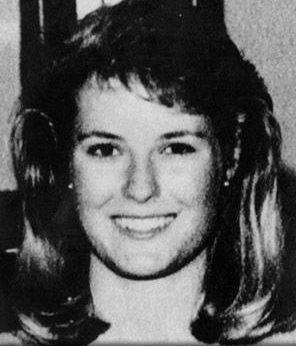
Mercy Road offramp, Interstate 15, San Diego County, California · 1986
Cara Knott, a 20-year-old San Diego State University student, disappeared on December 27, 1986, while driving home from her boyfriend's house. Her body was found the next day below a bridge near an isolated freeway offramp. California Highway Patrol officer Craig Alan Peyer was convicted of her murder in 1988 after a second trial.
 Credit: Woodlawn High SchoolEditorial useSourceSOLVEDListen
Leakin Park, Baltimore, Maryland · 1999
Hae Min Lee, an 18-year-old Baltimore County high school student, was strangled and found buried in Leakin Park in February 1999. Her ex-boyfriend Adnan Syed was convicted of first-degree murder in 2000; the case gained international attention after the 2014 podcast Serial, and Syed's conviction underwent multiple vacaturs, appeals, and reinstatements through 2025.
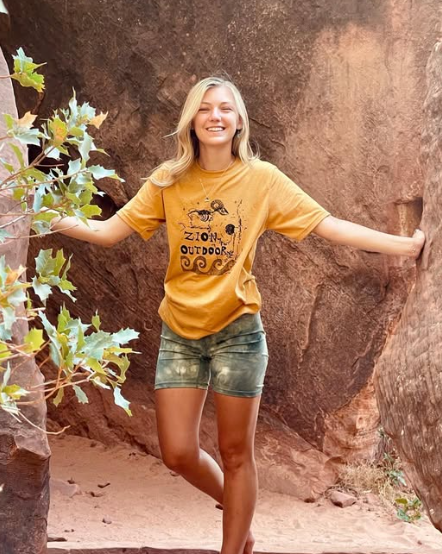 Credit: Instagram/@gabspetito, widely distributed in press coverageEditorial useSourceSOLVEDListen
Bridger–Teton National Forest, Wyoming · 2021
Gabby Petito, a 22-year-old travel vlogger, was killed by strangulation and blunt-force trauma in August 2021 while on a cross-country van trip with her fiancé, Brian Laundrie. Laundrie returned to Florida alone, was named a person of interest, and later died by suicide, leaving a note admitting he had killed her.
 Image recordEditorial useSourceSOLVEDListen
Austin, Texas · 2022
Moriah Wilson, a 25-year-old professional cyclist, was shot and killed at a friend's residence in Austin, Texas, on May 11, 2022, and Kaitlin Armstrong was later convicted and sentenced to 90 years in prison for the killing.
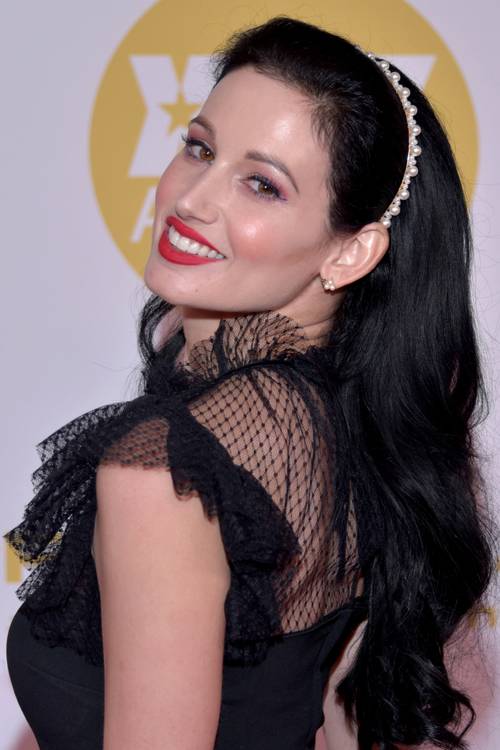 Credit: Wikimedia Commons, photo by Glenn Francis (PacificProDigital.com)Editorial useSourceSOLVEDListen
Hollywood Hills, Los Angeles, California · 2014
Amie Harwick, a Los Angeles marriage and family therapist and author, was strangled and thrown from her third-floor Hollywood Hills balcony on February 15, 2020, by an ex-boyfriend who had a history of stalking her. He was convicted of first-degree murder in 2023 and sentenced to life without parole.
 COLDListen
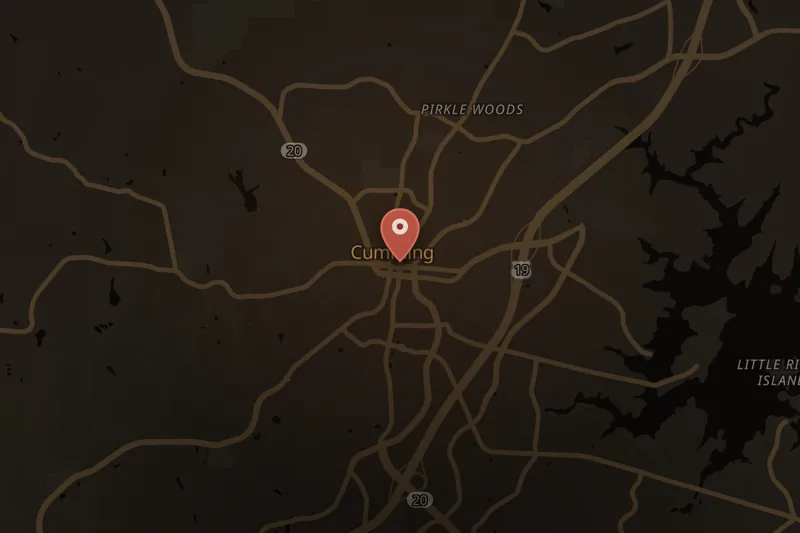
Cumming, Georgia · 2018
Tamla Horsford, a 40-year-old mother of five, died from a fall at a home in Cumming, Georgia, during a gathering on November 3-4, 2018; two separate investigations ruled her death accidental, though her family has disputed that finding and pushed for further inquiry.