
Start here
THE SOLVED CASE OF NICKY VERSTAPPEN | MIDWEEK MYSTERY

Georgia Marie's 23-minute breakdown, the fullest single telling on file.
Watch on YouTubeBefore you continue
This case involves sexual violence and crimes against children. Casepin presents the record in neutral, non-graphic language. Choose whether to continue.
Solved case · 1998
Also known as Death of Nicky Verstappen
 File:Herdenkingsmonument Nicky Verstappen.jpgCredit: Saschaporsche·CC BY-SA 3.0·Source
The short answer
Nicky Verstappen, an 11-year-old boy, disappeared from a summer camp in Brunssum, Netherlands, on 10 August 1998 and was found dead the next evening in nearby Landgraaf. A nationwide DNA-screening program led to the 2018 arrest of Jos Brech, who was ultimately convicted of manslaughter, kidnapping, sexual abuse, and possession of child pornography, with the verdict upheld by the Supreme Court in 2023.
Start hereTHE SOLVED CASE OF NICKY VERSTAPPEN | MIDWEEK MYSTERYGeorgia Marie · 23 minThe coverage index
1 piece from 1 creator: ranked, with duplicates removed and short clips set aside.
Start here
Video · YouTube · 23 min · 2018
Georgia Marie's 23-minute breakdown, the fullest single telling on file.
Watch on YouTubeTitles and descriptions are the creators’ own and may not reflect current legal status. The sourced facts are in the file below. Players load only when you press play. Suggest coverage we’re missing.
The case file
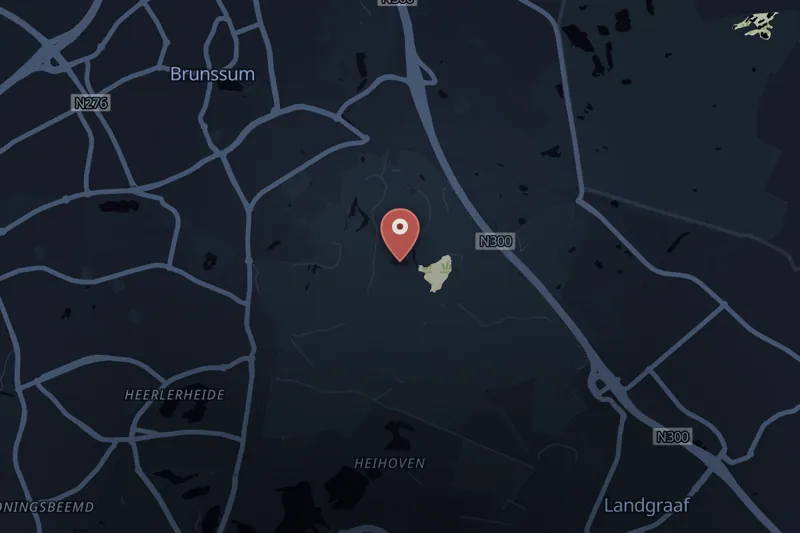
Nicky Verstappen, an 11-year-old boy from Heibloem, disappeared overnight during a children's summer camp on the Brunssummerheide in Brunssum, Limburg, in the Netherlands. He was last seen by a tentmate around 5:30 a.m. on 10 August 1998; later that morning he was gone from his sleeping bag, with only his shoes left behind. Police and volunteers, including Verstappen's parents, searched the area, and around 9 p.m. on 11 August his body was found in a pine grove on the Schinvelderweg in nearby Landgraaf, about 1.2 kilometres from the camp. He was barefoot and without a shirt but still wearing his pajama bottoms, which were inside-out and backwards. The soles of his feet showed no sign of having walked through the forest. A post-mortem examination, delayed several days because local medical examiners were unavailable, found evidence of possible sexual abuse and a possible head injury, though it could not establish an exact cause of death. A tissue with trace semen and a cigarette butt recovered near the body yielded a complete DNA profile of an unknown man.
The camp's founder, a former primary-school headmaster with prior convictions for child sexual abuse, was extensively questioned after admitting he had been near Verstappen's tent around 6 a.m. on 10 August, but he was never officially held as a suspect; DNA taken from his remains after his 2003 death did not match the profile recovered from the crime scene. Investigators pursued other leads over the following two decades, including a Kerkrade man with sexual-offense convictions whom witnesses placed near the camp, and anonymous letters left at a memorial to Verstappen. Voluntary DNA-testing rounds in 1999-2000 and 2010 covered 35 and 80 men respectively; none matched the crime-scene profile.
In January 2018, Dutch police asked about 21,500 men in Limburg province to submit DNA samples; the program ultimately collected more than 15,000 samples, the largest such screening in Dutch history. On 22 August 2018, investigators announced that DNA recovered from the belongings and relatives of Jos Brech, a 55-year-old man from Simpelveld who had been missing from his home in France since that April, matched DNA found on Verstappen's clothing. Brech, who had prior convictions for child sexual abuse, had been questioned near the crime scene in 1998 but was treated at the time as a passer-by. He was arrested near Castellterçol, Spain, on 26 August 2018, and extradited to the Netherlands.
Brech's trial opened on 28 September 2020. He testified that he had come across Verstappen's body by chance and touched it only to check for signs of life; prosecutors argued this account was inconsistent with the position of the body relative to where Brech said he had been standing. On 20 November 2020, the court convicted Brech of kidnapping and sexually abusing Verstappen, citing 27 traces of his DNA on the body including on the boy's underwear, and of possessing child pornography, sentencing him to twelve and a half years' imprisonment. The court acquitted him of manslaughter, saying it could not rule out that Verstappen died accidentally while Brech restrained him. On 28 January 2022, an appeal court in Den Bosch convicted Brech of manslaughter as well and increased his sentence to sixteen years. The Supreme Court upheld that verdict in September 2023, reducing the sentence by three months in view of the length of the proceedings.
14 dated entries · 1998–2023
Nicky Verstappen, 11, disappeared overnight from a summer camp on the Brunssummerheide in Brunssum; he was last seen by a tentmate around 5:30 a.m.
Verstappen's body was found around 9 p.m. in a pine grove on the Schinvelderweg in Landgraaf, about 1.2 kilometres from the camp.
The original investigation team was dissolved after a lack of leads.
Police began a first round of voluntary DNA testing, covering 35 men; none matched the crime-scene profile.
Police collected DNA samples from 80 more men; none matched the crime-scene profile.
The remains of the camp's late founder were exhumed for DNA testing; the profile did not match.
Police announced a mass DNA-screening request to roughly 21,500 men in Limburg province.
Investigators announced that DNA from the belongings and relatives of Jos Brech, who had been missing since April 2018, matched DNA found on Verstappen's clothing.
Brech was located and arrested near Castellterçol, Spain.
Brech was extradited to the Netherlands.
Brech's trial opened in the Netherlands; he denied the charges.
The court convicted Brech of kidnapping and sexual abuse of Verstappen and of possessing child pornography, acquitted him of manslaughter, and sentenced him to twelve and a half years' imprisonment.
An appeal court in Den Bosch convicted Brech of manslaughter in addition to the earlier charges and increased his sentence to sixteen years.
The Supreme Court upheld the appeal court's verdict, reducing the sentence by three months due to the length of proceedings.
2 named in this file
Victims first. Every legal label is set from public records and court outcomes, not from the prose.
11-year-old boy who disappeared overnight from a summer camp in Brunssum and was found dead the following evening in nearby Landgraaf.[3]
Convicted in 2020 of the kidnapping, sexual abuse, and possession of child pornography connected to Verstappen's death; an appeal court also convicted him of manslaughter in 2022 and increased his sentence to sixteen years, a verdict upheld by the Supreme Court in 2023.[3]
From the record
3 cited
Coverage is not a source: every fact in this file rests on the records below.
PressBBC NewsAccessed Jul 12, 2026
Presshartvannederland.nlAccessed Jul 12, 2026
EncyclopedicWikipediaAccessed Jul 12, 2026
Trust
Are you family of someone named in this file? Corrections and removal requests from victims’ families are prioritized.
Near this case
Place Saint-Lambert, Liège · 2010s
A grenade-and-gun attack on a public square in Liège, Belgium, on 13 December 2011 killed five people and injured more than 147, and the attacker also killed a woman earlier that day before dying by suicide.
 Credit: User Mario scolas on fr.wikipedia·CC BY-SA 2.0·SourceSOLVEDListen
Liège, Belgium · 1990s
André Cools, a leading Belgian socialist politician and mayor of Flémalle, was shot dead in Liège on 18 July 1991. A 2003 trial in Liège led to the conviction of two men, who were sentenced to twenty years' imprisonment in January 2004.
 SOLVEDListen
Woods between Mierlo and Lierop, near Eindhoven · 1990s
Fifteen-year-old Nicole van den Hurk disappeared while cycling to a seasonal job in Eindhoven, Netherlands, in October 1995 and was found dead five weeks later. DNA evidence led to the 2014 arrest of Jos de Graaf, who was ultimately convicted of her rape and manslaughter in 2018, a verdict the Dutch Supreme Court upheld in 2020.
 Credit: English Wikipedia·Editorial use·SourceSOLVEDListen
Vineyard near Linden, California, where Larry McNabney's body was found · 1995
Sacramento attorney Larry McNabney was killed in September 2001, authorities determined, by his wife, Elisa McNabney (born Laren Sims), and legal secretary Sarah Dutra, who injected him with a horse tranquilizer. His body was found buried in a Linden, California vineyard in February 2002. Elisa hanged herself in jail before trial; Dutra was convicted of voluntary manslaughter.
 Credit: Szetoyanlun·CC BY-SA 3.0·SourceSOLVEDListen
31 Granville Road, Tsim Sha Tsui, Kowloon, Hong Kong · 1990s
In spring 1999, 23-year-old Hong Kong nightclub hostess Fan Man-yee was abducted, held captive for a month, and tortured to death by three men and a teenage girl in a Tsim Sha Tsui apartment; her skull was later found sewn inside a Hello Kitty plush toy.
 SOLVEDListen
Wimbledon Common, southwest London · 1992
Rachel Nickell, 23, was stabbed 49 times and sexually assaulted on Wimbledon Common in July 1992 while walking with her toddler son. A wrongful prosecution of an innocent man collapsed at trial, and the case went cold until a 2002 cold-case DNA review linked it to Robert Napper, who pleaded guilty to manslaughter by diminished responsibility in 2008.
Also covered by
 Credit: Family handout via Suffolk News·Editorial use·SourceCOLDListen
Bury St Edmunds, Suffolk, England · 2016
Royal Air Force gunner Corrie McKeague disappeared after a night out in Bury St Edmunds in September 2016, and a 2022 inquest concluded he died after climbing into a waste bin that was tipped into a bin lorry, though his remains were never found.
El Pianista trail, near Boquete, Panama · 2014
Two Dutch students, Kris Kremers and Lisanne Froon, disappeared while hiking a jungle trail in Panama in April 2014, and their remains were recovered along a riverbank months later, but no official cause of death has ever been established.
 Credit: Argonne National Laboratory / Wikimedia Commons, c.1922–23·Public domain·SourceSOLVEDListen
Orange, New Jersey · 1917
Beginning in 1917, factory workers who came to be known as the Radium Girls were poisoned after being instructed to shape radium-paint brushes with their lips; the resulting illnesses, deaths, and lawsuits against the United States Radium Corporation and the Radium Dial Company reshaped U.S. occupational health and labor law.

