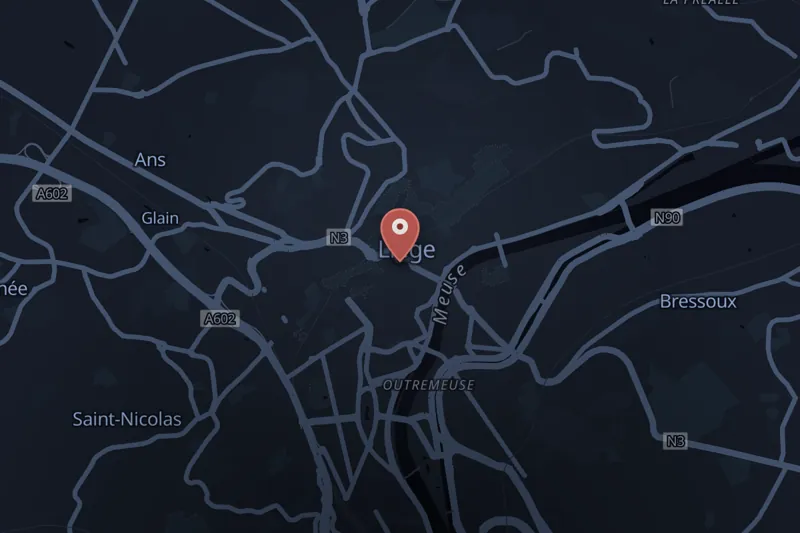
On 13 December 2011, a murder–suicide attack took place in Liège, in the Wallonia region of Belgium. At 12:33 local time, a 33-year-old man threw grenades and opened fire with an FN FAL rifle on civilians in the Place Saint-Lambert, the city's main commercial square, on a busy day when shoppers filled a nearby Christmas market. Five people were killed and more than 147 others were injured, seven of them seriously. The attacker then killed himself with a revolver.
Earlier that same morning, he had killed a 45-year-old woman, Antonietta Racano, at his apartment. She had been working as a cleaner for a neighbour and was reportedly lured to the flat under the pretext of work. Her body was hidden in a shed before he left for the city centre carrying a backpack of weapons. Beforehand, he had transferred money from his account to that of his girlfriend, a home-care nurse.
Witnesses at the square reported four explosions and gunfire, and it was initially thought that two or more assailants were involved. Stun grenades were thrown toward the courthouse and a bus shelter, and shots were fired with a 7.62×51mm NATO FN FAL from the rooftop of a bakery across the square. Police reached the scene quickly and sealed off the area.
Those killed in the attack included two teenage boys, aged 15 and 17, and a 17-month-old boy who died in hospital the same day. A 75-year-old woman died of her injuries on 15 December, and a 20-year-old man who had been in an induced coma since the attack died of head injuries on 23 December. Counting the woman killed at the apartment, six people died.
The attacker was identified as Nordine Amrani, a French-speaking Belgian welder of Moroccan origin who had been orphaned young and raised in foster homes. According to his lawyer he did not speak Arabic and was not Muslim, and he had no known links to terrorist groups. A Liège court had sentenced him in 2008 to 58 months in prison for possessing thousands of weapons parts, almost 10,000 rounds of ammunition, dozens of firearms, and 2,800 cannabis plants in the context of a criminal conspiracy; he had also been convicted of handling stolen goods and sex offences, and was released in October 2010. On the day of the attack he had been summoned to answer police questions about a sexual abuse case.
Belgian officials, including then Prime Minister Elio Di Rupo and Liège mayor Willy Demeyer, condemned the attack, and King Albert II and Queen Paola visited Liège the same day. The attack happened on the same day and hour as a separate shooting in Florence, Italy, though there is no indication the two were coordinated.


 Credit: User Mario scolas on fr.wikipediaCC BY-SA 2.0SourceSOLVEDListen