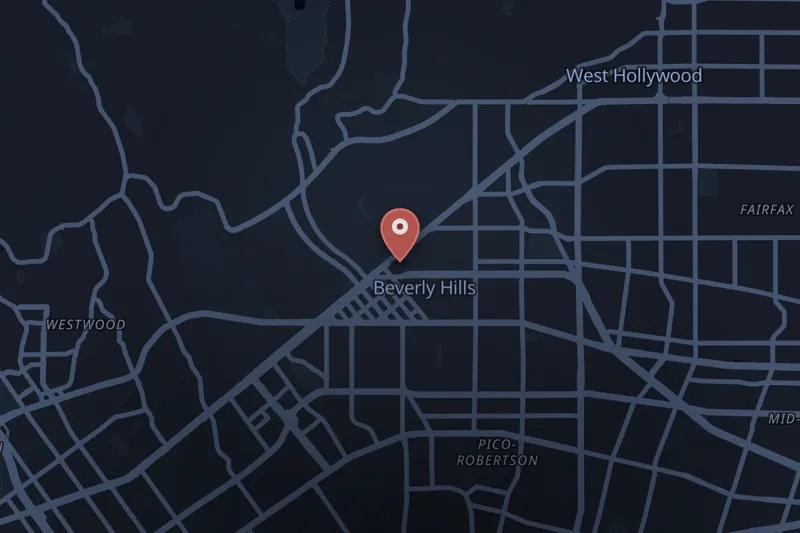
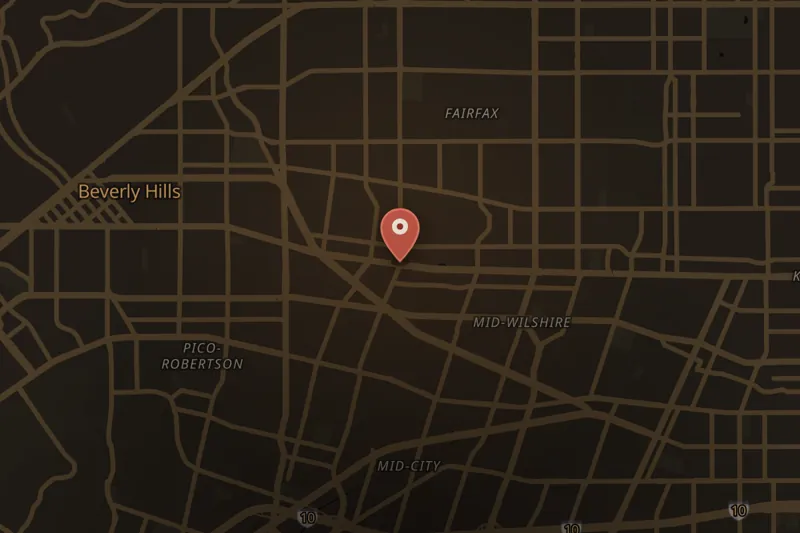
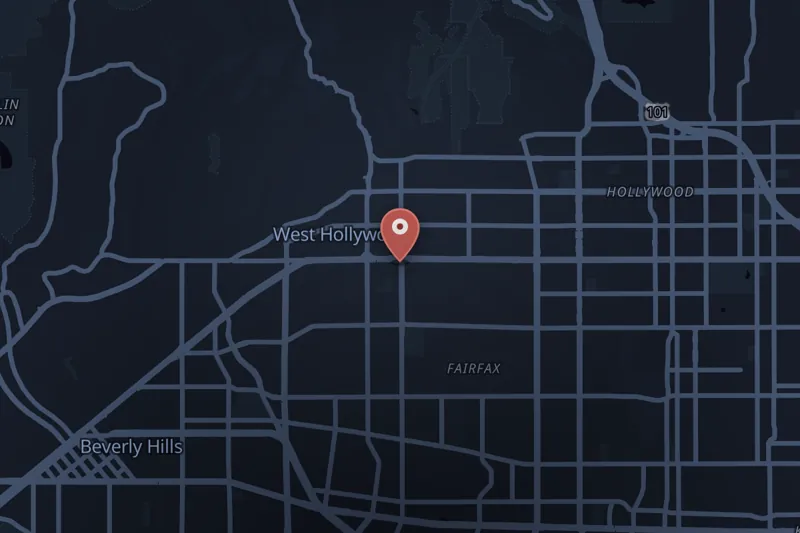
On March 9, 1997, at approximately 12:45 a.m., 24-year-old rapper Christopher Wallace, known professionally as the Notorious B.I.G., was shot while sitting in the front passenger seat of a Chevrolet Suburban stopped at a red light at Wilshire Boulevard and South Fairfax Avenue in Los Angeles. A gunman driving a dark-colored Chevrolet Impala pulled alongside the vehicle and fired six shots; four struck Wallace. He was rushed to Cedars-Sinai Medical Center, where he was pronounced dead at 1:15 a.m. Wallace had traveled to Los Angeles that February to promote his second album, Life After Death, and had attended a party at the Petersen Automotive Museum hours before the shooting rather than departing for a scheduled trip to London. Days earlier, he had told a radio interviewer he had hired security because of the ongoing East Coast–West Coast hip-hop feud and the murder of Tupac Shakur six months prior.
An autopsy report, released to the public in 2012, found that three of the four gunshot wounds were not immediately fatal; the fatal shot entered through Wallace's right hip and damaged several vital organs.
The investigation into Wallace's death has spanned decades without resulting in criminal charges, and the case remains officially unsolved. Early Los Angeles Times reporting identified a suspected member of the Southside Crips acting for personal financial motives, but that investigation stalled. A 2002 book by Randall Sullivan, drawing on the work of retired LAPD detective Russell Poole, alleged that Death Row Records co-founder Marion "Suge" Knight conspired with a corrupt LAPD officer to orchestrate the killing, a theory later depicted in a 2002 documentary and challenged in subsequent Los Angeles Times reporting that identified a wrongly implicated mortgage broker and later scrutinized a key informant's credibility. Retired LAPD detective Greg Kading, who worked the case as part of a gang task force, alleged that Knight arranged for a gang associate, since deceased, to carry out the shooting in retaliation for Shakur's murder.
Wallace's family pursued wrongful-death litigation against the City of Los Angeles beginning in 2002, alleging LAPD involvement or concealment of evidence tied to the Rampart corruption scandal. A 2005 jury trial ended in a mistrial after previously undisclosed evidence surfaced from a lead detective's files. A second lawsuit, filed in 2007 naming two LAPD officers connected to the Rampart scandal, was dismissed by a federal judge in 2007 on procedural grounds and, after refiling, was ultimately dismissed in 2010. The New York Times described the litigation as "one of the longest running and most contentious celebrity cases in history."
The criminal case was reopened in 2006 in connection with the civil litigation, and the LAPD released Wallace's autopsy findings in 2012 in an effort to generate new leads. No one has been criminally charged in Wallace's death. Wallace's mother, Voletta Wallace, who had led efforts to seek accountability for her son's killing through the legal system, died in February 2025.


 SOLVEDListen
.jpg)