Wilma Andersson, 17, was reported missing in Uddevalla, Sweden, on Thursday, November 14, 2019. There was no indication at the time that a crime had occurred, and a search was launched. On the following Tuesday night, her shoes and eyeglasses were found, and her boyfriend was apprehended as a suspect in a possible manslaughter. The next day, a search was conducted in Ljungskile, south of Uddevalla. In late November, Swedish police received help from the armed forces, who used divers and a mini submarine to search for her body. On November 28, her head was found in her boyfriend's bedroom; the rest of her body had not been located. By early December, more than 5,000 people had taken part in searches for her remains.
Andersson's boyfriend, Tishko Ahmed Sherzad, was arrested in absentia on December 3, 2019, and apprehended the following day. In May 2020, prosecutors charged him, then 23, with Andersson's murder and with the separate offense of desecrating her body by mutilation (Swedish: brott mot griftefriden). According to the prosecution's account, he had beheaded her and kept her head wrapped in plastic inside a trolley. He pleaded not guilty to the charges. Because her body had not yet been found at the time of the charge, a cause of death could not be established. In mid-July 2020, an evaluation by Sweden's National Board of Forensic Medicine found that he did not have a serious mental illness, though examiners described narcissistic personality traits — a grandiose self-image inconsistent with his actual life circumstances, alongside a shallow emotional range and a marked lack of empathy. He denied guilt throughout the trial.
On July 27, 2020, Uddevalla District Court found Sherzad guilty of murder and of violating Andersson's corpse. He was sentenced to life in prison and ordered to pay 227,664 SEK (about €22,000) in damages to her family. He continued to deny the accusations after the verdict. On appeal, the Court of Appeal for Western Sweden reduced his sentence from life in prison to 18 years; under Swedish practice, prisoners are typically released early after serving two-thirds of a fixed-term sentence. Sherzad continued to maintain his innocence even after further remains belonging to Andersson were found in his closet.
Sherzad was born January 22, 1997, in Sulaymaniyah, Iraq, to a Kurdish family. He came to Sweden with his father in 2006, at age nine, and became a Swedish citizen in 2014; he was living in Uddevalla at the time of the killing. After the trial concluded, Swedish public broadcaster SVT chose not to publish his name, saying doing so was not "indisputably in public interest" and would not create understanding of why the crime had been carried out. SVT did publish the name and a photograph of the 17-year-old victim.


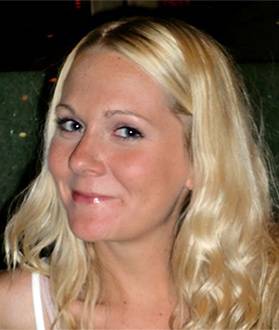 Credit: https://www.gp.se/nyheter/g%C3%B6teborg/m%C3%B6rdade-elin-krantz-missk%C3%B6ter-sig-i-f%C…Editorial useSourceSOLVEDListen