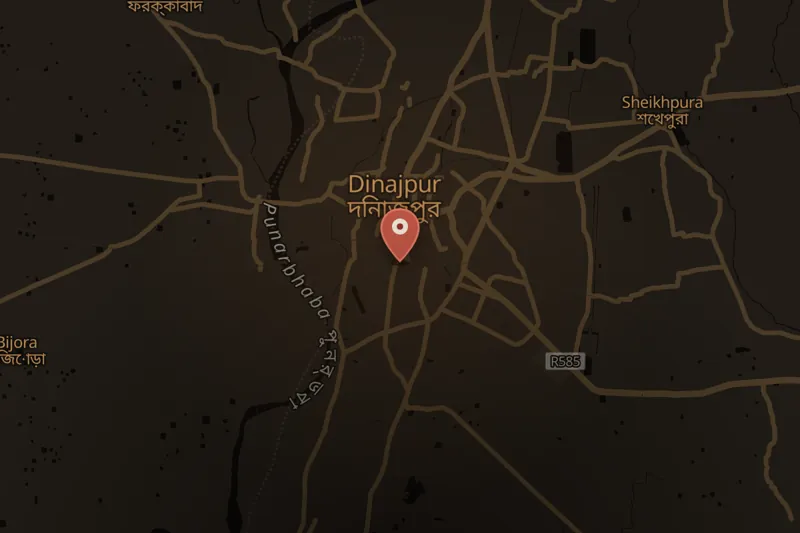
Yasmin Akhter was a 14-year-old girl working as a domestic helper in Dhaka. On 24 August 1995, while traveling back to her hometown in Dinajpur, she boarded the wrong bus and became lost. Three members of the Bangladesh Police, later identified as Moinul Hoque, Abdus Sattar, and Amrita Lal, offered her a lift in a police van. Instead of taking her home, the officers drove her to a secluded location where she was gang raped and strangled to death. Her body was discarded by the roadside and discovered the following day.
News of the crime spread after Manoranjan Shill Gopal, a local member of parliament, informed Matiur Rahman, editor of the local newspaper The Daily Uttarbangla, that police had raped and killed a girl. Rahman confirmed the victim's identity on 26 August and sought to publish the story despite police warnings not to do so. Police cut electricity to the newspaper's office in an apparent attempt to prevent publication, but Rahman borrowed power from a neighbor to print the news. The report triggered mass protests; the local police station was attacked and looted, and authorities declared a curfew enforced by Bangladesh Rifles personnel. During the unrest, police fired on protesters, killing seven people and injuring approximately 300 others.
The case proceeded to trial after significant resistance from police, who initially refused to register it, and required pressure from women's rights activists and civil society groups. Moinul Hoque and Abdus Sattar were arrested in 1997 and were subsequently tried and convicted of rape and murder, receiving death sentences. Amrita Lal was arrested years after the initial verdict and also received a death sentence. Separately, five policemen — including the then police superintendent of Dinajpur and the officer in charge of the local police station — along with the doctor who conducted the first autopsy on the victim, were acquitted of charges related to destroying evidence during the investigation.
Hoque and Sattar were executed by hanging on 1 September 2004 at Rangpur Central Jail. Lal's clemency requests were later denied, and he was executed by hanging at Rangpur on 29 September 2004; he reportedly expressed remorse to the victim's family before his execution.
The case left a lasting mark on Bangladesh, with 24 August now marked as Resistance Day against Repression of Women. In 2024, The Daily Star reported that a film based on the case, titled Ami Yasmin Bolchi and starring Bidya Sinha Saha Mim, had been forced to halt production due to pressure from the Dhaka Metropolitan Police.

 SOLVEDListen


