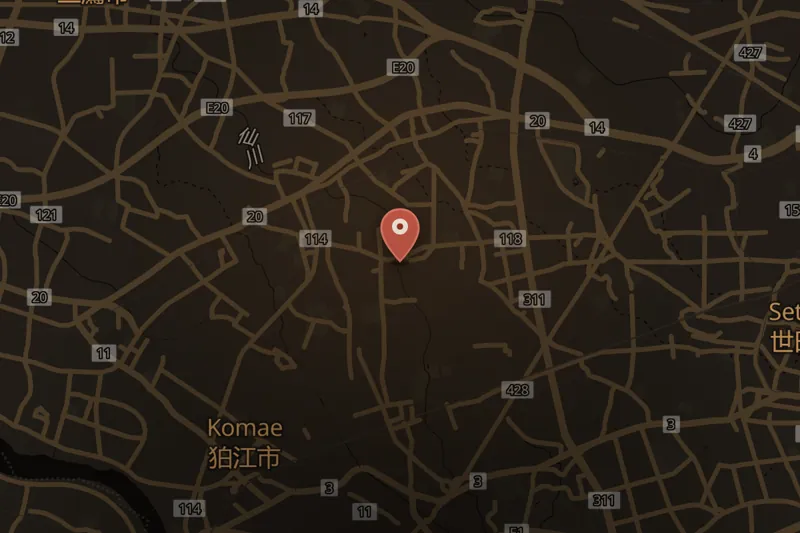
The Setagaya family murder refers to the unsolved killing of the Miyazawa family — Mikio Miyazawa, 44; his wife Yasuko, 41; and their children Niina, 8, and Rei, 6 — in the Kamisoshigaya neighborhood of Setagaya, Tokyo, on the night of December 30 to 31, 2000. Their bodies were discovered around 10:40 a.m. on December 31, 2000, by Yasuko's mother, Haruko, after she was unable to reach her daughter by phone and visited the house. Mikio, Yasuko, and Niina had been stabbed to death, while Rei had been strangled with bare hands in his second-floor bedroom.
Tokyo Metropolitan Police Department (TMPD) investigators concluded the family was killed between approximately 11:30 p.m. and 12:05 a.m. JST, and that the perpetrator likely entered through an open second-floor bathroom window near Soshigaya Park, possibly by climbing a fence and an air-conditioning unit. Evidence suggests a struggle occurred, including a broken sashimi knife blade found in Mikio's head; a santoku knife from the home was also used. The killer reportedly remained in the house for two to ten hours afterward, using the family's computer, consuming food and drink, using the toilet, treating apparent injuries with first-aid supplies, and ransacking drawers and papers, taking some cash while leaving other money behind. Numerous personal items were left behind at the scene, including a knife, scarf, hip bag, clothing, and handkerchiefs.
The investigation, among the largest in Japanese history, has involved more than 246,000 investigators and over 12,500 pieces of evidence. Police identified specific details about the suspect, including estimated height (around 170 cm), build, and various revised age ranges over the years. DNA analysis of blood at the scene indicated the suspect is male and possibly of mixed ancestry, with maternal DNA suggesting European or Caucasus-region heritage and paternal DNA indicating East Asian descent. Despite these findings, no fingerprint or DNA match has been found in Japanese police databases, and the TMPD has sought assistance from Interpol on the possibility the suspect is not in Japan.
The case attracted extensive Japanese media attention and became a catalyst in public debate leading to the 2010 abolition of the statute of limitations for crimes eligible for the death penalty in Japan. The Miyazawa family home was eventually reported for demolition in 2019 due to structural deterioration, a decision appealed by family members and supporters, though police stated all evidentiary material had already been preserved. In 2015, Yasuko Miyazawa's sister, An Irie, filed a complaint over a television documentary's characterization of the case. As of December 2021, a ¥20 million reward remained available for information leading to an arrest. No suspect has been charged or convicted.