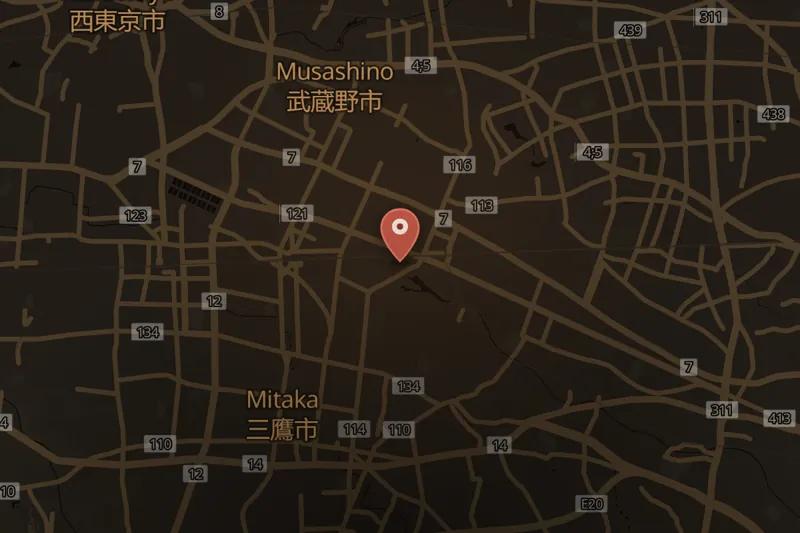
On the morning of April 23, 1994, a park janitor at Inokashira Park, located between Mitaka and Musashino in Tokyo, accidentally opened a plastic bag and discovered human remains. Police responded and located 27 severed limbs and body parts distributed across multiple trash cans in the park, all sealed in waste disposal bags that had been punctured to allow water drainage. Investigators noted that the knots used to tie the bags were of a type specifically used by fishermen in the region. Most fingerprints on the victim's hands and feet had been deliberately damaged, but enough remained for authorities to identify the victim.
The victim was identified as a 35-year-old male architect, referred to publicly only as "S," who had lived near the park. His body had been cut into pieces roughly 20 centimeters in length using what investigators believe was an electric saw, executed with a level of precision that authorities compared to that of a highly trained medical professional. The body had also been thoroughly washed and drained of blood, a process that investigators concluded would have required both advanced anatomical knowledge and access to a large-capacity water supply beyond that of an ordinary household.
No definitive cause of death was established. The body showed no signs of physical battery and no drugs were found in his system, though antemortem hemorrhage marks on the ribs suggested he may have been cut while still alive. The victim's torso, chest, and genitals were never recovered; one theory suggests these parts may have been collected by park janitorial staff the day before the rest of the remains were found and taken to a waste disposal facility.
"S" had reportedly parted ways with an acquaintance around midnight on April 22, after which his movements became unclear. Unconfirmed eyewitness accounts described a man resembling "S" being beaten near a department store, and separately, two men behaving suspiciously with plastic bags in the park around 4:00 a.m., though the absence of battery evidence on the body complicates the first account. Investigators interviewed the victim's friends and acquaintances and searched his residence but found no evidence leading to a suspect.
Media attention on the case was diminished after the crash of China Airlines Flight 140 on April 26, 1994, just three days after the murder was discovered. Investigators continued working the case for about eleven months before many were reassigned to the 1995 sarin gas attack on the Tokyo subway system. The statute of limitations on the case expired in 2009, fifteen years after the killing.
Several theories about the perpetrator have circulated, including involvement by a former partner of "S," an unidentified religious organization to which "S" belonged, or an organized crime group with the resources for such a meticulous dismemberment. In 2015, a man using the pseudonym "K," who had worked near "S"'s residence and had conflicts with a foreign criminal organization over street vending territory, publicly suggested that "S" may have been killed in a case of mistaken identity, believing that he himself had been the intended target.