
Start here
Fake Serial Killer | Thomas Quick (Sture Bergwall) Case Analysis
Dr. Todd Grande's 13-minute overview: the quickest complete way into the case.
Watch on YouTubeBefore you continue
This case involves sexual violence and crimes against children. Casepin presents the record in neutral, non-graphic language. Choose whether to continue.
Overturned conviction · 1994
Also known as Sture Bergwall

The short answer
Sture Bergwall, using the name Thomas Quick, confessed to more than 30 murders while confined in a Swedish psychiatric institution and was convicted of eight of them between 1994 and 2001; after he withdrew all his confessions in 2008, every conviction was quashed on appeal, the last in July 2013, in what has been called the largest miscarriage of justice in Swedish history.
Start hereFake Serial Killer | Thomas Quick (Sture Bergwall) Case AnalysisDr. Todd Grande · 13 minThe coverage index
1 piece from 1 creator: ranked, with duplicates removed and short clips set aside.
Start here
Video · YouTube · 13 min · 2021
Dr. Todd Grande's 13-minute overview: the quickest complete way into the case.
Watch on YouTubeTitles and descriptions are the creators’ own and may not reflect current legal status. The sourced facts are in the file below. Players load only when you press play. Suggest coverage we’re missing.
The case file
Sture Ragnar Bergwall, a Swedish man born on 26 April 1950, used the name Thomas Quick from 1993 to 2002 and was for years believed to be one of Sweden's most prolific serial killers. After being sentenced for armed robbery in 1991, Bergwall was confined to Säter, a secure psychiatric institution, for treatment of personality disorders. Facing the prospect of release, and anxious about leaving the institution, he began describing childhood abuse and recovered memories of committing murders. His therapist, Birgitta Ståhle, came to believe he had multiple personalities, including one she considered the source of the killings, and viewed his case as significant for criminal psychology and trauma theory. Bergwall later said the personalities emerged through therapy and that he developed them to match his therapist's expectations, which in turn reinforced her belief in them.
During therapy sessions followed by police interviews, Quick confessed to more than 30 murders in Sweden, Norway, Denmark, and Finland between 1964 and 1993. Between 1994 and 2001, he was convicted of eight of these murders across six separate district court trials. None of the convictions rested on eyewitnesses or technical forensic evidence connecting him to a crime scene; each was based on his own confession, obtained while he was on benzodiazepines and interviewed following therapy built around recovered-memory theory. Investigators later found Quick had repeatedly guessed wrong before arriving at correct details, such as the murder weapon in the case of Israeli tourist Yenon Levi, and that his earlier incorrect guesses were edited out of the account presented at trial. In the case of nine-year-old Therese Johannesen, who disappeared from Fjell, Drammen, Norway, in 1988, the conviction relied on burnt fragments presented as her bones; those fragments were later determined to be composed of wood and glue resembling hardboard, not bone. In the case of Gry Storvik, semen recovered from the victim did not match Quick's DNA.
Journalists Hannes Råstam and Jenny Küttim, and separately Dan Josefsson, later published documentaries and books arguing that flawed therapy produced Quick's false confessions; Josefsson's account describes a group led by psychologist Margit Norell as having shaped both the therapy and the police investigation. In November 2006, retired lawyer Pelle Svensson reported Quick's trials to the Swedish Chancellor of Justice on behalf of a victim's parents seeking to have the convictions declared invalid.
In 2008, during the recording of a television documentary, Quick withdrew all of his confessions; in a December 2008 interview with Råstam he denied taking part in any of the killings he had previously confessed to. With his confessions retracted and no other evidence remaining, Quick's convictions were reconsidered one by one. The Yenon Levi conviction was quashed after Quick was acquitted at retrial in September 2010; the Johan Asplund conviction was quashed in March 2012; the Therese Johannesen conviction in March 2011; the Trine Jensen and Gry Storvik convictions in September 2012; the conviction for the killing of a couple at Appojaure in May 2013; and the Charles Zelmanovits conviction, the last of the eight, in July 2013. Having reverted to his birth name, Bergwall was released from Säter after more than twenty years in confinement. The episode has been described as the largest miscarriage of justice in Swedish history.
17 dated entries · 1950–2013
Sture Ragnar Bergwall is born.
Bergwall, who has adopted the name Quick around this time, is sentenced for armed robbery and subsequently confined to a secure psychiatric institution for the criminally insane.
Quick is convicted of the 1976 murder of Charles Zelmanovits in Piteå, based solely on his confession.
Quick is convicted of the 1984 murders of a couple, referred to in the case record as the Stegehuis couple, at Appojaure near Gällivare.
Quick is convicted of the 1988 murder of Israeli tourist Yenon Levi at Rörshyttan.
Quick is convicted of the 1988 murder of nine-year-old Therese Johannesen, who had disappeared from Drammen, Norway.
Quick is convicted of the 1981 murder of Trine Jensen in Oslo.
Quick is convicted in the 1980 disappearance and presumed murder of Johan Asplund in Sundsvall; no body was ever found.
Retired lawyer Pelle Svensson reports Quick's trials to the Swedish Chancellor of Justice on behalf of a victim's parents, seeking to have the convictions declared invalid.
Quick withdraws all of his confessions during the recording of a television documentary; in a December interview with journalist Hannes Råstam he denies involvement in any of the murders.
The Svea Court of Appeal grants a retrial in the Yenon Levi case.
Quick is acquitted at retrial in the Yenon Levi case and the conviction is quashed.
The Therese Johannesen conviction is quashed after forensic re-examination undermined the evidence used at trial.
The Johan Asplund conviction is quashed.
The Trine Jensen and Gry Storvik convictions are quashed.
The conviction for the killing of the Stegehuis couple is quashed following a retrial ordered by the Supreme Court.
The Charles Zelmanovits conviction, the last of Quick's eight murder convictions, is quashed; Bergwall, having reverted to his birth name, is released from Säter after more than twenty years in confinement.
8 named in this file
Victims first. Every legal label is set from public records and court outcomes, not from the prose.
Killed in Piteå in 1976. Quick was convicted of his murder in 1994 based solely on his confession, with no forensic evidence. The conviction was quashed in July 2013.[3]
Killed in Oslo in 1985. Quick confessed and was convicted, but semen recovered from the victim did not match his DNA. The conviction was quashed in September 2012.[3]
Disappeared in Sundsvall in 1980; no body was ever found. Quick was convicted of his murder in 2001 based solely on his confession; the conviction was quashed in March 2012.[3]
A couple killed at Appojaure, near Gällivare, in 1984. Quick was convicted of their murders in 1996; the conviction was later questioned after it emerged Quick may have had access to case details never disclosed to the public before trial. Quashed in May 2013 after a retrial ordered by the Supreme Court.[3]
A nine-year-old girl who disappeared from Fjell, Drammen, Norway, in 1988. Quick was convicted of her murder in 1998 based partly on burnt fragments presented as her bones; those fragments were later found to be hardboard, not bone. The conviction was quashed in March 2011.[3]
Killed in Oslo in 1981. Quick was convicted of her murder in 2000 with no forensic evidence connecting him to the crime. The conviction was quashed in September 2012.[3]
An Israeli tourist killed at Rörshyttan in 1988. Quick was convicted of his murder in 1997; investigators later found Quick had repeatedly guessed the wrong murder weapon before arriving at the correct answer, information withheld from the trial court. Quick was acquitted at retrial in September 2010.[3]
Confessed under the name Thomas Quick to more than 30 murders while confined in a Swedish psychiatric institution and was convicted of eight of them between 1994 and 2001. Withdrew all confessions in 2008; all eight convictions were quashed on appeal by July 2013.[3]
3 cited
Coverage is not a source: every fact in this file rests on the records below.
PressThe GuardianAccessed Jul 12, 2026
PressThe TimesAccessed Jul 12, 2026
EncyclopedicWikipediaAccessed Jul 12, 2026
Trust
Are you family of someone named in this file? Corrections and removal requests from victims’ families are prioritized.
Near this case
 SOLVEDListen
Stjärnsund, Sweden · 2000s
A 10-year-old girl, Engla Höglund, was abducted and murdered in Stjärnsund, Sweden, in April 2008; photographs taken by a bystander led investigators to Anders Eklund, who confessed and was sentenced to life imprisonment for her murder and an earlier 2000 killing.
Robin Hood Hills, West Memphis, Arkansas · 1990s
Three eight-year-old boys were found murdered in West Memphis, Arkansas, in 1993; three teenagers were convicted the following year in a case marked by disputed evidence, allegations of coerced confession, and claims of a Satanic motive, and were released in 2011 after entering Alford pleas.
 Credit: Photo by Calvin Beale, as an employee of the Economic Research Service, part of the…·Public domain·SourceSOLVEDListen
Madison, Jefferson County, Indiana · 1992
In January 1992, twelve-year-old Shanda Sharer was abducted and killed in southern Indiana by four teenage girls, all charged as adults; each pleaded guilty and received prison sentences.
 Credit: en:User:Paul.h·Public domain·SourceSOLVEDListen
Petaluma, California, United States · 1993
Polly Hannah Klaas, a 12-year-old girl, was abducted at knifepoint from her home in Petaluma, California, on October 1, 1993, and later found murdered. Richard Allen Davis was convicted of first-degree murder in 1996 and sentenced to death.
 Image record·Editorial use·SourceUNSOLVEDListen
Solna, north of Stockholm — where da Costa's remains were discovered in 1984 · 1984
The 1984 killing and dismemberment of Catrine da Costa near Stockholm remains unsolved; two physicians were tried and acquitted, and no cause of death was ever established.
Sveavägen, Stockholm, Sweden · 1980s
Swedish Prime Minister Olof Palme was shot dead on a Stockholm street on 28 February 1986 while walking home with his wife; despite one conviction later overturned on appeal and a 2020 prosecutorial conclusion naming a deceased suspect, the case remains legally unsolved and was closed in 2020, with the main suspect's designation later withdrawn in 2025.
Also covered by
 Credit: Woodlawn High School·Editorial use·SourceSOLVEDListen
Leakin Park, Baltimore, Maryland · 1999
Hae Min Lee, an 18-year-old Baltimore County high school student, was strangled and found buried in Leakin Park in February 1999. Her ex-boyfriend Adnan Syed was convicted of first-degree murder in 2000; the case gained international attention after the 2014 podcast Serial, and Syed's conviction underwent multiple vacaturs, appeals, and reinstatements through 2025.
 Credit: Instagram/@gabspetito, widely distributed in press coverage·Editorial use·SourceSOLVEDListen
Bridger–Teton National Forest, Wyoming · 2021
Gabby Petito, a 22-year-old travel vlogger, was killed by strangulation and blunt-force trauma in August 2021 while on a cross-country van trip with her fiancé, Brian Laundrie. Laundrie returned to Florida alone, was named a person of interest, and later died by suicide, leaving a note admitting he had killed her.
 Image record·Editorial use·SourceSOLVEDListen
Austin, Texas · 2022
Moriah Wilson, a 25-year-old professional cyclist, was shot and killed at a friend's residence in Austin, Texas, on May 11, 2022, and Kaitlin Armstrong was later convicted and sentenced to 90 years in prison for the killing.
 Credit: Wikimedia Commons, photo by Glenn Francis (PacificProDigital.com)·Editorial use·SourceSOLVEDListen
Hollywood Hills, Los Angeles, California · 2014
Amie Harwick, a Los Angeles marriage and family therapist and author, was strangled and thrown from her third-floor Hollywood Hills balcony on February 15, 2020, by an ex-boyfriend who had a history of stalking her. He was convicted of first-degree murder in 2023 and sentenced to life without parole.
 COLDListen
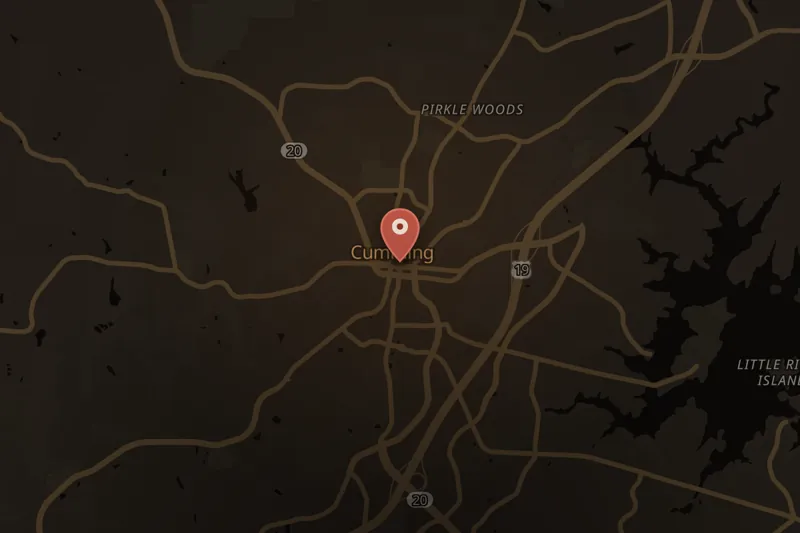
Cumming, Georgia · 2018
Tamla Horsford, a 40-year-old mother of five, died from a fall at a home in Cumming, Georgia, during a gathering on November 3-4, 2018; two separate investigations ruled her death accidental, though her family has disputed that finding and pushed for further inquiry.

