
Start here
Secret Medical Testing on People & the Government Knew?! The Tuskegee Experiment

Bailey Sarian's 51-minute breakdown, the fullest single telling on file.
Watch on YouTubeSolved case · 1932
Also known as Tuskegee Study of Untreated Syphilis in the Negro Male · Tuskegee Experiment
The short answer
Between 1932 and 1972, the U. S. Public Health Service studied untreated syphilis in nearly 400 Black men in Macon County, Alabama, without informing them of their diagnosis or providing treatment, and more than 100 died as a result.
Secret Medical Testing on People & the Government Knew?! The Tuskegee ExperimentBailey Sarian · 51 min1 piece from 1 creator: ranked, with duplicates removed and short clips set aside.
Start here
Bailey Sarian's 51-minute breakdown, the fullest single telling on file.
Watch on YouTubeTitles and descriptions are the creators’ own and may not reflect current legal status. The sourced facts are in the file below. Players load only when you press play. Suggest coverage we’re missing.
Between 1932 and 1972, the United States Public Health Service (PHS), later joined by the Centers for Disease Control and Prevention (CDC), conducted a study of untreated syphilis in Macon County, Alabama, in collaboration with the Tuskegee Institute (now Tuskegee University). Investigators enrolled 600 impoverished African American sharecroppers: 399 men with latent syphilis and a control group of 201 men who were not infected. The stated purpose was to observe the natural progression of untreated syphilis to the point of death and autopsy. Effective treatments to reduce the severity of syphilis had existed since the 1920s, and penicillin became a widely used cure by 1945, yet researchers withheld treatment from the men for the study's full 40-year duration. More than 100 of the men died as a result.
The men were never told they had syphilis. Instead, researchers described their condition using the local term bad blood, which covered several ailments, and offered free medical exams, meals, transportation, and funeral expense payments as incentives to stay in the study. In place of treatment, participants received disguised placebos, ineffective remedies, and invasive diagnostic procedures such as spinal taps, which were misrepresented to them as therapy. The study was originally planned to last six months but was extended indefinitely after funding for a treatment phase fell through. Even after penicillin became the standard cure for syphilis by 1947, and even when men were separately diagnosed with syphilis at military draft boards during World War II, study researchers intervened to keep them untreated and blocked their access to public health treatment campaigns that later came to the county. By the time the study ended in 1972, only 74 of the original participants were still alive: 28 had died directly of syphilis, 100 had died of related complications, 40 of their wives had been infected, and 19 of their children had been born with congenital syphilis.
Concerns about the study's ethics were raised internally and externally for years before it ended, including by a Public Health Service employee whose 1966 letter to federal officials was rebuffed. The study became public in 1972 after a leak to the press; a Washington Star report on July 25 of that year was followed by national front-page coverage and Congressional hearings. A federal advisory panel subsequently found the study medically unjustified, and it was terminated on November 16, 1972.
In 1974, the U.S. government settled a class-action lawsuit brought on behalf of participants and their families for $10 million and agreed to provide free medical care to survivors and infected family members. That year, Congress passed the National Research Act, creating a commission whose work led to the 1979 Belmont Report and the establishment of the Office for Human Research Protections, along with federal requirements for informed consent and institutional review boards in human-subjects research. In 1997, the President of the United States formally apologized on behalf of the federal government at a White House ceremony attended by five of the study's eight known surviving participants; the government later helped establish Tuskegee University's National Center for Bioethics in Research and Health Care in 1999.
The study has been described as one of the most infamous biomedical research studies in U.S. history and is widely cited as a major cause of enduring distrust of medical and public health institutions among African Americans. A 2016 economic analysis linked the study's 1972 disclosure to decreased physician visits and reduced life expectancy among older Black men, an effect compared in scale to eliminating smoking. The last known surviving participant died in 2004.
The U.S. Public Health Service begins a study of untreated syphilis in Macon County, Alabama, enrolling 600 Black sharecroppers, including 399 men with latent syphilis and 201 uninfected controls.
The study publishes its first clinical data.
The study issues its first major report, before the discovery of penicillin as a treatment for syphilis.
Penicillin becomes the standard treatment for syphilis, but study researchers continue to withhold it from participants and block their access to community treatment campaigns.
The Washington Star publishes the first news report exposing the study.
The study is formally terminated after a federal advisory panel finds it medically unjustified.
The U.S. government settles a class-action lawsuit for $10 million, and Congress passes the National Research Act requiring informed consent and institutional review boards for human-subjects research.
The study's revelations lead to the Belmont Report, establishing federal ethical guidelines for research involving human subjects.
The President of the United States formally apologizes to survivors on behalf of the federal government at a White House ceremony.
The last known surviving participant of the study dies.
Victims first. Every legal label is set from public records and court outcomes, not from the prose.
Study participant; one of five surviving participants who attended the 1997 White House ceremony where the U.S. government formally apologized.[3]
Study participant who, after learning the study's true nature, sought help from a civil rights attorney; a 1973 lawsuit on his behalf resulted in a $10 million settlement. He was one of five surviving participants who attended the 1997 White House ceremony where the U.S. government formally apologized.[3]
Study participant; one of eight known surviving participants recognized at the 1997 White House ceremony, where he was represented in person by a family member.[3]
Study participant; one of five surviving participants who attended the 1997 White House ceremony where the U.S. government formally apologized.[3]
Study participant and sharecropper who helped build Moton Field, the airfield where the Tuskegee Airmen trained during World War II.[3]
Study participant; one of five surviving participants who attended the 1997 White House ceremony where the U.S. government formally apologized.[3]
Study participant; one of eight known surviving participants recognized at the 1997 White House ceremony, where he was represented in person by a family member.[3]
Study participant; one of five surviving participants who attended the 1997 White House ceremony where the U.S. government formally apologized.[3]
Study participant; one of eight known surviving participants recognized at the 1997 White House ceremony, where he was represented in person by a family member.[3]
Coverage is not a source: every fact in this file rests on the records below.
Are you family of someone named in this file? Corrections and removal requests from victims’ families are prioritized.
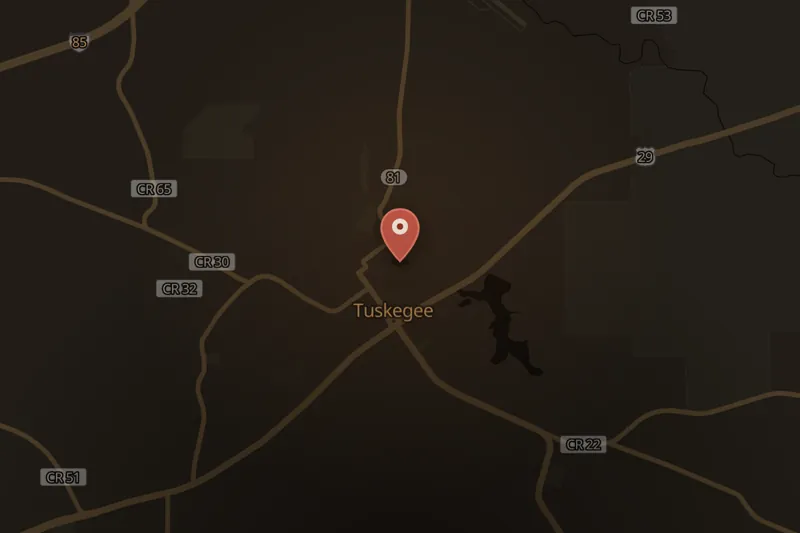
 Credit: Carol M. HighsmithPublic domainSourceONGOINGListen
Tuskegee University, West Commons on-campus apartments · 2020s
During Tuskegee University's homecoming weekend, gunmen firing from a car killed 18-year-old La'Tavion Johnson and injured 16 others at an on-campus apartment party on November 10, 2024. Two men were later arrested and federally charged with possession of machine guns after weapons found on them had illegal conversion devices.
 SOLVEDListen
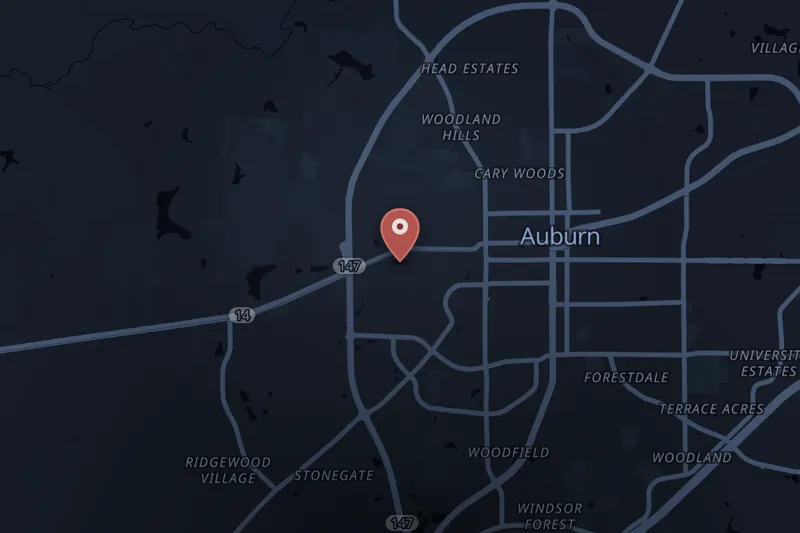
Auburn, Lee County, Alabama · 2000s
Lori Ann Slesinski disappeared from Auburn in 2006, and Derrill Richard Ennis was convicted of her murder despite her body never being found.
 Credit: Wfsa 12 NewsEditorial useSourceSOLVEDListen
Auburn, Alabama · 2010s
Aniah Blanchard, a 19-year-old Alabama college student, disappeared from Auburn in October 2019 and was later found dead of a gunshot wound; the man convicted of her murder was sentenced to life in prison in 2026.
 Credit: Family/Instagram photograph, widely distributed in press coverageEditorial useSourceSOLVEDListen
Moscow, Idaho · 2022
Four University of Idaho students—Madison Mogen, Kaylee Goncalves, Ethan Chapin, and Xana Kernodle—were fatally stabbed inside an off-campus house in Moscow, Idaho, in the early morning hours of November 13, 2022. Bryan Kohberger, a criminology PhD student at nearby Washington State University, was arrested that December and pleaded guilty in 2025, receiving four consecutive life sentences.
 Credit: Mona EshaikerCC BY-SA 3.0SourceSOLVEDListen
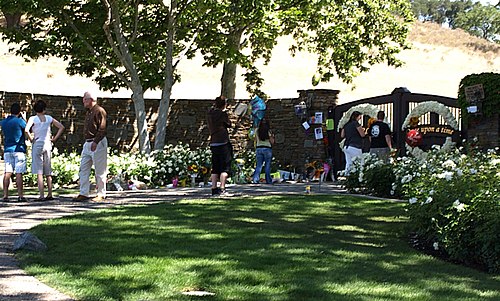
Holmby Hills, Los Angeles, California · 2009
Singer Michael Jackson died on June 25, 2009, in Los Angeles from acute propofol intoxication administered by his personal physician, Conrad Murray. The Los Angeles County coroner ruled the death a homicide, and Murray was convicted of involuntary manslaughter in November 2011.
 Credit: RaptacCC BY-SA 4.0SourceSOLVEDListen
Bardstown, Kentucky · 2015
Crystal Rogers, a 35-year-old Bardstown, Kentucky, mother of five, disappeared in July 2015 and has never been found; in 2025, her former boyfriend, Brooks Houck, was found guilty of her murder, and two other men were convicted of related conspiracy and evidence-tampering charges.
 Credit: English WikipediaEditorial useSourceSOLVEDListen
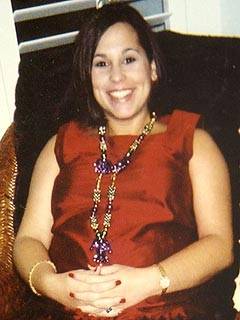
Modesto, California · 2002
Laci Peterson, 27 and eight months pregnant, disappeared from her Modesto, California home on December 24, 2002; her body and that of her unborn son Conner were found in San Francisco Bay in April 2003, and her husband Scott Peterson was convicted in 2004 of murdering both.
 Credit: CBS News / Travis Alexander (personal photo)Editorial useSourceSOLVEDListen
Mesa, Arizona, United States · 2000s
Travis Alexander, 30, was stabbed, slashed, and shot to death in his Mesa, Arizona home on June 4, 2008. His ex-girlfriend, Jodi Arias, was convicted of first-degree murder in 2013 and sentenced to life without parole in 2015 after two juries deadlocked on the death penalty.
 COLDListen
Cumming, Georgia · 2018
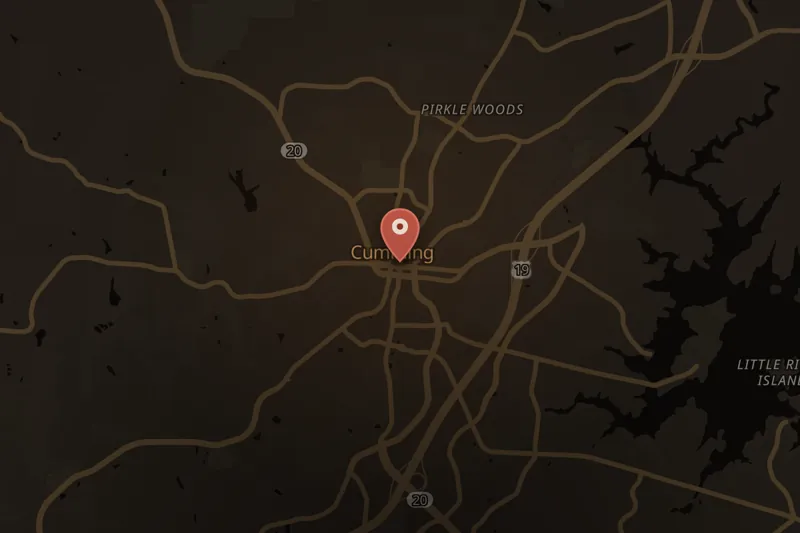
Tamla Horsford, a 40-year-old mother of five, died from a fall at a home in Cumming, Georgia, during a gathering on November 3-4, 2018; two separate investigations ruled her death accidental, though her family has disputed that finding and pushed for further inquiry.
 Credit: Los Angeles Police DepartmentPublic domainSourceUNSOLVEDListen
Leimert Park, Los Angeles, California, USA · 1940s
Elizabeth Short, known posthumously as the Black Dahlia, was found murdered in Los Angeles in January 1947 in a case that remains unsolved.
 Credit: Ted Van ZylEditorial useSourceSOLVEDListen
Albuquerque, New Mexico, United States · 1993
Girly Chew Hossencofft, a Malaysian-born bank teller living in Albuquerque, New Mexico, disappeared on September 9, 1999, shortly after filing for divorce from her husband Diazien Hossencofft. He and his girlfriend Linda Henning were later convicted of her murder. Her body has never been found.
 Credit: Argonne National Laboratory / Wikimedia Commons, c.1922–23Public domainSourceSOLVEDListen
Orange, New Jersey · 1917
Beginning in 1917, factory workers who came to be known as the Radium Girls were poisoned after being instructed to shape radium-paint brushes with their lips; the resulting illnesses, deaths, and lawsuits against the United States Radium Corporation and the Radium Dial Company reshaped U.S. occupational health and labor law.