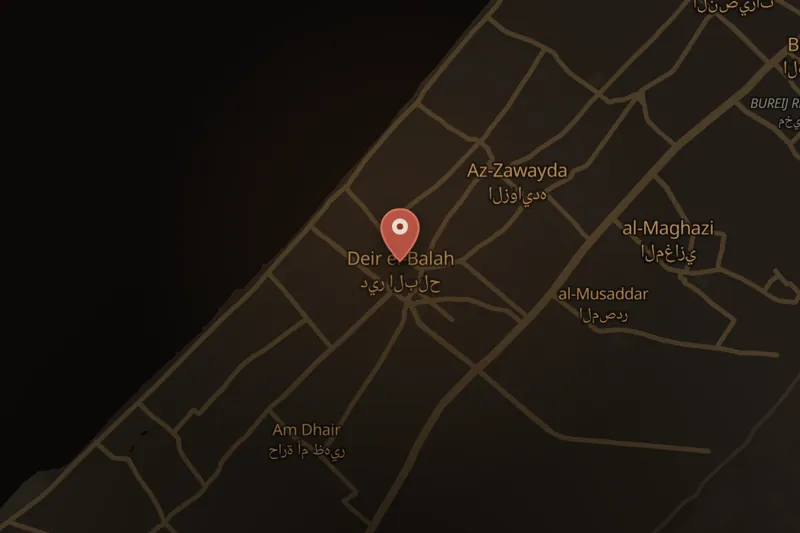
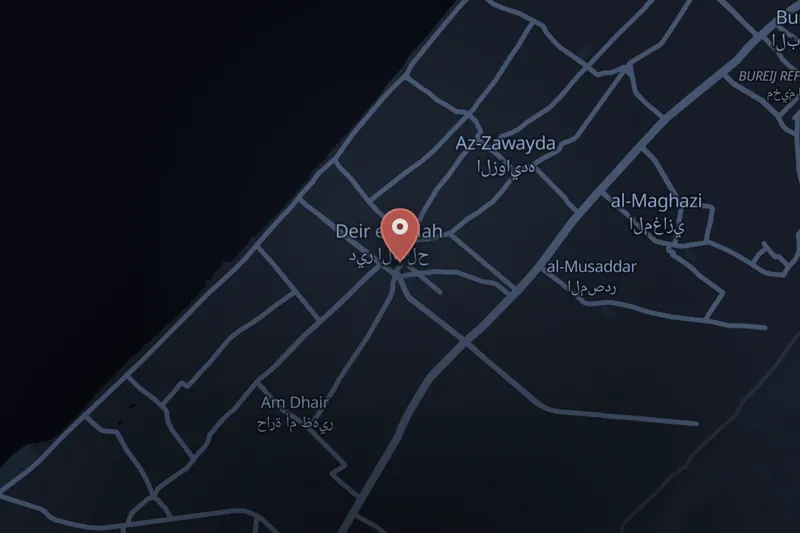
On 1 April 2024, Israeli drones fired three missiles in five minutes at a three-car convoy operated by the charity World Central Kitchen (WCK) in the northern Gaza Strip, killing all seven aid workers aboard. The workers had been overseeing the transfer of food from a makeshift pier to a warehouse in an area affected by severe humanitarian crisis during the Gaza war. The victims held Australian, British, Palestinian, Polish, and dual American-Canadian citizenships: Saif Abu Taha, Damian Soból, Lalzawmi "Zomi" Frankcom, James Henderson, John Antony Chapman, James Kirby, and Jacob Flickinger. Three of the British victims worked for Solace Global, a private security firm.
The attack occurred three days after a unanimous International Court of Justice ruling ordering Israel to ensure the unhindered flow of aid into Gaza, and two days after a WCK vehicle had been struck by an Israeli sniper. The Israeli military (IDF) acknowledged its drone operators struck the first WCK car, then struck a second car after survivors of the first strike boarded it, and then a third car after survivors of the second strike boarded that one. The IDF said the convoy's movements had been coordinated in advance but that this information was not properly disseminated to operational forces, and that commanders misidentified the vehicles' occupants, in part after mistaking an armed WCK guard and a bag for a weapon. The IDF investigation, led by Major General (ret.) Yoav Har-Even, concluded the strikes on the second and third vehicles violated its rules of engagement "for no real reason." As a result, the IDF dismissed two officers, including a major and a colonel, and reprimanded three others, including Southern Command head Yaron Finkelman.
WCK founder José Andrés rejected the IDF's account, stating the strikes were "not just some unfortunate mistake in the fog of war" and calling for an independent investigation, arguing the IDF could not credibly investigate itself. Independent analyses by Bellingcat, Al-Jazeera Sanad, the BBC, and CNN examined wreckage and geolocation data, generally concluding that the vehicles were struck by precision drone missiles capable of being fired only by Israeli forces. An Australian government report, produced by former Australian Defence Force chief Mark Binskin at the request of Foreign Minister Penny Wong, found the Israeli investigation "timely, appropriate and, with some exceptions, sufficient," while still identifying failings including lack of real-time communication and rules-of-engagement violations.
The attack drew condemnation from numerous governments and international bodies, including the UN, EU, NATO, and the United States, and led WCK and other humanitarian organizations, including Anera and Project HOPE, to pause Gaza operations. Statements by Israel's ambassador to Poland about the incident triggered a diplomatic dispute between Israel and Poland. The UK government has withheld surveillance footage from a Shadow R1 aircraft that was flying over Gaza at the time of the attack, citing national security grounds; the father of victim James Henderson has called for its release. A subsequent Israeli strike on a WCK vehicle in Khan Yunis on 30 November 2024 killed five people, including three aid workers, again prompting WCK to briefly suspend Gaza operations.


 UNSOLVEDListen