
 SOLVEDListen
Markina, Basque Country, Spain · 1980s
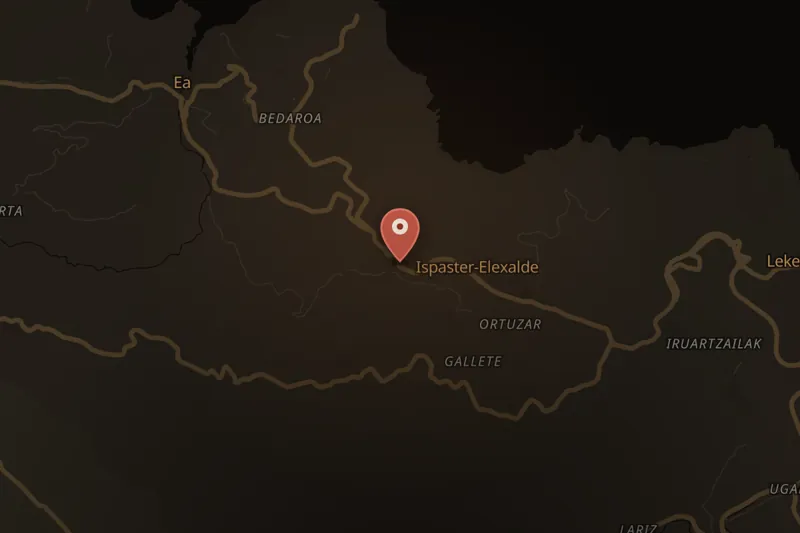
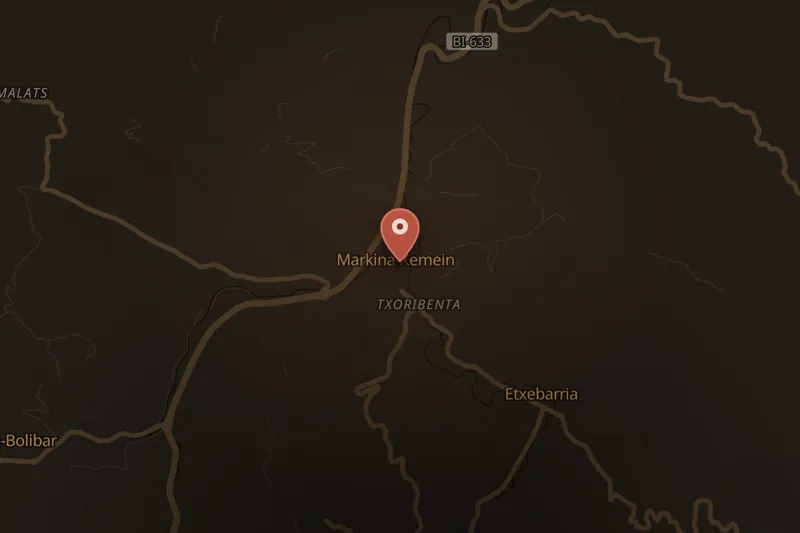
1980 Markina attack
On 20 September 1980, four off-duty Spanish civil guards were shot dead by ETA gunmen in a bar near Markina in the Basque Country.
Solved case · 1980
 Atentado de Ispáster croppedCredit: GoldorakCC BY-SA 4.0Source
The short answer
An ETA gun and grenade ambush on a Civil Guard convoy near Ispaster, Spain, on 1 February 1980 killed six Civil Guards and two of the attackers.
No one's coverage is attached to this file yet.
Know great coverage of this case?
A documentary, a podcast episode, a careful long-form video. Suggest it and an editor will review it before it appears here.
Suggest coverage for 1980 Ispaster attackThe 1980 Ispaster attack was a gun and grenade assault carried out by the Basque separatist organisation ETA on 1 February 1980, on a road near the town of Ispaster in the Basque Country of northern Spain. The targets were a convoy of Civil Guards escorting workers and weapons from the nearby Esperanza y Cia arms factory to Bilbao. Six Civil Guards were killed, and two ETA members died after being struck by hand grenades they had thrown. According to the source, it was the deadliest ETA attack of 1980, the year in which the organisation killed more people than in any other.
The ambush took place on a Friday morning. ETA had watched similar convoys and planned the operation using information it had gathered. The convoy of four vehicles left the factory at 7:30 am; the first carried technicians, the third carried mortar devices made at the factory, and the second and fourth each carried three Civil Guards. At about 8:15 am the convoy slowed on a winding section of road, where the attackers were concealed by dense vegetation near a small hill. After letting the workers' vehicle pass, they launched a grenade at the second vehicle and opened fire with assault rifles, machine guns and grenades, firing more than 100 shots.
The attackers then approached the vehicles and threw grenades inside. During the second of these, two ETA members were killed when they failed to escape before the grenades detonated; one body was later found six kilometres away, apparently moved by fellow members. The drivers of the trapped third vehicle were released, and the weapons it carried were seized. Alerted by a resident who heard the gunfire, police reached the scene at 9:00 am and recovered grenades, 9mm ammunition and firearms of Belgian origin.
The attack came as devolution to the Basque autonomous region was imminent, with the first regional elections held a month later. It was condemned by the Basque General Council and major regional parties, including the Basque Nationalist Party, the PSOE, Euskadiko Ezkerra and the Union of the Democratic Centre. Disturbances occurred at the funerals of both the Civil Guards and the ETA members.
Legal proceedings extended over two decades. In June 1982 several defendants appeared in court accused of taking part in or assisting the attack. In 1984 Jaime Rementeria Beotegui was found guilty, fined and imprisoned; held since August 1983, he was released in January 2004. Francisco Esquisavel was also convicted and left prison in 2002 after 22 years. The final outstanding case closed in 1999, when Jose Luis Ansola Larranaga was acquitted for lack of evidence. On 13 July 1980 ETA attempted a similar ambush at Orio, killing two Civil Guards before losing two members to a counter-attack.
ETA carries out a gun and grenade ambush on a Civil Guard convoy near Ispaster, killing six Civil Guards; two ETA members die from grenades they had thrown.
ETA attempts a similar ambush at Orio, killing two Civil Guards before two of its members are killed in a counter-attack.
Several defendants appear in court accused of participating in or assisting the attack.
Jaime Rementeria Beotegui is imprisoned in connection with the case.
Jaime Rementeria Beotegui is found guilty of participation, fined and sentenced to prison.
Jose Luis Ansola Larranaga is acquitted of involvement for lack of evidence, closing the last outstanding case.
Francisco Esquisavel is released from prison after 22 years.
Jaime Rementeria Beotegui is released from prison.
Victims first. Every legal label is set from public records and court outcomes, not from the prose.
Convicted of direct participation in the 1980 Ispaster attack by Spain's Audiencia Nacional (National Court); sentenced in June 1982 to 162 years in prison.[3]
Accused in 1982 of direct participation and later found guilty; released from prison in 2002 after 22 years.[3]
Found guilty in 1984 of participation in the attack, fined and sentenced to prison; imprisoned from August 1983 and released in January 2004.[3]
Charged with cleaning blood stains from a car used in the 1980 Ispaster attack by Spain's Audiencia Nacional (National Court) in June 1982; trial outcome not documented in available sources.[3]
Charged with sheltering ETA fugitives involved in the 1980 Ispaster attack by Spain's Audiencia Nacional (National Court) in June 1982; trial outcome not documented in available sources.[3]
Charged with cleaning blood stains from a car used in the 1980 Ispaster attack by Spain's Audiencia Nacional (National Court) in June 1982; trial outcome not documented in available sources.[3]
Charged with driving a getaway car for a participant in the 1980 Ispaster attack by Spain's Audiencia Nacional (National Court) in June 1982; trial outcome not documented in available sources.[3]
Acquitted in 1999 for lack of evidence; prosecutors had alleged he directed the operation. Known as "Peio the Elder".[3]
Chief Prosecutor who alleged that Ansola directed the operation and sought a lengthy prison term.[3]
From the record
Coverage is not a source: every fact in this file rests on the records below.
Are you family of someone named in this file? Corrections and removal requests from victims’ families are prioritized.
SOLVEDListenMarkina, Basque Country, Spain · 1980s
On 20 September 1980, four off-duty Spanish civil guards were shot dead by ETA gunmen in a bar near Markina in the Basque Country.
 SOLVEDListen
Ermua, Biscay, Basque Country, Spain · 1990s
Miguel Ángel Blanco, a 29-year-old councillor in Ermua, Spain, was kidnapped by the Basque separatist group ETA on 10 July 1997 and shot two days later after the Spanish government did not meet ETA's 48-hour deadline; he died of his wounds on 13 July 1997. Two people were tried, beginning in 2006, in connection with the kidnapping and killing.
 SOLVEDListen
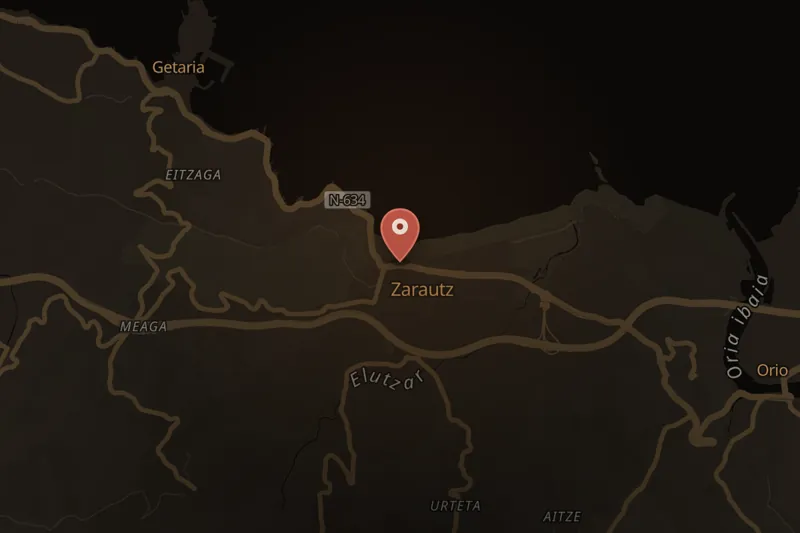
Zarautz, Gipuzkoa, Basque Country, Spain · 1980s
A 1980 mass shooting by the Basque separatist organisation ETA at a bar in Zarautz, Spain, killed five people and led to two convictions.
 Credit: D4444n at en.wikipediaCC BY-SA 3.0SourceSOLVEDListen
Grand Hotel, Brighton, England · 1984
On 12 October 1984 the IRA detonated a long-delay bomb at the Grand Hotel in Brighton in an attempt to assassinate Prime Minister Margaret Thatcher and her cabinet during the Conservative Party Conference. Five people were killed and more than thirty injured; Thatcher was uninjured. IRA member Patrick Magee was convicted in 1986 and sentenced to eight concurrent life terms.
 Credit: Official presidential portrait (Egyptian Presidency)Public domainSourceSOLVEDListen
Cairo, Egypt (site of the assassination during the annual victory parade) · 1981
On 6 October 1981, Egyptian President Anwar Sadat was shot and killed by members of Egyptian Islamic Jihad during a military parade in Cairo commemorating the 1973 Yom Kippur War. Ten others died and 28 were wounded. The lead assassin and four co-conspirators were tried, convicted, and executed in 1982.
 Credit: Randy Gaddo, Marine Staff Sgt.Public domainSourceUNSOLVEDListen
Beirut International Airport and Ramlet al Baida, Beirut, Lebanon · 1983
On October 23, 1983, two truck bombs struck buildings housing U.S. and French peacekeepers in Beirut, Lebanon, killing 307 people — 241 U.S. and 58 French military personnel, six civilians, and two attackers — in one of the deadliest single-day losses for the U.S. military since World War II.