
 SOLVEDListen
Markina, Basque Country, Spain · 1980s
1980 Markina attack
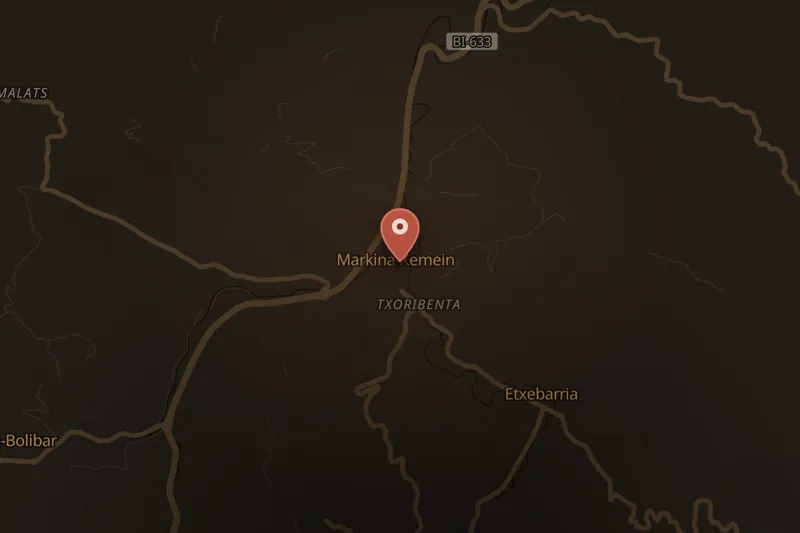
On 20 September 1980, four off-duty Spanish civil guards were shot dead by ETA gunmen in a bar near Markina in the Basque Country.
Solved case · 1980
The short answer
A 1980 mass shooting by the Basque separatist organisation ETA at a bar in Zarautz, Spain, killed five people and led to two convictions.
No one's coverage is attached to this file yet.
Know great coverage of this case?
A documentary, a podcast episode, a careful long-form video. Suggest it and an editor will review it before it appears here.
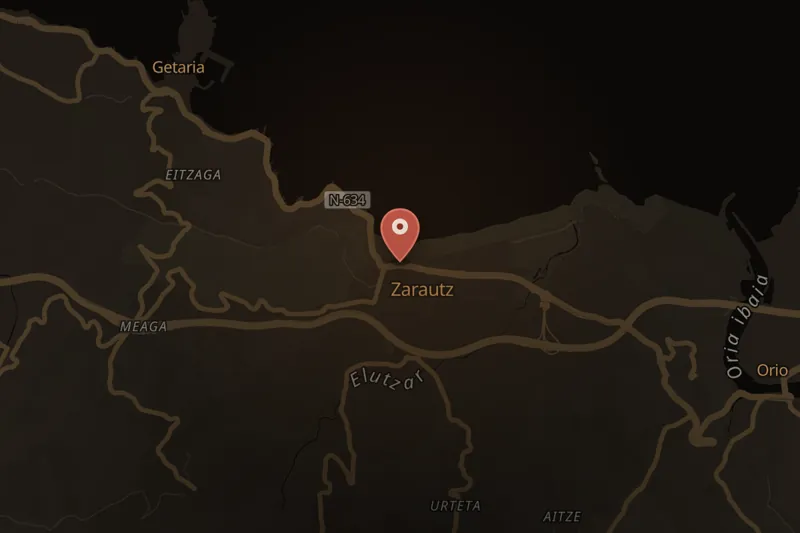
Suggest coverage for 1980 Zarautz attackThe 1980 Zarautz attack was a mass shooting carried out by the Basque separatist organisation ETA on 3 November 1980 in Zarautz, a town in the province of Gipuzkoa in Spain's Basque Country. The targets were several off-duty civil guards from the local traffic department who were in a bar in the town. According to the account, it was the second deadliest ETA attack of 1980, a year in which the organisation killed more people than in any other.
The attack followed a series of earlier fatal ETA attacks in Zarautz. A civil guard was killed there on 18 October 1975, described as the last person killed by ETA during the dictatorship of Francisco Franco, and further attacks caused fatalities on 5 July 1978 and 16 May 1980. The shooting also came a day after demonstrations organised by the Basque Country's main political parties, at which about 15,000 people turned out "against terrorism and for peace." Those rallies had been called amid rising political violence, including the killing of university professor Juan de Dios Doval, a member of the local executive of the Union of the Democratic Centre, then Spain's governing party.
Testimony given at a later trial indicated that an ETA unit had spent October observing the movements of civil guards at the Aizea bar. Shortly before midnight, five off-duty civil guards were in the bar along with at least 20 other people when two armed individuals entered, shouted slogans in support of ETA, and opened fire. The shooting lasted less than ten seconds. Four of the civil guards died and the fifth was wounded; two waiters and three other customers were also injured. One of those customers died the following morning after being struck in the head and throat. The attackers fled in a Renault 18 driven by an accomplice, with three additional ETA members assisting the escape.
The next day, about 3,000 people demonstrated against ETA violence, and the local council passed a motion condemning the attack. The two councillors of Herri Batasuna, the party closest to ETA, abstained from the vote, though both condemned the attack personally and one resigned from the party in protest.
On 17 March 1988, Juan María Tapia Irujo was sentenced to 66 years in prison for taking part in the attack. His testimony led to José Javier Zabaleta Elosegi, known as "Baldo," receiving a 200-year sentence for his participation in and authorship of the attack. An appeal against Zabaleta's sentence was rejected in 2003.
A civil guard is killed in Zarautz, described as the last person killed by ETA during the dictatorship of Francisco Franco.
An ETA attack in Zarautz results in one fatality.
A further ETA attack in Zarautz results in one fatality.
About 15,000 people demonstrate in the Basque Country 'against terrorism and for peace,' organised by the main political parties.
Two armed individuals open fire on off-duty civil guards at the Aizea bar shortly before midnight; four civil guards are killed and several people wounded.
A wounded customer dies of gunshot injuries, and about 3,000 people demonstrate against ETA violence.
Juan María Tapia Irujo is sentenced to 66 years in prison for participation in the attack.
An appeal against José Javier Zabaleta Elosegi's 200-year sentence is rejected.
Victims first. Every legal label is set from public records and court outcomes, not from the prose.
Alias 'Baldo'; sentenced to 200 years in prison for participation in and authorship of the attack; an appeal against the sentence was rejected in 2003.[3]
Sentenced on 17 March 1988 to 66 years in prison for participation in the attack; his testimony was used at the subsequent trial.[3]
From the record
Coverage is not a source: every fact in this file rests on the records below.
Are you family of someone named in this file? Corrections and removal requests from victims’ families are prioritized.
SOLVEDListenMarkina, Basque Country, Spain · 1980s
On 20 September 1980, four off-duty Spanish civil guards were shot dead by ETA gunmen in a bar near Markina in the Basque Country.
 SOLVEDListen
Ermua, Biscay, Basque Country, Spain · 1990s
Miguel Ángel Blanco, a 29-year-old councillor in Ermua, Spain, was kidnapped by the Basque separatist group ETA on 10 July 1997 and shot two days later after the Spanish government did not meet ETA's 48-hour deadline; he died of his wounds on 13 July 1997. Two people were tried, beginning in 2006, in connection with the kidnapping and killing.
 Credit: GoldorakCC BY-SA 4.0SourceSOLVEDListen
Road near Ispaster, Biscay, Basque Country, Spain · 1980s
An ETA gun and grenade ambush on a Civil Guard convoy near Ispaster, Spain, on 1 February 1980 killed six Civil Guards and two of the attackers.
 Credit: D4444n at en.wikipediaCC BY-SA 3.0SourceSOLVEDListen
Grand Hotel, Brighton, England · 1984
On 12 October 1984 the IRA detonated a long-delay bomb at the Grand Hotel in Brighton in an attempt to assassinate Prime Minister Margaret Thatcher and her cabinet during the Conservative Party Conference. Five people were killed and more than thirty injured; Thatcher was uninjured. IRA member Patrick Magee was convicted in 1986 and sentenced to eight concurrent life terms.
 Credit: Official presidential portrait (Egyptian Presidency)Public domainSourceSOLVEDListen
Cairo, Egypt (site of the assassination during the annual victory parade) · 1981
On 6 October 1981, Egyptian President Anwar Sadat was shot and killed by members of Egyptian Islamic Jihad during a military parade in Cairo commemorating the 1973 Yom Kippur War. Ten others died and 28 were wounded. The lead assassin and four co-conspirators were tried, convicted, and executed in 1982.
 Credit: Randy Gaddo, Marine Staff Sgt.Public domainSourceUNSOLVEDListen
Beirut International Airport and Ramlet al Baida, Beirut, Lebanon · 1983
On October 23, 1983, two truck bombs struck buildings housing U.S. and French peacekeepers in Beirut, Lebanon, killing 307 people — 241 U.S. and 58 French military personnel, six civilians, and two attackers — in one of the deadliest single-day losses for the U.S. military since World War II.