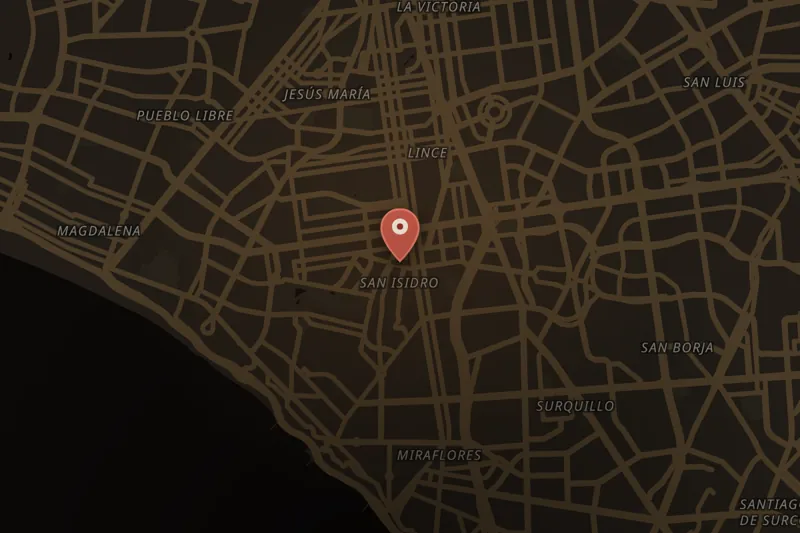
On the night of the attack, a car bomb containing an estimated 30 kilograms (66 lb) of explosives detonated at the El Polo Shopping Centre in Lima, Peru, located just outside the United States embassy. The blast occurred three days before a scheduled visit to Peru by U.S. President George W. Bush. Nine people were killed and thirty-two were injured. No Americans were among those caught in the explosion, and the embassy compound itself, which sits behind a 20-foot-high wall set back from the street, sustained no apparent damage. A seven-floor hotel and a branch of the Banco de Crédito del Perú, both near the mall, were damaged in the blast.
The nine people killed included two embassy security guards and one Peruvian police officer. They were identified as Iván Marilúz Jiménez, José Luis Gallegos Chávez, Augusto Banda Serra, Rafael Ernesto Barzola Vera, Saúl Díaz Herrera (a sub-officer of the National Police of Peru), Augusto Gil Figueroa, Carlos Rodríguez Ponce, Juan Carlos Gamarra Orellana, and Zenón Enríquez Vargas.
Peruvian President Alejandro Toledo stated that he would "not permit democracy to be undermined by terrorist attacks." The country's interior minister said the attack would not stop Bush's planned visit to Lima, where he was due to meet Toledo along with the leaders of Colombia, Bolivia, and Ecuador. A statement from the U.S. embassy condemned the "barbaric terrorist bombing" that had occurred in its vicinity. Shortly before departing for Peru, Bush reportedly said, "You bet I'm going."
No group claimed responsibility for the bombing. United States officials suspected that guerrillas from the left-wing Shining Path organization were responsible, and international terrorist groups, including Al-Qaeda, were also considered as possible perpetrators. Despite this suspicion falling primarily on Shining Path, the organization did not claim the attack, nor did the Túpac Amaru Revolutionary Movement (MRTA) or the Revolutionary Armed Forces of Colombia (FARC), two other left-wing groups active in the region during that period. One analyst suggested the attack may have been motivated by opposition to Bush's broader war on terror.
This was not the first attack on the U.S. embassy in Lima: the MRTA had previously bombed the embassy on January 15, 1990, and Shining Path bombed it again on July 27, 1993, an attack in which four people were wounded. As of the available record, no individual or group has been formally charged or convicted in connection with the 2002 bombing, and responsibility remains unresolved.

 SOLVEDListen