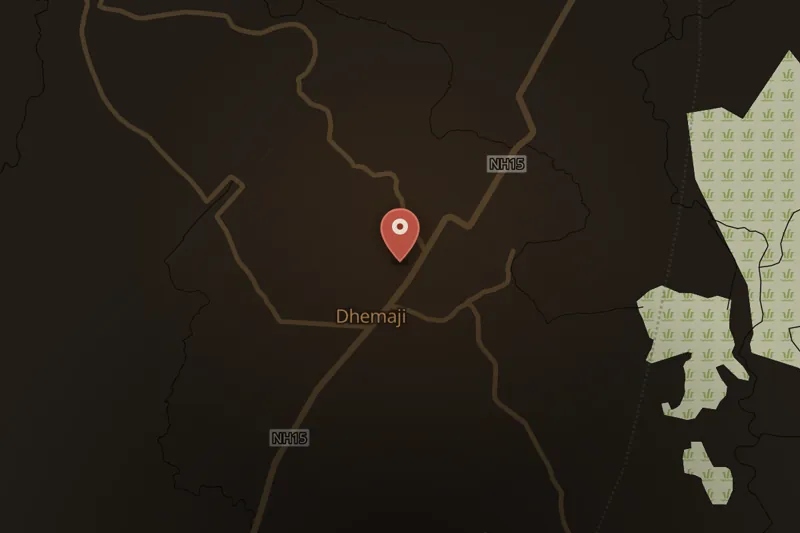
On 15 August 2004, India's Independence Day, a large crowd of people—predominantly schoolchildren aged 12 to 14 and their mothers—gathered at the Dhemaji College ground in Dhemaji, Assam, for an Independence Day parade. At around 09:30, a bomb detonated near the college gate as students and teachers from various schools were passing through it. Police stated the device had been planted at the gate and was triggered remotely. The blast killed at least 18 people and injured many more.
Police attributed the bombing to the United Liberation Front of Assam (ULFA), a banned militant group that had called for a boycott of the Independence Day event. ULFA initially denied responsibility. The day after the attack, ULFA chairman Arabinda Rajkhowa issued a statement claiming that the "Indian Occupation Force" and its agents had used schoolchildren as a shield to defy the group's boycott call. More than five years later, on 13 December 2009, ULFA's commander-in-chief Paresh Barua sought public apology and forgiveness for the blast, stating in an email that the group's leadership had been misled by some of its own cadres and junior leaders about the bombing, which was the reason the leadership had initially denied involvement.
In the immediate aftermath, local residents reportedly attacked police vehicles at the site, blaming law enforcement for failing to protect the parade; police used baton charges and tear gas to control the situation. The Superintendent of Police, T. Thangneo, and the Additional Superintendent of Police, Abu Sufian, both of Dhemaji, were suspended for negligence of duty, and the Deputy Commissioner was transferred over the security lapse.
The injured were treated at Dhemaji Civil Hospital, with ten critically injured patients transferred to Dibrugarh Civil Hospital. Assam Chief Minister Tarun Gogoi condemned the bombing as "most barbaric, inhuman and pathetic" and announced that 16 August would be observed annually as Mourning Day in memory of those killed. He also announced compensation of Rs 300,000 for each person killed and Rs 50,000 for each seriously injured person. Gogoi additionally stated that the Armed Forces Special Powers Act should remain in force in the disturbed areas to counter increasing activity by rebel groups.
The Dhemaji and Lakhimpur units of the All Assam Students' Union (AASU) called a 12-hour bandh (shutdown) on 16 August 2004 in protest and demanded the chief minister's resignation. The Assam State Committee of the Communist Party of India (Marxist) condemned the attack, organized a protest rally in Guwahati on 17 August against both the militants and the administration, and called a 12-hour Assam-wide bandh on 18 August.


 Credit: nrkbetaCC BY-SA 2.0SourceSOLVEDListen


