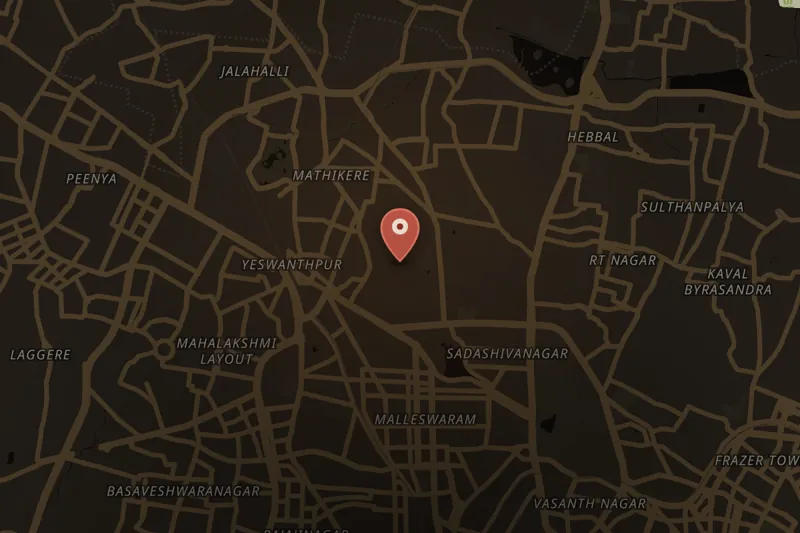
On the evening of Wednesday, 28 December 2005, a shooting occurred on the campus of the Indian Institute of Science (IISc) in Bangalore, India. Two individuals entered the campus around 7:00 pm local time in a white Ambassador car. At approximately 7:20 pm, as delegates attending the International Conference on Operations Research: Applications in Infrastructure Development — organised by the Operations Research Society of India at the JN Tata Auditorium — were leaving for dinner, a gunman wearing a black mask and army uniform began firing indiscriminately from a rifle believed to be a Chinese Type 56, positioned outside the auditorium.
Munish Chandra Puri, a Professor Emeritus in the mathematics department of the Indian Institute of Technology in New Delhi, was struck by bullets and died en route to the hospital. Three other scientists and a lab assistant were also injured. One of the injured was a pregnant woman who sustained an eye injury; the other three sustained serious bullet injuries and underwent emergency surgeries.
In the aftermath, police recovered a Chinese-made Type 56 military rifle, twelve empty cartridges, one empty magazine, five live magazines (one half-spent), two grenades, and one live hand-grenade, which was defused. Investigators surmised that the attackers escaped by scaling the campus boundary wall. No organisation claimed responsibility for the attack.
The Karnataka state police identified the attackers as belonging to a cell of the Pakistan-based militant group Lashkar-e-Taiba (LeT), and the state government declared the shooting a terrorist attack — described as the first such attack in Bangalore. Six people were convicted in connection with the case in December 2011, while several others, including the shooter, remained at large.
In 2007, investigators explored possible links between the IISc shooting and two individuals, Bilal Abdullah and Kafeel Ahmed, who were perpetrators of separate terrorist incidents that occurred in the United Kingdom that same year. These purported connections were investigated further; no additional detail on their outcome is available.