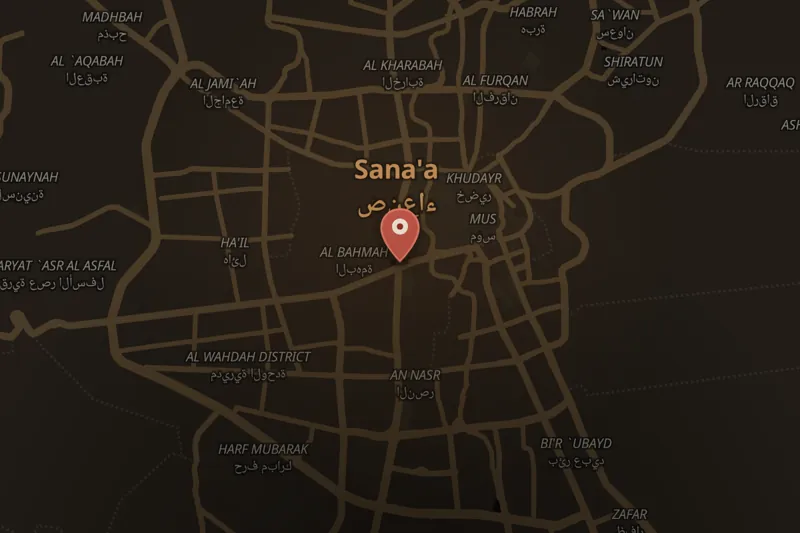
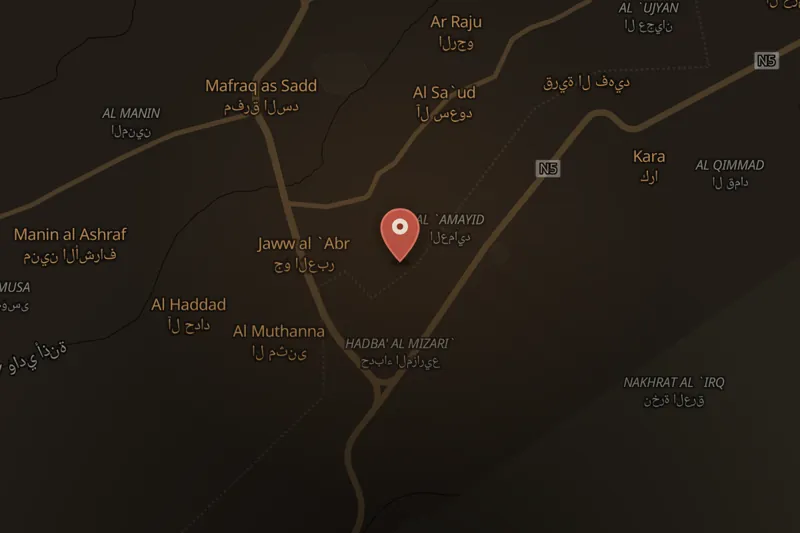
On 2 July 2007, a suicide car bombing struck a convoy of tourists exiting the Temple of Awwam, an ancient archaeological site in Marib Governorate, Yemen. The attack was carried out by al-Qaeda in Yemen as part of a broader resurgence following a 2006 prison break that freed several militants. A Marib-based cell led by Ali bin Ali Douha recruited 21-year-old Abdu Muhammad Sa'ad Ahmed Ruhayqah, who did not initially know how to drive, and trained him over several weeks before he rammed an explosive-laden 1982 Toyota Land Cruiser—loaded with medical oxygen tanks, TNT, and artillery shells—into the two middle vehicles of a four-car convoy carrying Spanish tourists organized by the Basque agency Banao.
The bombing killed eight Spanish tourists and two Yemeni drivers, and left five tourists, two drivers, and four security personnel injured. One additional tourist, María Asunción Vitorica, died on 14 July after being airlifted for treatment. Survivors described chaotic scenes at the site, located about 50 meters from the temple.
Spain's Audiencia Nacional, under judge Fernando Andreu, opened an investigation the day after the attack, and Yemeni authorities pledged cooperation. Spanish forensic and police teams, along with an FBI unit, were dispatched to Yemen. Yemeni President Ali Abdullah Saleh publicly discussed the bombing, initially describing the bomber as a non-Yemeni Arab, and offered a reward for information on the perpetrators. By August 2007, Yemeni authorities had identified an 11-member cell, including Ruhayqah, but none of the alleged perpetrators were in custody. DNA testing was later used to confirm Ruhayqah's identity as the bomber.
Yemeni security raids in the following weeks killed several men connected to the attack, including Egyptian militant Ahmed Bassiouni Dewidar, whose death after a gunfight and grenade explosion during a raid drew scrutiny, and Ali bin Ali Douha, the cell's local leader, who was killed along with others in an August 2007 raid on a Marib safe house. Cooperation between Spanish and Yemeni investigators diminished over time, and the Audiencia Nacional provisionally shelved the case in 2011 without any suspects facing trial.
In 2015, a joint investigation by Al Jazeera and El País featured claims from a man identifying himself as a former al-Qaeda member and government informant, who said he had warned Yemeni security agencies of the impending attack a week in advance but that no action was taken to stop it. He also alleged that several individuals killed by Yemeni authorities in connection with the bombing had been wrongly linked to it. A Spanish prosecutor requested further investigation into these claims, though an Interpol official noted that responsibility for acting on them rested with Yemeni authorities.
The bombing was the first fatal terrorist attack in Yemen to directly target tourists, prompting international condemnation and negatively affecting Yemen's tourism sector, while analysts cited it as evidence of al-Qaeda's reorganization and renewed operational capability in the country.


 Credit: Voice of AmericaPublic domainSourceSOLVEDListen