Casepin
Back to cases

Case file

Wereth 11 Massacre and the 333rd Field Artillery Battalion (United States)

SOLVED1944Wereth, Belgium3 SOURCESUPDATED JUL 2026
Illustrative

The 333rd Field Artillery Battalion was a racially segregated African-American U.S. Army unit that fought in Europe during World War II. Its lineage traced back to the 333rd Field Artillery Regiment, formed in 1917, deactivated after World War I, and later reconstituted before being activated as a segregated unit at Camp Gruber, Oklahoma, in August 1942, with white officers commanding Black enlisted men.

The battalion landed at Normandy in early July 1944 and fought continuously as corps artillery through the summer, including at the siege of Brest, before moving into the Ardennes sector as part of the U.S. VIII Corps. In October 1944 it took up positions near Schönberg, Belgium, supporting the 106th Infantry Division. When the Battle of the Bulge began on 16–17 December 1944, German forces rapidly overran the area. While most of the battalion withdrew west toward Bastogne, Service and C Batteries were ordered to remain behind to cover the retreat of the 106th Infantry Division. These units suffered heavy losses; many soldiers were killed or captured, and the battalion lost most of its howitzers and vehicles in the retreat.

During the chaos, eleven soldiers escaped into the woods and made their way to the hamlet of Wereth, Belgium, where a local farmer, Mathias Langer, offered them shelter. A local resident alerted nearby SS troops of the 1st SS Panzer Division that Black American soldiers were hiding in the village. The soldiers surrendered without resistance but were marched to a nearby field, beaten, tortured, and shot. Their bodies were found six weeks later when Allied forces recaptured the area, showing signs of severe torture, including broken bones and stab wounds. As prisoners of war, the men should have been protected under the Geneva Conventions; their killing has been characterized as a war crime.

Research attributes the massacre to a scouting element of Schnelle Gruppe Knittel, commanded by Sturmbannführer Gustav Knittel. Knittel was convicted in 1946 at the Malmedy massacre trial and sentenced to life imprisonment for ordering illegal executions of American prisoners of war during the Battle of the Bulge; his sentence was later reduced, and he was released in December 1953, dying in 1976.

The 333rd Field Artillery Battalion suffered more casualties during the Battle of the Bulge than any other artillery unit in VIII Corps, with six officers and 222 enlisted men killed or captured. Survivors were folded into the 969th Field Artillery Battalion, which helped defend Bastogne alongside the 101st Airborne Division and received the Presidential Unit Citation. The battalion was later reconstituted, and its lineage continued through subsequent Army reorganizations. Memorials to the Wereth 11 have since been erected in Belgium and the United States, commemorating the men killed and African-American soldiers who served in the European theater of World War II.

Key facts

Victims
On file
Date
1944
Location
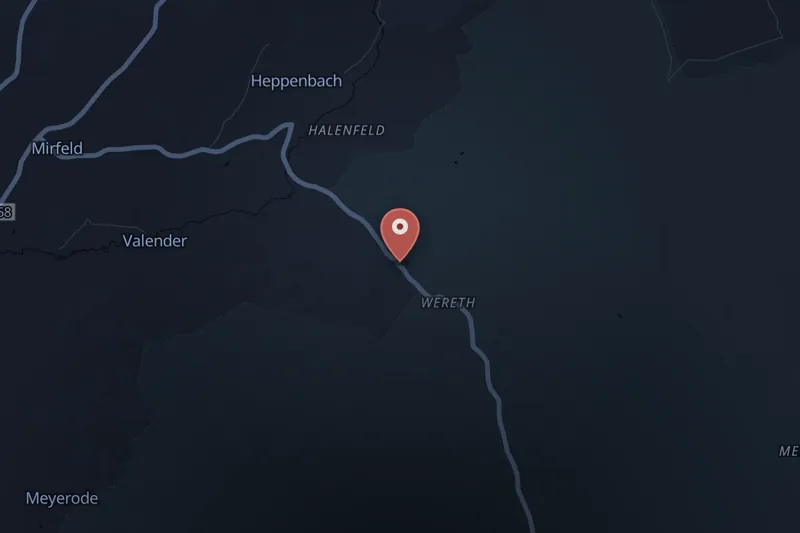
Wereth, Belgium
Case status
solved

Case timeline

  1. 1917-08-05

    333rd Field Artillery Regiment formed and assigned to the 161st Field Artillery Brigade, 86th Division.

  2. 1919-01

    Regiment returned to the United States from France without having seen action.

  3. 1929-09-13

    Regiment reconstituted in the Organized Reserve.

  4. 1937-10-02

    Regiment inactivated by relief of Reserve personnel.

  5. 1942-08-05

    333rd Field Artillery Regiment activated as a segregated unit at Camp Gruber, Oklahoma.

  6. 1943-03-10

    Army reorganization redesignates 1st Battalion as the 333rd Field Artillery Battalion.

  7. 1944-07

    333rd Field Artillery Battalion lands at Normandy and begins continuous combat operations.

  8. 1944-10

    Battalion moves to Schönberg, Belgium, as part of VIII Corps artillery supporting the 106th Infantry Division.

  9. 1944-12-16

    German artillery begins shelling the Schönberg area at the onset of the Battle of the Bulge.

  10. 1944-12-17

    German forces capture Schönberg; Service Battery is attacked while attempting to withdraw, and eleven soldiers escape into the woods toward Wereth.

  11. 1944-12-17

    Eleven soldiers are captured by SS troops near Wereth, Belgium, tortured, and executed in a nearby field.

  12. 1945-04

    Sufficient replacements arrive to reconstitute the 333rd Field Artillery Battalion.

  13. 1945-06-10

    333rd Field Artillery Battalion inactivated in Germany.

  14. 1945-12-30

    333rd Field Artillery Group inactivated at Camp Patrick Henry, Virginia.

  15. 1946

    Gustav Knittel sentenced to life imprisonment at the Malmedy massacre trial for ordering illegal executions of American prisoners of war.

  16. 1953-12

    Knittel released from prison after sentence reductions.

  17. 1976

    Gustav Knittel dies of health problems.

  18. 1994-09-11

    Hermann Langer erects a small stone cross at Wereth to remember the eleven murdered men.

  19. 2004-05-23

    New memorial dedicated at the execution site to the Wereth 11 and African-American soldiers of the European theater.

  20. 2006-08-20

    First U.S. memorial to the Wereth 11 dedicated at Winchendon Veterans' Memorial Cemetery, Massachusetts.

  21. 2016

    Memorial erected in Miller Park, Bloomington, Illinois, naming each of the eleven soldiers.

Best coverage

No approved coverage links are attached yet.

People

  • Gustav Knittel

    CONVICTED

    Sturmbannführer commanding Schnelle Gruppe Knittel; convicted in 1946 at the Malmedy massacre trial and sentenced to life imprisonment (later reduced) for ordering illegal executions of American prisoners of war during the Battle of the Bulge.

Roles reflect public records and court outcomes at the time of writing — supporting citations are on file under Sources.

Places

Common questions

What happened to the victim?
In December 1944, during the Battle of the Bulge, eleven African-American soldiers of the 333rd Field Artillery Battalion were captured, tortured, and executed by German SS troops near the Belgian hamlet of Wereth, a war crime now known as the Wereth 11 massacre.
Where did the massacre happen?
Wereth, Belgium.
Who was convicted?
Gustav Knittel (Sturmbannführer commanding Schnelle Gruppe Knittel; convicted in 1946 at the Malmedy massacre trial and sentenced to life imprisonment (later reduced) for ordering illegal executions of American prisoners of war during the Battle of the Bulge.).
What is the current status of the case?
Status: solved.

Sources

  1. ENCYCLOPEDIC333rd Field Artillery Battalion (United States)Wikipedia · 2026-07-10
  2. PRESSWWII Unit Detail — American Battle Monuments Commissionabmc.gov · 2026-07-10
  3. OFFICIAL / AGENCYDefense.gov News Article on the 333rd Field Artillery Battaliondefense.gov · 2026-07-10

Record history

First published
JUL 11, 2026