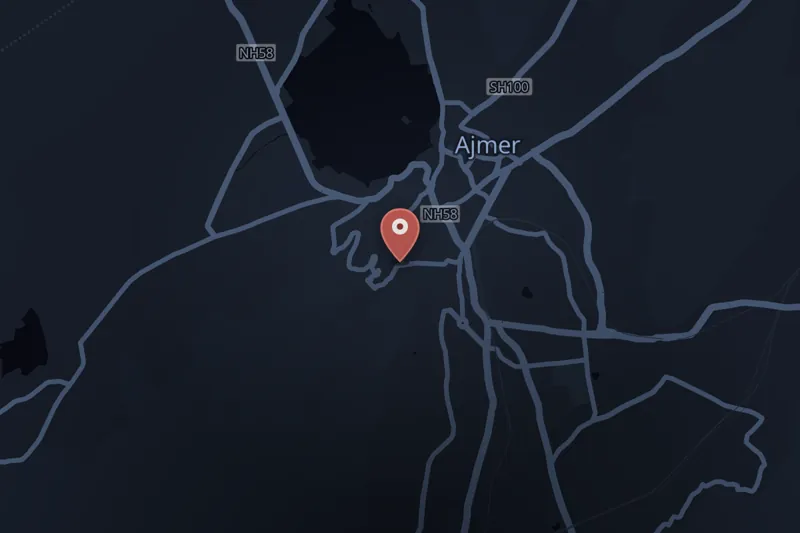
On the evening of 11 October 2007, at approximately 6:12 pm, an explosion occurred in the courtyard outside the Dargah of Sufi saint Khawaja Moinuddin Chishti in Ajmer, Rajasthan, India. The blast happened shortly after evening prayers, as a crowd had gathered to break their fast during the Islamic holy month of Ramadan. The explosive device was concealed inside a tiffin carrier, an object commonly used by workers to carry lunch, allowing it to blend into the surroundings undetected. The attack killed three people and injured seventeen others. Investigators recovered remnants of a mobile phone from the blast site; Ajmer police official Lalit Maheswari stated that the presence of mobile device components suggested a "sophisticated device" had been used.
In the immediate aftermath, the Ministry of Home Affairs of India suggested the Pakistan-based group Lashkar-e-Taiba could be responsible, and early media coverage framed the attack as part of a broader conflict between conservative Islamist extremists and Sufi-derived Islamic traditions practiced in India. This initial narrative shifted substantially as the investigation progressed.
On 22 October 2010, the Anti-Terrorism Squad of India arrested five suspects and charged them with conspiracy in the bombing. Notably, four of the five suspects were found to have connections to the Hindu nationalist organization Rashtriya Swayamsevak Sangh (RSS). The National Investigation Agency (NIA) subsequently filed a further charge sheet naming Swami Aseemanand and several others, including Sandeep Dange, Bhawesh Patel, Sunil Joshi, and Bharat Bhai, alleging the plot was conceived to avenge attacks on Hindu temples. Aseemanand's confession, which also contributed to investigations of the Mecca Masjid and Malegaon 2006 blast cases, implicated additional figures including Abhinav Bharat co-founder Prasad Shrikant Purohit and senior RSS leader Indresh Kumar as alleged co-conspirators, though the charge sheet's specific allegations regarding named individuals varied in how the case ultimately proceeded through the courts.
On 8 March 2017, a Special NIA Court in Jaipur delivered its verdict, convicting three former RSS pracharaks: Devendra Gupta, Bhavesh Bhai Patel, and Sunil Joshi. Joshi, who had been found shot dead under unexplained circumstances in Dewas, Madhya Pradesh not long after the 2007 blast, was convicted posthumously. Gupta and Joshi were found guilty of conspiracy, while Patel was found guilty of planting the explosive device at the blast site. Gupta and Patel each received life imprisonment sentences, along with fines of Rs 10,000 and Rs 5,000 respectively. Swami Aseemanand and six other accused individuals were acquitted, with the court citing "benefit of doubt." The court separately questioned the NIA's decision to grant a clean chit to two other accused individuals and raised concerns about the investigation's treatment of other "suspicious persons" named in proceedings, without invoking relevant procedural code sections against them.

 Credit: nrkbetaCC BY-SA 2.0SourceSOLVEDListen


