
Start here
L'assassinat du président Mohamed Boudiaf 29-06-1992
The creator's telling of the case, the strongest entry point on file.
Watch on YouTubeSolved case · 1992
Also known as assassination of President Mohamed Boudiaf · Mohamed Boudiaf assassination
 Mohamed BoudiafCredit: Public domain, via Wikimedia CommonsPublic domainSource
The short answer
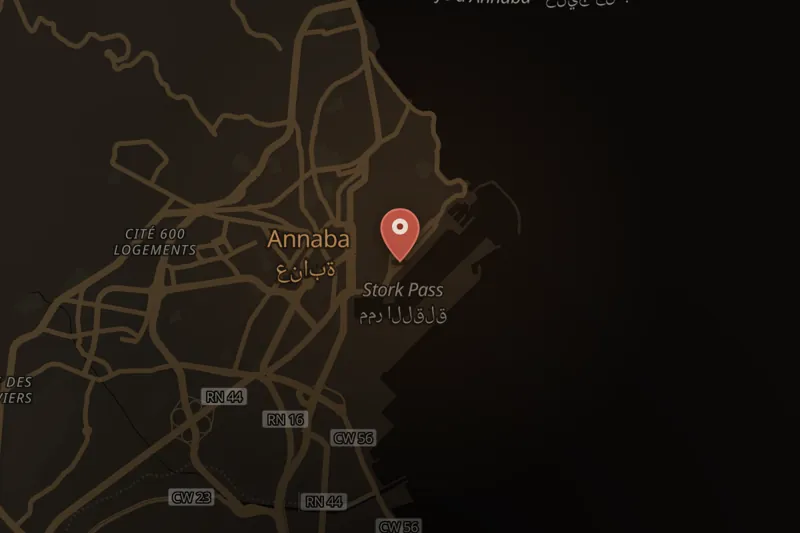
Mohamed Boudiaf, Chairman of Algeria's High Council of State, was shot dead on 29 June 1992 in Annaba by one of his own bodyguards while addressing a public meeting broadcast on national television.
L'assassinat du président Mohamed Boudiaf 29-06-19926 pieces from 6 creators: ranked, with duplicates removed and short clips set aside.
Start here
The creator's telling of the case, the strongest entry point on file.
Watch on YouTubeTitles and descriptions are the creators’ own and may not reflect current legal status. The sourced facts are in the file below. Players load only when you press play. Suggest coverage we’re missing.
Mohamed Boudiaf was serving as Chairman of the High Council of State (HCE) of Algeria when he was assassinated on 29 June 1992 in the city of Annaba. He had returned from exile in Morocco five months earlier to head the HCE, a body established as a constitutional alternative to the Islamic state that the Islamic Salvation Front (FIS) had sought to declare after winning Algeria's first democratic parliamentary elections since independence in 1962. His stated mission was to suppress the FIS, end the emerging civil conflict, and restore order.
The attack occurred while Boudiaf was delivering a speech at a public meeting that was being broadcast on national television. The assault began with a grenade explosion to one side of the podium, drawing the attention of Boudiaf and his security detail, followed by a second grenade thrown beneath his chair. During the confusion, a gunman dressed in the uniform of an elite police intervention unit emerged from behind Boudiaf and fired a sub-machine gun into his back. Boudiaf was struck three times — twice in the head and once in the back. The gunman and at least 40 other people were killed or injured in the attack, including the Minister of Industry and a senior provincial official, who were among the wounded.
The shooter was identified as Lambarek Boumaarafi, one of Boudiaf's own bodyguards. He was officially presented as an Islamic fundamentalist and sympathizer of the FIS who had acted alone. Boudiaf was among the last surviving veterans of the Algerian War at the time of his death; other veterans of that era, including Krim Belkacem and Mohamed Khider, as well as former foreign minister Mohammed Seddik Benyahia, had also been assassinated in earlier years.
The killing carried international ramifications. It coincided with a launch by Algeria's state oil company, Sonatrach, of an onshore leasing round in London aimed at attracting foreign oil company participation, and oil prices briefly rose amid fears that unrest following Boudiaf's death could disrupt production, before falling back later the same day. The United States, the Organization of African Unity, and other Western nations condemned the assassination. In contrast, Iranian politician and ayatollah Ahmad Jannati reportedly expressed satisfaction at Boudiaf's death, drawing sharp condemnation from Algerian officials. Commentators described the attack as the Arab world's most dramatic political killing since the assassination of Egyptian President Anwar Sadat in 1981.
Algeria gains independence.
Algerian War veteran Mohamed Khider is assassinated in Madrid.
Algerian War veteran Krim Belkacem is assassinated in Frankfurt.
The Islamic Salvation Front (FIS) wins Algeria's first democratic parliamentary election since independence.
Mohamed Boudiaf returns from exile in Morocco to head the newly formed High Council of State (HCE).
Mohamed Boudiaf is assassinated in Annaba while addressing a public meeting broadcast on national television; he is shot three times by bodyguard Lambarek Boumaarafi after two grenade explosions near the podium.
Victims first. Every legal label is set from public records and court outcomes, not from the prose.
Chairman of Algeria's High Council of State, shot and killed on 29 June 1992 while giving a public speech in Annaba.[4]
Boudiaf's bodyguard and the gunman in the assassination; tried and sentenced to death by the Algiers Criminal Court on 3 June 1995, though the sentence was never carried out and he has remained imprisoned.[1]
From the record
Coverage is not a source: every fact in this file rests on the records below.
Are you family of someone named in this file? Corrections and removal requests from victims’ families are prioritized.
 Credit: Bart Molendijk / AnefoCC BY-SA 3.0 NLSourceSOLVEDListen
Sriperumbudur, Tamil Nadu, India · 1991
Former Indian Prime Minister Rajiv Gandhi was killed by a suicide bomber tied to the LTTE at a campaign rally in Sriperumbudur, Tamil Nadu, on 21 May 1991, along with 14 other people. Twenty-six people were convicted at trial; the Supreme Court later reduced death sentences to four, and in 2022 the Supreme Court ordered the release of the last six convicts still imprisoned.
 Credit: Yaakov Saar, Government Press Office (Israel)CC BY-SA 3.0SourceSOLVEDListen
Kings of Israel Square (now Rabin Square), Tel Aviv · 1995
Israeli Prime Minister Yitzhak Rabin was shot and killed on 4 November 1995 in Tel Aviv by Yigal Amir, a far-right law student opposed to the Oslo Accords, as Rabin left a peace rally. Amir was convicted and sentenced to life; two associates were convicted of conspiracy.
 Credit: User Mario scolas on fr.wikipediaCC BY-SA 2.0SourceSOLVEDListen
Liège, Belgium · 1991
André Cools, a leading Belgian socialist politician and mayor of Flémalle, was shot dead in Liège on 18 July 1991. A 2003 trial in Liège led to the conviction of two men, who were sentenced to twenty years' imprisonment in January 2004.
 UNSOLVEDListen
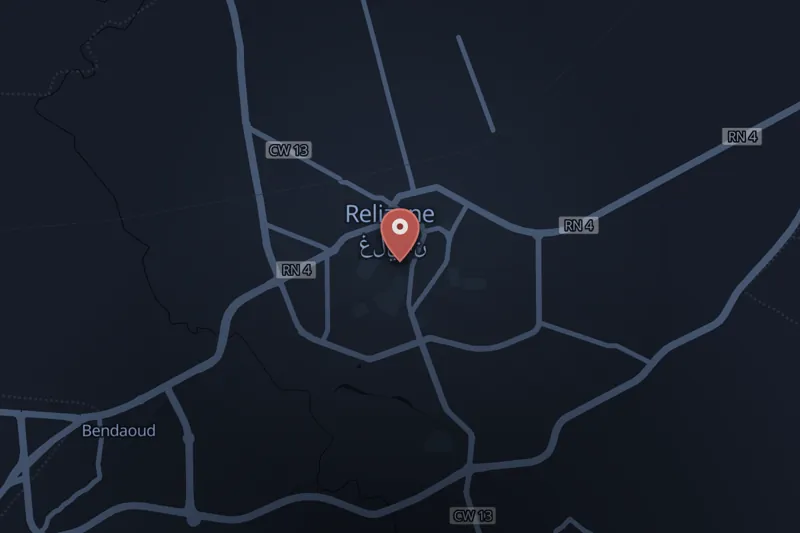
Ammi Moussa area, Wilaya of Relizane, Algeria · 1997
On 30 December 1997, during the Algerian Civil War, armed assailants attacked four farming villages in the Ammi Moussa area of Relizane Province, killing large numbers of residents including women and children. Casualty figures vary widely across sources, from an initial official count of 78 to as many as 412.
 SOLVEDListen
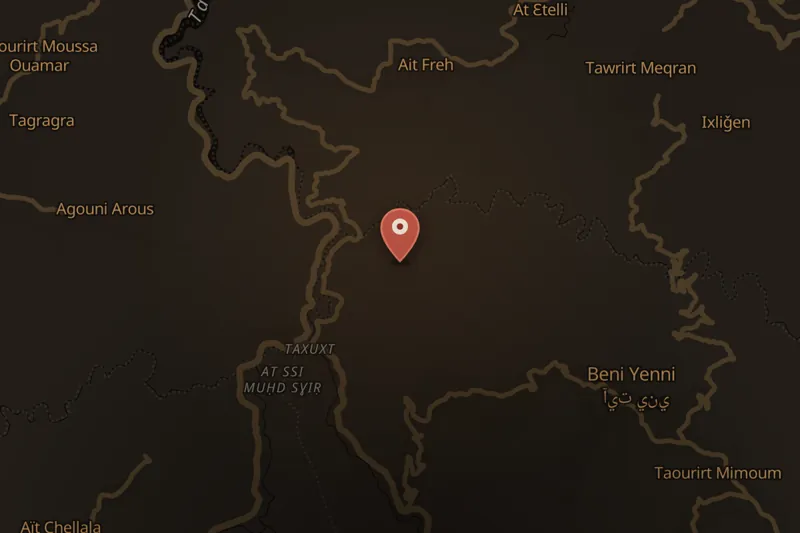
Larbaâ Nath Irathen, Kabylia, Algeria · 2021
On 11 August 2021, Djamel Ben Ismail, a 38-year-old Algerian artist and musician, was lynched and burned alive by a mob in Larbaâ Nath Irathen, Kabylia, after being falsely accused of setting wildfires. Over 100 suspects were later tried, with 49 initially sentenced to death.
 UNSOLVEDListen
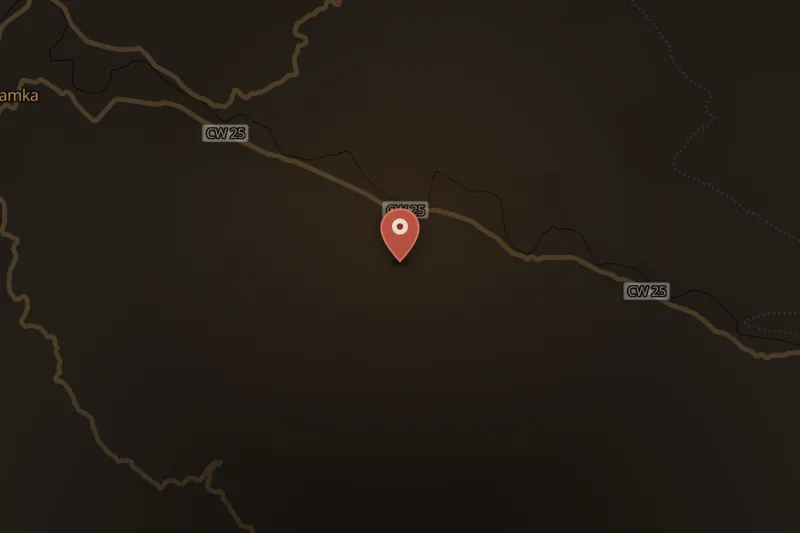
Oued Rhiou area, Relizane Province, Algeria · 1998
On 4 January 1998, mass killings occurred in three villages near Oued Rhiou in Relizane Province, Algeria, during the Algerian civil conflict, with hundreds killed and attributed to the armed Islamist group GIA.


