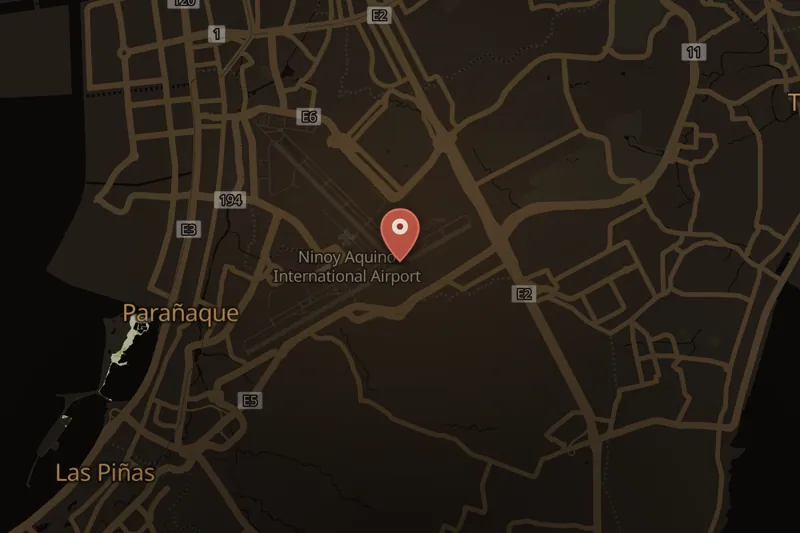
Benigno "Ninoy" Aquino Jr., a former Philippine senator and prominent critic of President Ferdinand Marcos, was shot in the head and killed on the apron of Manila International Airport on August 21, 1983. He had just landed on China Airlines Flight 811 following three years of self-imposed exile in the United States and was being escorted toward a van intended to return him to military custody. Rolando Galman, whom the government accused of being the gunman, was also shot dead at the scene by security personnel.
Aquino had been a vocal opponent of Marcos since his election to the Senate in 1967 and was imprisoned on charges of murder and subversion shortly after Marcos declared martial law in 1972. He was convicted in a military trial in 1977 and sentenced to death, but was released in 1980 on humanitarian grounds after suffering a heart attack, traveling to the United States for medical treatment and subsequent exile. He returned to the Philippines in August 1983 despite warnings of threats to his life.
Following the shooting, government officials initially claimed Galman acted alone as a communist hitman, a version later challenged during investigations. President Marcos established a fact-finding board — the Agrava Board — which conducted extensive hearings and took testimony from 193 witnesses, including a passenger, Rebecca Quijano, who testified she saw a uniformed man shoot Aquino in the back of the head. The board's majority report implicated several military officials, including Chief of Staff Gen. Fabian Ver, AVSECOM commander Gen. Luther Custodio, and METROCOM chief Gen. Prospero Olivas, and unanimously rejected the theory that Galman was the shooter. A separate minority report by the board's chair cleared Ver.
In 1985, 25 military personnel and one civilian were charged with the murders of Aquino and Galman before the Sandiganbayan special court, which acquitted all defendants in December 1985. After Marcos was ousted in 1986, the Supreme Court found the earlier trial had been a "sham" orchestrated by the former president and ordered a retrial. In 1990, sixteen military defendants were convicted and sentenced to life imprisonment; the Supreme Court affirmed the convictions in 1991. Over subsequent years, some convicts were pardoned, others died in custody, and sentences were commuted; the last remaining convicts were released from prison in March 2009.
Aquino's assassination galvanized widespread opposition to the Marcos government and elevated his widow, Corazon Aquino, to national political prominence. She ran against Marcos in the 1986 snap election, and following the People Power Revolution, Marcos resigned and fled the country while Corazon Aquino became president. Although many, including Aquino's family, have long believed the assassination was ordered by Marcos, this has never been conclusively proven in court.


 OVERTURNEDListen


