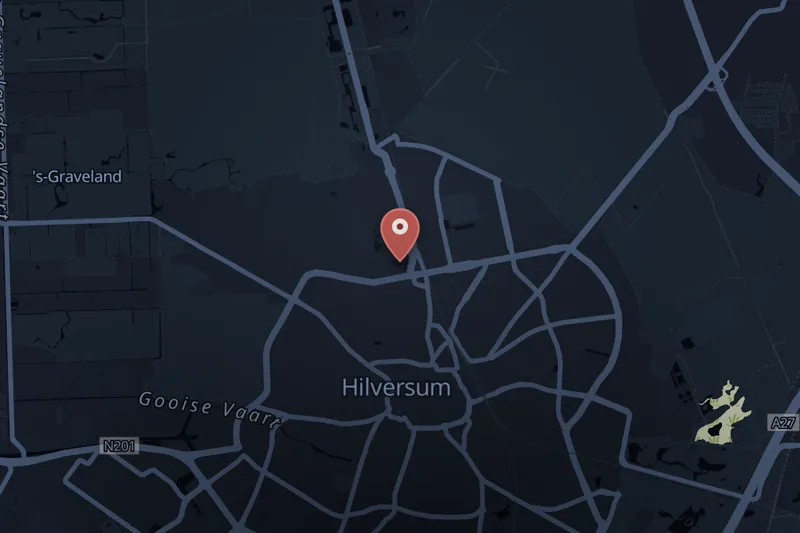
Pim Fortuyn, a Dutch politician who led the Pim Fortuyn List (LPF), was shot and killed in a car park in the Media Park area of Hilversum, North Holland, on 6 May 2002, nine days before the Dutch general election in which he was a leading candidate. He had just given an interview to Ruud de Wild on the radio station 3FM. Fortuyn had previously expressed fear of being murdered, including after being pied at a book launch and during a television appearance in March 2002.
Volkert van der Graaf, a 32-year-old environmental and animal rights activist from Harderwijk, was arrested near the scene after being pursued by Fortuyn's driver, Hans Smolders, and two bystanders from a nearby building. He was still carrying the handgun used in the shooting when police stopped him at a petrol station. Investigators found that Van der Graaf had planned the attack using information gathered from the internet, including a printed map of the crime scene and Fortuyn's public schedule, and had bought a semi-automatic pistol and ammunition illegally in the days beforehand. On the day of the shooting he waited near Fortuyn's car for about two hours before approaching him, then turned and fired six shots at close range; five struck Fortuyn in the back and head.
At his trial, Van der Graaf pleaded guilty and told the court he had acted to stop Fortuyn from using "the weak parts of society" — including Muslims, whom he said Fortuyn treated as scapegoats — to gain political power. He also said he was "not proud" of what he had done. On 15 April 2003 he was convicted of assassinating Fortuyn and sentenced to eighteen years in prison; the sentence was upheld on appeal. He was released on parole in May 2014 after serving two-thirds of his term, in line with standard Dutch penal procedure, and has since lived in Apeldoorn, Gelderland.
The assassination shocked the Netherlands and was followed by rioting on the Binnenhof that evening. Campaigning was suspended, but the election went ahead as scheduled; because Dutch law did not allow ballots to be altered, Fortuyn remained on the ballot posthumously. The Pim Fortuyn List won 26 of 150 seats in an unprecedented debut, then fell to eight seats the following year and held none after the 2006 election. The coalition government that briefly included the LPF collapsed after three months amid internal conflict. Fortuyn is widely credited with reshaping Dutch political debate on immigration and integration, and prominent right-wing politicians rose in profile in the aftermath of his death. In a 2004 televised and online poll, Fortuyn was initially named the greatest person in Dutch history, though the result was later disputed after it emerged that the historical figure William the Silent had received more votes that were not fully counted before Fortuyn was declared the winner.


 SOLVEDListen


