
Solved case
Assassination of Rafic Hariri
Former Lebanese Prime Minister Rafic Hariri was killed along with 21 others when a massive truck bomb detonated near his motorcade in Beirut on 14 February 2005. After a lengthy UN-backed investigation, the Special Tribunal for Lebanon convicted Hezbollah operative Salim Ayyash in absentia in 2020, and two co-defendants were convicted in 2022; Hezbollah's leadership was not found to have been implicated.
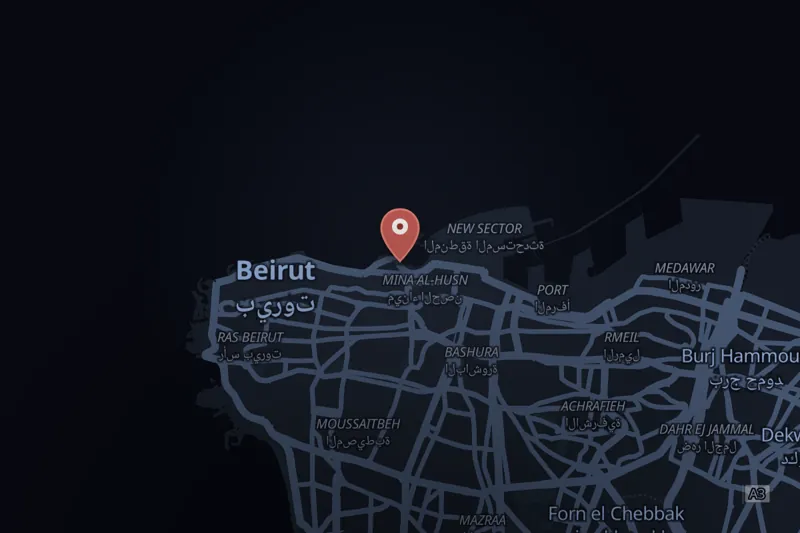
On the morning of 14 February 2005, former Lebanese Prime Minister Rafic Hariri visited the Lebanese parliament and stopped at the Café de l'Etoile in Beirut before leaving in a six-car convoy. Roughly six and a half minutes later, as the convoy passed near the St. George Hotel on the Beirut Corniche, explosives equivalent to approximately 1,000 kilograms of TNT detonated, destroying the convoy. Hariri and 21 others, including several of his bodyguards and former Minister of Economy and Trade Bassel Fleihan, were killed. The blast left a 30-foot-wide crater, injured about 220 people, set numerous vehicles on fire, and damaged surrounding buildings. Hariri was buried near the Mohammad Al-Amin Mosque along with the bodyguards who died with him.
A videotape claiming responsibility on behalf of a previously unknown "Nusra and Jihad Group in Greater Syria" was found shortly after the attack, and a separate tape aired by Al Jazeera showed a man believed to be Ahmad Abu Adas claiming the attack. Adas disappeared after his home was raided; later UN and press reporting, including a 2015 New York Times account, indicated DNA evidence showed he was not the bomber and that he had likely been lured into recording the video before being killed. UN investigators determined the bomb had been placed in a stolen white Mitsubishi Canter truck, based on CCTV footage, and was likely detonated by a suicide bomber able to evade electronic jamming used to protect Hariri's convoy.
Hariri's assassination helped trigger the Cedar Revolution, a mass protest movement that contributed to Syria's withdrawal of troops from Lebanon by April 2005. The UN Security Council authorized an international investigation, producing the Mehlis report and subsequent findings that implicated a network of individuals with links to Syrian and Lebanese security officials, though the reports stopped short of directly accusing any government. Four pro-Syrian Lebanese generals were detained for roughly four years without charge before being released for lack of evidence when the newly created Special Tribunal for Lebanon (STL) took over the investigation in 2009.
The STL, seated in Leidschendam near The Hague, tried four Hezbollah-linked defendants in absentia beginning in 2014. On 18 August 2020, the tribunal found Salim Ayyash guilty in absentia of five charges, including the premeditated murder of Hariri using explosives; three other defendants were acquitted. Judges concluded there was no evidence Hezbollah's leadership had been involved and no direct evidence of Syrian involvement. Hezbollah denied any role, and its leader, Hassan Nasrallah, refused to permit Ayyash's arrest. In 2022, two additional Hezbollah members, Hassan Habib Merhi and Hussein Oneissi, were convicted for their roles in the attack; all three convicted men were sentenced to life in prison. Lebanese investigator Wissam Eid, whose cellphone-network analysis contributed to identifying suspects, was assassinated in 2008, and STL-linked investigator Wissam al-Hassan was assassinated in 2012. The United States later offered a $10 million reward for information on Ayyash, who remained a fugitive and was reportedly killed in an Israeli airstrike in Syria in November 2024.
Key facts
- Victims
- Wissam Eid, Wissam al-Hassan, Bassel Fleihan, Rafic Hariri
- Date
- 2005
- Location
- Near St. George Hotel, Beirut Corniche
- Case status
- solved
Case timeline
2004-08
Syrian President Bashar al-Assad reportedly met Hariri and threatened him over opposition to extending Lebanese President Émile Lahoud's term, according to testimonies later cited in UN reports.
2004-09-02
UN Security Council adopts Resolution 1559 calling for Syria to end its occupation of Lebanon.
2004-10-12
The Mitsubishi Canter truck later used in the bombing is stolen in Sagamihara, Japan, according to investigators.
2005-02-14
A truck bomb explodes near the St. George Hotel on Beirut's Corniche as Hariri's convoy passes, killing Hariri and 21 others and injuring about 220 people.
2005-04
Syria completes withdrawal of its troops from Lebanon amid the Cedar Revolution.
2005-04-07
UN Security Council adopts Resolution 1595 establishing an investigative team led by Detlev Mehlis.
2005-08-30
Four pro-Syrian Lebanese generals are arrested on suspicion of conspiracy to commit murder.
2005-10-12
Syrian Interior Minister Ghazi Kanaan, interviewed as a witness by Mehlis' team, is found dead in Damascus of a gunshot wound; Syria says it was suicide.
2005-10-20
The Mehlis report is presented to the UN Security Council, implicating Syrian and Lebanese officials.
2005-12-10
A second Mehlis report is submitted, upholding the first report's conclusions.
2005-12-30
Former Syrian Vice President Abdul Halim Khaddam publicly implicates Assad in the assassination.
2006-01-11
Detlev Mehlis is replaced by Belgian jurist Serge Brammertz as head of the UN investigation.
2006-12-18
A Brammertz progress report indicates DNA evidence suggests the attack may have involved a young male suicide bomber.
2007-01-23
Lebanon and the UN sign an agreement to establish the Special Tribunal for Lebanon.
2008-03-28
A UN investigative commission report identifies a 'Hariri Network' behind the assassination and linked cases.
2008
Investigator Wissam Eid, whose cellphone analysis contributed to identifying suspects, is assassinated.
2009-03-01
The Special Tribunal for Lebanon formally opens at Leidschendam, near The Hague.
2009-04-29
The STL pre-trial judge orders the unconditional release of the four detained Lebanese generals, finding them not suspects or accused persons before the Tribunal.
2011-06-30
The STL submits indictments of four Hezbollah members and one other individual to Lebanon's Prosecutor General, per Haaretz reporting.
2012-10-19
Brigadier General Wissam al-Hassan, a leading figure in the investigation, is assassinated in a car bombing in Beirut.
2014-01-16
The trial Prosecutor v. Ayyash et al. begins at the Special Tribunal for Lebanon.
2020-08-18
The Special Tribunal for Lebanon finds Salim Ayyash guilty in absentia of five charges, including Hariri's premeditated murder; three other defendants are acquitted.
2021-03
The United States offers a $10 million reward for information on fugitive Salim Ayyash.
2022
Hezbollah members Hassan Habib Merhi and Hussein Oneissi are convicted by the STL for their roles in the assassination and sentenced to life in prison.
2024-11
Salim Ayyash is reportedly killed in an Israeli airstrike in Syria.
Best coverage
No coverage has been attached to this file yet.
People
Wissam Eid
VICTIMLebanese police investigator whose cellphone-network analysis aided the case; assassinated in 2008.
Jamil Al Sayyed
LAW ENFORCEMENTFormer head of Lebanon's General Security Department; detained for nearly four years as a suspect but released without charge by the Special Tribunal for lack of evidence.
Hassan Habib Merhi
CONVICTEDHezbollah member convicted by the Special Tribunal for Lebanon in 2022 for a role in the assassination; sentenced to life in prison.
Hussein Hassan Oneissi
CONVICTEDHezbollah member convicted by the Special Tribunal for Lebanon in 2022 for a role in the assassination; sentenced to life in prison.
Wissam al-Hassan
VICTIMLebanese Brigadier General and leading figure in the Special Tribunal's investigation; assassinated in a car bombing in 2012.
Mustafa Hamdan
LAW ENFORCEMENTFormer head of the Lebanese Presidential Guard brigade; detained for nearly four years as a suspect but released without charge by the Special Tribunal for lack of evidence.
Bassel Fleihan
VICTIMFormer Lebanese Minister of Economy and Trade, killed in the same bombing.
Ali Al Hajj
LAW ENFORCEMENTFormer director general of Lebanon's Internal Security Forces; detained for nearly four years as a suspect but released without charge by the Special Tribunal for lack of evidence.
Salim Jamil Ayyash
CONVICTEDFound guilty in absentia in August 2020 by the Special Tribunal for Lebanon of five charges including the premeditated murder of Hariri; sentenced to life in prison.
Assad Hassan Sabra
ACQUITTEDTried in absentia at the Special Tribunal for Lebanon and acquitted in the August 2020 verdict.
Rafic Hariri
VICTIMFormer Prime Minister of Lebanon, killed in the 14 February 2005 bombing.
Raymond Azar
LAW ENFORCEMENTFormer director of Lebanese Military Intelligence; detained for nearly four years as a suspect but released without charge by the Special Tribunal for lack of evidence.
Roles reflect public records and court outcomes at the time of writing — supporting citations are on file under Sources.
Places
Common questions
- What happened to the victim?
- Former Lebanese Prime Minister Rafic Hariri was killed along with 21 others when a massive truck bomb detonated near his motorcade in Beirut on 14 February 2005. After a lengthy UN-backed investigation, the Special Tribunal for Lebanon convicted Hezbollah operative Salim Ayyash in absentia in 2020, and two co-defendants were convicted in 2022; Hezbollah's leadership was not found to have been implicated.
- Where did the crime happen?
- Near St. George Hotel, Beirut Corniche.
- Who was convicted?
- Hassan Habib Merhi (Hezbollah member convicted by the Special Tribunal for Lebanon in 2022 for a role in the assassination; sentenced to life in prison.), Hussein Hassan Oneissi (Hezbollah member convicted by the Special Tribunal for Lebanon in 2022 for a role in the assassination; sentenced to life in prison.), and Salim Jamil Ayyash (Found guilty in absentia in August 2020 by the Special Tribunal for Lebanon of five charges including the premeditated murder of Hariri; sentenced to life in prison.).
- What is the current status of the case?
- Status: solved.
Related cases
View all cases
1983 US Embassy Bombing in Beirut
U.S. Embassy, Beirut, Lebanon

Lebanon Hostage Crisis
Beirut, Lebanon
Bombing of the Palestine Research Center
Hamra district, West Beirut, Lebanon

Assassination of Benazir Bhutto
Liaquat National Bagh, Rawalpindi, Pakistan

Assassination of Anna Politkovskaya
Apartment block, central Moscow, Russia
Assassination of Hrant Dink
Şişli, Istanbul, Turkey
Sources
- ENCYCLOPEDICAssassination of Rafic HaririWikipedia · 2026-07-07
- PRESSContemporaneous coverage — BBC NewsBBC News · 2026-07-07
- PRESSContemporaneous coverage — The New York TimesThe New York Times · 2026-07-07
Record history
- First published
- JUL 10, 2026
When a file you follow changes — a new development, a correction, fresh coverage — the Dispatch is how you hear about it.
The Casepin Dispatch
A calm weekly briefing from the archive — one case worth understanding, meaningful updates to files you follow, and the best new coverage. You’ll also get the one-time note when the apps land. No gore, no rumor, no drip.