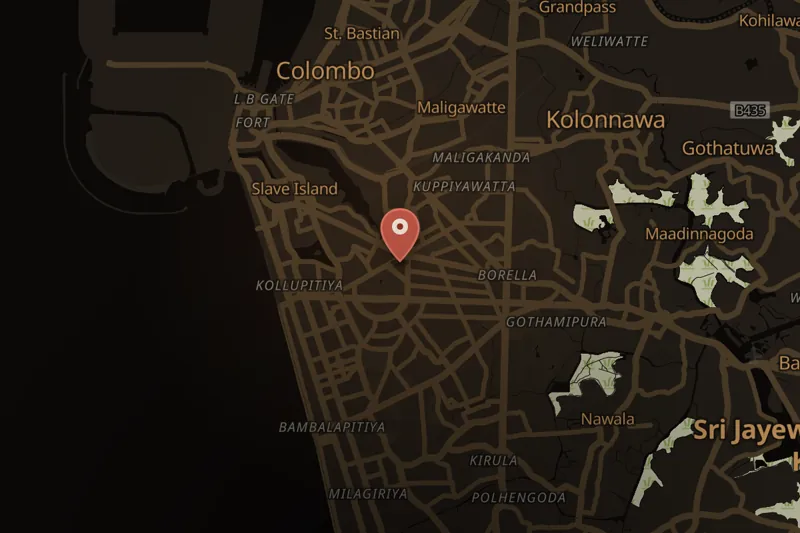
On December 18, 1999, Chandrika Bandaranaike Kumaratunga, the fifth President of Sri Lanka, was campaigning for a second term ahead of the 1999 presidential election. As she left her final election rally at Town Hall in Colombo, an unidentified female suicide bomber attempted to leap over a security barricade. Security guards restrained her before she detonated a bomb strapped to her body while Kumaratunga was walking toward her vehicle. The explosion killed 34 people, including the bomber, several of the president's security guards, senior police officer T. N. De Silva, three government ministers, and Kumaratunga's chauffeur. More than 105 others were injured, including foreign journalists.
Kumaratunga survived the blast but sustained serious injuries. Shrapnel entered the bridge of her nose and damaged her optic nerve, permanently blinding her right eye; she has worn a glass eye since. Another fragment lodged in her neck, and a third came within a quarter-inch of her brain. Witnesses reported she continued directing civilians to safety even as she bled from her injuries.
The attack was attributed to the Liberation Tigers of Tamil Eelam (LTTE), a militant separatist organization that had waged an armed conflict against the Sri Lankan government since the 1970s seeking an independent Tamil state in the island's northeast. The LTTE had previously killed Kumaratunga's presidential campaign opponent Gamini Dissanayake in 1994.
Shortly after the Town Hall blast, a second bomb exploded at a rally of the opposition United National Party in Ja-Ela, a Colombo suburb, killing 12 more people — including former Major General Lucky Algama — and wounding more than 70. The bomber in that attack was later identified as Skandaraja Ashoka, also linked to the LTTE.
In the aftermath, the Sri Lankan Defence Ministry deployed troops in Colombo and imposed an indefinite curfew across the capital and surrounding districts. Kumaratunga, from her hospital bed, urged the public to remain calm and avoid retaliating against Tamil minorities, asking that people instead pray at their places of worship; no major violent unrest followed that night. Her election opponent, Ranil Wickremesinghe, briefly appeared at a UNP rally the following day before leaving. Kumaratunga went on to win the election and was sworn in for her second term on December 22, 1999.
The suicide bomber died in the blast. Two other individuals, Velayutham Varatharajah and Chandra Ragupathy, were convicted and sentenced to 30 years in prison for aiding and abetting the attack under Sri Lanka's Prevention of Terrorism Act. In 2021, President Ranil Wickremesinghe pardoned both, as part of a broader pardon of eight Tamil prisoners, after obtaining Kumaratunga's consent.

 Credit: Masako Kawasaki at English WikipediaCC BY-SA 3.0SourceSOLVEDListen


