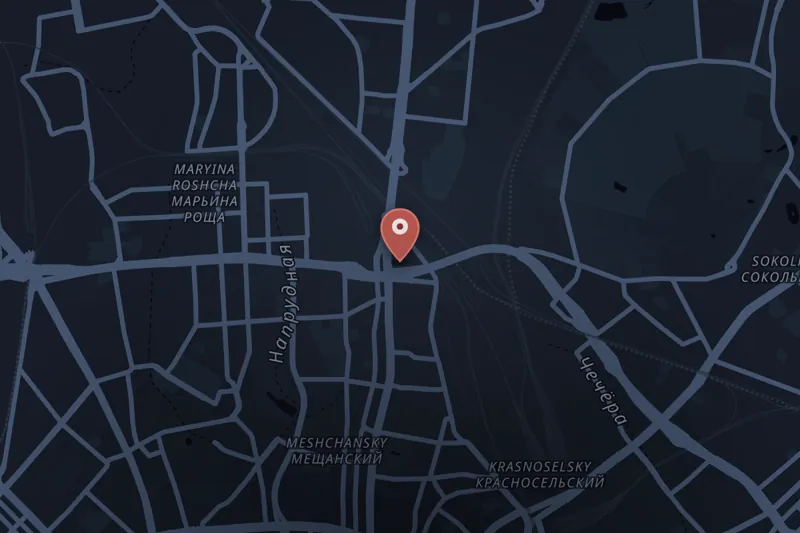
On the evening of 31 August 2004, at approximately 20:17 Moscow time, a female suicide bomber detonated an explosive device outside the entrance to Rizhskaya metro station in Moscow. The blast killed at least 10 people, including the bomber herself, and wounded 50 others. Among the dead was Nikolai Kipkeyev, who was accompanying the bomber and was later identified as a perpetrator of a series of car bombings carried out in 2001.
Investigators concluded that the attack was organized by the same network responsible for the February 2004 Moscow Metro bombing, as well as a series of bombings at bus stops in Voronezh, southern Russia, between 2004 and 2005. According to the official investigation, Kipkeyev, who led an Islamic militant group known as Karachay Jamaat (also called "Muslim Society No. 3") based in the Republic of Karachay-Cherkessia, had been escorting an unidentified female suicide bomber who was intended to detonate the device aboard a Moscow metro train. Investigators determined that the bomb exploded prematurely while the two were standing on the street near the station entrance, killing both.
In May 2005, Russian law enforcement arrested three men in connection with the Moscow, Voronezh, and Krasnodar attacks: Tambiy Khubiyev and Maksim Panaryin, both from Karachay-Cherkessia, and Murat Shavayev, from Kabardino-Balkaria. All three were identified as members of Karachay Jamaat. Khubiyev confessed to organizing the bombings near the Avtozavodskaya and Rizhskaya metro stations in Moscow, as well as a series of explosions in Krasnodar in August 2003. Panaryin was named a suspect in the Voronezh bus stop bombings and the explosion near Rizhskaya station. Shavayev, who worked as an officer in the Russian Ministry of Justice, was accused of assisting Khubiyev and Panaryin in preparing the attacks; he denied involvement. According to Khubiyev's testimony, Shavayev had helped construct the bomb used in the February 2004 metro bombing and had smuggled components for the improvised explosive device used near Rizhskaya station into Moscow. Investigators also determined that the woman who detonated the bomb near Rizhskaya was the widow of Idris Gloov, who had helped organize the February 2004 bombing and was killed in a shootout with police in Stavropol Krai shortly afterward.
The trial of Khubiyev, Panaryin, and Shavayev was held in camera at Moscow City Court in 2006 and 2007. On 2 February 2007, all three were convicted and sentenced to life imprisonment. Khubiyev and Shavayev each received two life terms, covering both the Avtozavodskaya and Rizhskaya bombings, while Panaryin received a single life term for the August 2004 Rizhskaya attack. Additional prison terms of 100, 150, and 200 years were imposed on Shavayev, Khubiyev, and Panaryin respectively on other charges, and the court ordered the defendants to pay more than 7 million rubles in damages to victims. The Supreme Court of Russia upheld the verdict on appeal.