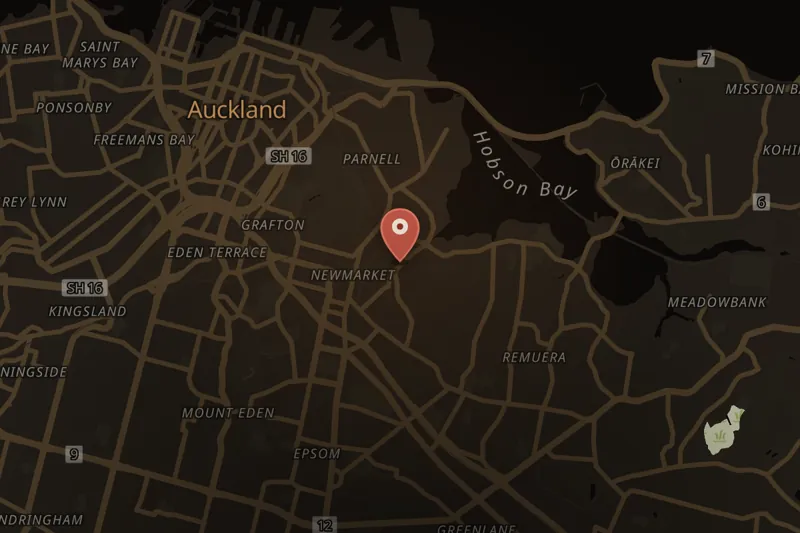
In early December 1963, Kevin James Speight, a 26-year-old seaman, and Frederick George Walker, a 38-year-old man who described himself as a commercial traveller, were shot dead inside a house at 115 Bassett Road in the Auckland suburb of Remuera, New Zealand. Both men were connected to the city's illegal after-hours drinking trade. The property operated as a "beerhouse," or sly-grog den, where liquor was sold and consumed after licensed hotels were required to close at six o'clock in the evening. The two victims were shot several times at close range with a .45 calibre Reising submachine gun, an uncommon weapon in New Zealand at the time. Although the gun could fire automatically, it was set to fire single shots.
The bodies lay undiscovered for several days. They were found on the morning of Saturday 7 December 1963, when the owner of the property arrived to collect rent. The killings drew intense public attention and dominated newspaper coverage, which the press cast as a "Chicago-style" gangland killing unlike anything previously reported in the country. The rarity of the weapon and the affluent suburban setting added to the public alarm.
A large police investigation followed, involving dozens of detectives. On 31 December 1963, police arrested two men with lengthy criminal records on both sides of the Tasman Sea: Ronald Jorgensen and John Gillies. Their trial began on 24 February 1964. Both men denied the murder charges, although Gillies acknowledged obtaining a machine gun. The jury found both guilty, and each was sentenced to life imprisonment. The weapon was never recovered and was reported to have been thrown from the Auckland Harbour Bridge.
The case had a long afterlife. While imprisoned, Jorgensen took up painting. He was later released on parole under strict conditions, including a requirement to live with his father in Kaikoura. In 1984 he disappeared after his car was found wrecked at the foot of a cliff. Investigators initially suspected the death had been staged, and later accounts placed him alive in Australia years afterward, though his fate remains formally unresolved. Gillies was first released on parole in the late 1960s, returned to prison after further offending, and was finally freed in 1987. He lived under a new identity in Wellington until his death in 2019.
The murders became a landmark in New Zealand's public memory and are frequently described as the country's first gang-style killing. They were later the subject of books, documentaries and later journalism. The licensing rules that sustained the illegal drinking houses changed within a few years, as reforms allowed licensed premises to stay open later in the evening and removed much of the demand those houses had served.

 SOLVEDListen


