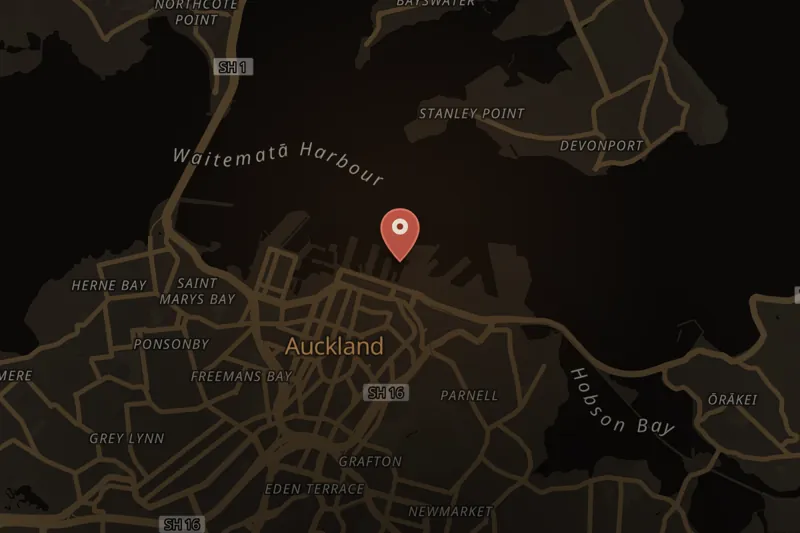
On the night of 10 July 1985, two limpet mines detonated seven minutes apart against the hull of the Greenpeace flagship Rainbow Warrior, berthed at Marsden Wharf in the Port of Auckland, New Zealand. The vessel was preparing to lead a flotilla protesting French nuclear testing at Moruroa Atoll. While the crew evacuated after the first blast, Portuguese-Dutch photographer Fernando Pereira returned below deck to retrieve camera equipment and drowned when the second explosion caused rapid flooding. The ship partially sank minutes later.
The operation, codenamed Opération Satanique, was carried out by operatives of the Directorate-General for External Security (DGSE), France's foreign intelligence agency. Preparatory work included DGSE agent Christine Cabon infiltrating the Greenpeace Auckland office under a false identity to gather intelligence. Two agents, Dominique Prieur and Alain Mafart, posed as a married couple to deliver mines brought into the country aboard the yacht Ouvéa; divers Jean Camas and Jean-Luc Kister carried out the bombing itself.
New Zealand Police launched one of the country's largest investigations, arresting Prieur and Mafart after a Neighbourhood Watch group helped identify them; their Swiss passports proved false, exposing French government involvement. Other agents involved in the operation, including the Ouvéa crew intercepted by Australian police on Norfolk Island, were released and evacuated by a French submarine before New Zealand could bring charges. France initially denied any involvement, but the denial collapsed after British and French press reporting implicated President François Mitterrand, prompting the resignation of Defence Minister Charles Hernu and the dismissal of DGSE head Admiral Pierre Lacoste. Prime Minister Laurent Fabius publicly acknowledged in September 1985 that French agents had sunk the ship on orders.
Prieur and Mafart pleaded guilty to manslaughter and were sentenced on 22 November 1985 to ten years' imprisonment in New Zealand. Under pressure from France, which threatened trade retaliation, a 1986 UN-mediated agreement saw the pair transferred to detention on the French Pacific atoll of Hao for three years, in exchange for a French apology and reparations to New Zealand. Both agents returned to France well before serving three years, a breach later ruled by arbitration to have violated the agreement, resulting in a further payment by France to New Zealand in 1990. France also paid reparations to Greenpeace and to Pereira's family.
Additional agents involved in the operation, including Louis-Pierre Dillais and Gérard Royal, were never extradited or prosecuted. In 2005, Admiral Lacoste confirmed Mitterrand had personally approved the operation. In 2015, bomber Jean-Luc Kister publicly acknowledged his role in an interview, expressing that the mission had been "a big, big failure." The wreck of Rainbow Warrior was scuttled at Matauri Bay in 1987 as a dive site, and Greenpeace commissioned successor vessels bearing the same name.