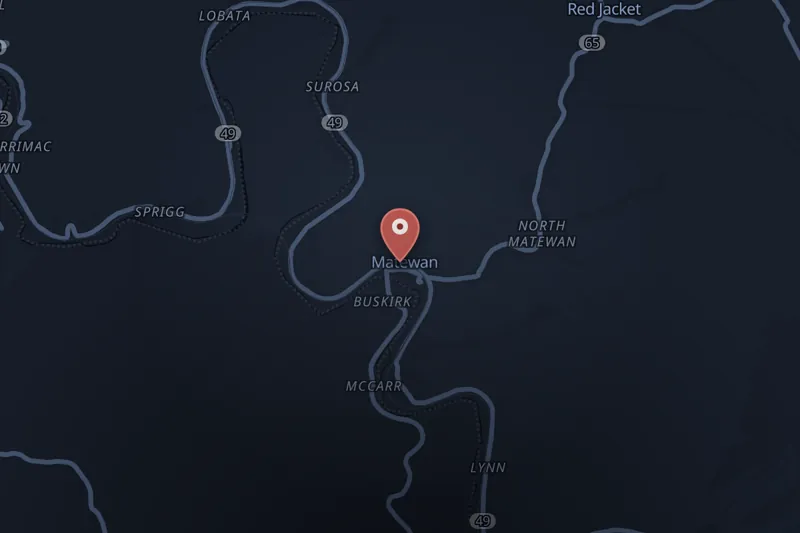
On May 19, 1920, a violent confrontation known as the Battle of Matewan (or Matewan Massacre) occurred in the town of Matewan, Mingo County, West Virginia. The clash arose amid escalating labor tensions between coal miners attempting to organize with the United Mine Workers of America (UMWA) and the Stone Mountain Coal Company, which employed the Baldwin–Felts Detective Agency to evict miners' families from company-owned housing.
A contingent of Baldwin–Felts detectives arrived in Matewan by train that morning to carry out evictions at the Stone Mountain Coal Camp. After completing evictions and eating at the Urias Hotel, the detectives headed toward the train depot to leave town. They were intercepted by Matewan Police Chief Sid Hatfield, a supporter of the miners' unionization efforts, who claimed to hold arrest warrants for the detectives. Detective Albert Felts produced a warrant for Hatfield's arrest, which Mayor Cabell Testerman disputed as fraudulent. Unknown to the detectives, armed miners had surrounded the area from surrounding buildings.
Accounts differ on who fired first. One account says Albert Felts fired from his coat pocket, mortally wounding Mayor Testerman, then fired at Hatfield but instead killed miner Tot Tinsley. Hatfield then shot and killed Albert Felts. A broader gun battle followed. The dead included seven Baldwin–Felts detectives — among them Albert and Lee Felts, brothers of agency founder Tom Felts — along with Mayor Testerman (who died the next day of his wounds) and two miners, Tot Tinsley and Bob Mullins, both reportedly unarmed. Four bystanders were also wounded.
In the aftermath, West Virginia Governor John J. Cornwell dispatched state police to secure the town. Hatfield married Testerman's widow, Jessie, twelve days after the shootout. Labor unrest continued, culminating in a further strike on July 1, 1920, and widespread violence. A trial of miners charged in the deaths of the seven agents ran from January 26 to March 19, 1921, ending in acquittals for all defendants. Tom Felts subsequently sent undercover operatives to build a case against Hatfield; after murder charges against Hatfield and 22 others were dismissed, Baldwin–Felts detectives shot and killed Hatfield and his deputy Ed Chambers on the courthouse steps in Welch, West Virginia, on August 1, 1921. The remaining defendants in related cases were also acquitted.
These events contributed to escalating labor conflict in the region, feeding into the later Battle of Blair Mountain. The Matewan Historic District was listed on the National Register of Historic Places on April 27, 1993. A West Virginia Division of Culture and History historic highway marker in Matewan commemorates the event, noting that none of the nineteen men indicted were convicted.

 Credit: Family photo via Find A Grave; reproduced by The CinemaholicEditorial useSourceSOLVEDListen