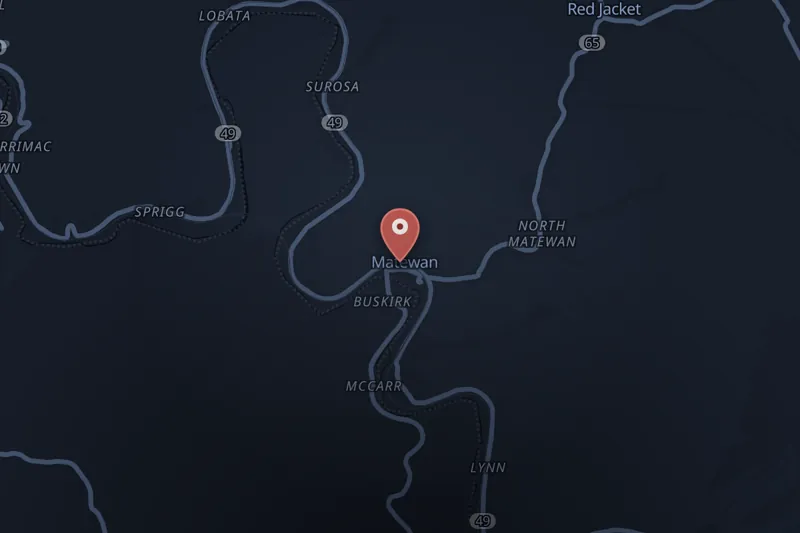
Leonard Woods was a 30-year-old Black coal miner living in Jenkins, Kentucky, a company town built by the Consolidation Coal Company in Letcher County. On the night of Sunday, November 30, 1927, Woods and two Black women, Susan Armister and Anna May Emory, encountered Herschel Deaton, a young white mining foreman from Coeburn, Virginia, and his two friends, Bill Townsend and Ernest Jordan, who were driving back from Coeburn. According to accounts published in white newspapers, the women climbed onto the car and Woods stood on the running board seeking a ride; when Deaton attempted to remove them, Woods shot him with a revolver. Deaton died before reaching the hospital. A separate account, based on a report written for the NAACP by local Black schoolteacher Laurence Kellis, suggested the two women may have had prior relationships with Deaton and his companions, and that the shooting followed a physical struggle after Woods intervened to stop the women from going with the men.
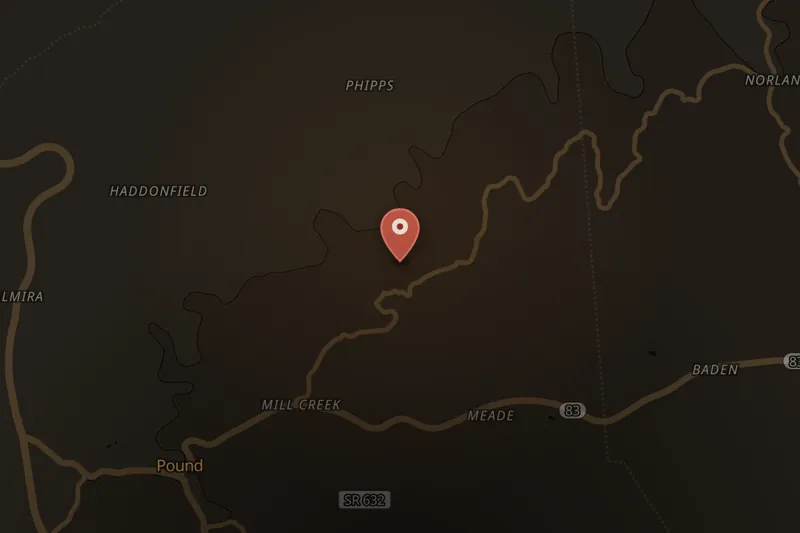
Woods and the two women were arrested and moved to the jail in Whitesburg, Kentucky, for safekeeping. After Deaton's funeral in Virginia, friends and acquaintances of Deaton organized with people in Kentucky to remove Woods from custody. On the night of Tuesday, November 29 into November 30, 1927, a convoy of dozens of cars brought a mob from Virginia into Kentucky via the newly opened Pound Gap Highway (US Route 23). The mob, which grew to an estimated 1,000 to 1,500 people in roughly 500 cars, broke into the Whitesburg jail using axes, railroad ties, and crowbars. Sheriff Morgan T. Reynolds made only a token request that the crowd "let the law take its course" before mingling with them; he later said he could not identify anyone. Woods was removed from the jail; the two women were released or returned to their cells depending on the account. Woods was taken to Pound Gap, where at approximately 3 a.m. he was hanged, shot repeatedly, and his body was burned after a woman in the crowd supplied gasoline. Onlookers later collected bullets and other items from the scene as souvenirs. Authorities buried Woods at the site later that day, but the coffin was reportedly exhumed hours later by Black men from the Kentucky side and reburied elsewhere.
The NAACP, despite receiving the Kellis report, did not pursue a full investigation, a decision historian Alexander Leidholdt attributes partly to the case's sensitive details. NAACP secretary James Weldon Johnson publicized the mob's size and interstate nature in correspondence with newspapers and in a telegram to President Calvin Coolidge, but the Department of Justice stated it lacked jurisdiction, and no federal anti-lynching legislation resulted. Black-owned newspapers, including the Richmond Planet, the Norfolk Journal and Guide, and the Baltimore Afro-American, covered the case using the Kellis report's account. Journalist Bruce Crawford, editor of Crawford's Weekly, published detailed coverage, an editorial condemning the lynching, and established a reward fund for identifying participants.
A grand jury convened in Whitesburg on January 16, 1928, considered charges including murder, rape, and carrying concealed weapons, but after hearing roughly a hundred witnesses concluded there was insufficient evidence for indictment, with no positive identifications made. Neither the sheriff nor the local police chief had recorded any license plate numbers. Partly under pressure from Norfolk editor Louis Isaac Jaffé, Virginia Governor Harry F. Byrd supported anti-lynching legislation, which was signed into law in February 1928. In 2021, a historical marker was placed near the lynching site through efforts of the Historical Society of the Pound, the Community Remembrance Project of Wise County, University of Virginia's College at Wise, and the Equal Justice Initiative.

 Credit: The original uploader was Bedford at English Wikipedia.CC BY-SA 3.0SourceONGOINGListen