Overview
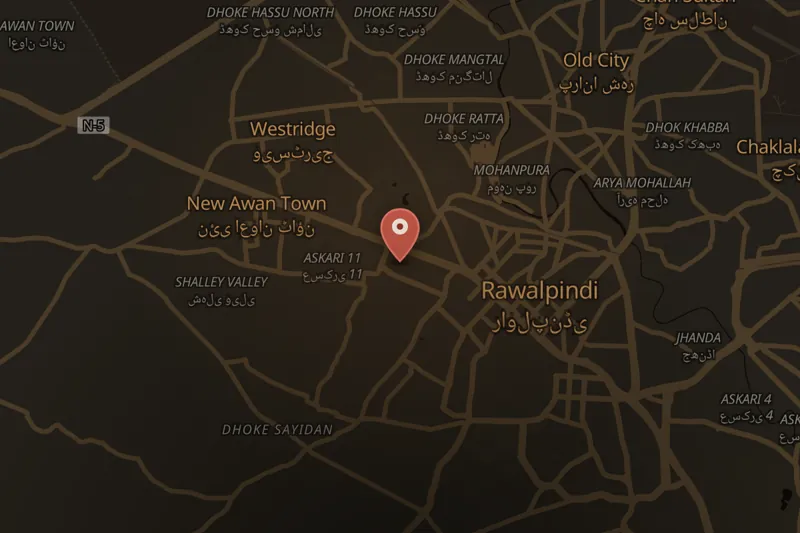
On 4 December 2009, a mosque on Parade Lane in Rawalpindi, Pakistan — located near the Pakistan Army's headquarters and frequented by serving and retired military officers and their families — was attacked during Friday prayers. Five armed suicide attackers opened fire on and threw grenades at a crowd of approximately 150 worshipers.
The Attack
Security forces responded to the scene and engaged the attackers. All five militants died, either by detonating explosives on themselves or in fighting with soldiers inside the mosque. Following the initial assault, the surrounding area was cordoned off and security forces, supported by helicopters, searched for any additional attackers.
Approximately 37 people were killed instantly and 61 others were injured, including women and children. Eyewitnesses reported that victims were fired upon at close range, and the mosque sustained heavy damage, including a collapsed roof. Worshipers reportedly had to pass through tight security, including metal detectors, to enter the mosque, and a senior police official, Aslam Tarin, suggested the attackers may have scaled the mosque's wall to gain entry.
Victims
The majority of those killed were retired and serving army officers along with family members, including children. Among the dead were Major General Bilal Omer Khan, a brigadier, two lieutenant colonels, and two majors, as well as National Logistics Corporation deputy director Taskeen Anjum. Also killed was Hashim Masood Aslam, the only son of Lieutenant General Masood Aslam, commander of XI Corps. General Muhammad Yusaf Khan, a former Vice Chief of Army Staff under Pervez Musharraf, was among those injured. The Inter-Services Public Relations released a list of victims comprising army personnel and civilians, many identified as sons or fathers of military officers.
Context and Aftermath
No group initially claimed responsibility, and there was speculation the attack was retaliation for the Pakistan Army's military campaign into the Taliban stronghold of South Waziristan. Subsequently, Tehrik-i-Taliban Pakistan claimed responsibility in an email sent to CNN, stating it was not targeting innocent people or the state of Pakistan but rather officers and ministers it described as aligned with American interests.

 Credit: Oliver MarkCC BY-SA 4.0SourceSOLVEDListen