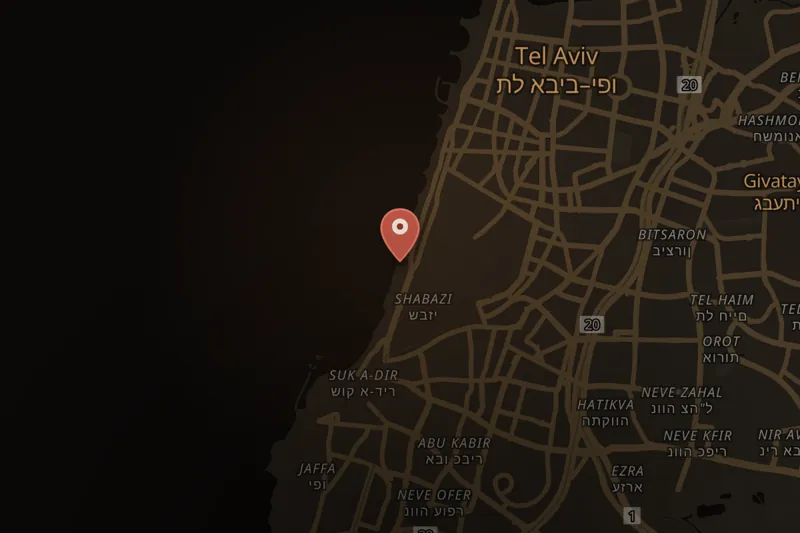
On the night of 1 June 2001, a suicide bomber detonated an explosive device packed with ball-bearings outside the Dolphinarium discotheque on the Tel Aviv beachfront, Israel. The attack occurred on a Friday night when the area outside the venue was crowded with teenagers waiting to enter a dance party at the Dolphin disco and an adjacent nightclub. The bomber detonated the device at 23:27. In addition to the bomber, 21 Israelis were killed, 16 of them teenagers. The majority of the victims were teenage girls whose families had recently emigrated to Israel from the former Soviet Union. The death toll was the highest inflicted on Israel in the preceding five years.
Survivors reported that the bomber, disguised in a manner that led people to mistake him for an Orthodox Jew of Asian appearance, wandered among the crowd and appeared to taunt his victims, banging a drum containing the explosives and saying in Hebrew, "Something's going to happen," before detonating the device. Witnesses described body parts and bodies piled on the sidewalk in the aftermath, and civilians in the vicinity assisted emergency services. The bombing followed a failed attempt on the same target five months earlier.
Two groups, Islamic Jihad and a group calling itself "Hezbollah-Palestine," initially claimed responsibility before later retracting those claims. It was subsequently determined that the bombing was carried out by Saeed Hotari, aged 22, described as a militant allegedly linked to the Palestinian Islamist group Hamas. Hotari died in the attack.
Israeli officials described the bombing as a "massacre." Palestinian Authority President Yasser Arafat condemned the attack and called for a cease-fire. UN Secretary-General Kofi Annan and U.S. President George W. Bush also condemned the bombing. Despite public pressure in Israel for military retaliation, Prime Minister Ariel Sharon did not order immediate retaliatory action, reportedly amid diplomatic pressure from the United States and other governments. In Ramallah, some Palestinians celebrated in the streets, and the bomber's father publicly praised his son as a martyr. The following day, Israeli-Arabs barricaded themselves in the Hassan Bek Mosque opposite the bombing site and threw objects at police.
According to the Israeli-based Intelligence and Terrorism Information Center, documents seized by the Israeli military during Operation Defensive Shield indicated that the Palestinian National Authority's Martyrs' Families and Injured Care Establishment transferred US$2,000 to the bomber's father, then living in Jordan, on 18 June 2001.
The Dolphinarium building was later abandoned, covered in graffiti, and briefly used as a surfing school before being demolished in May 2018 to extend the Tel Aviv beachfront promenade. Victims' families had campaigned for years to preserve the site as a permanent memorial. Annual memorial services have been held at the site.


 Credit: User:SambachCC BY-SA 2.5SourceSOLVEDListen


