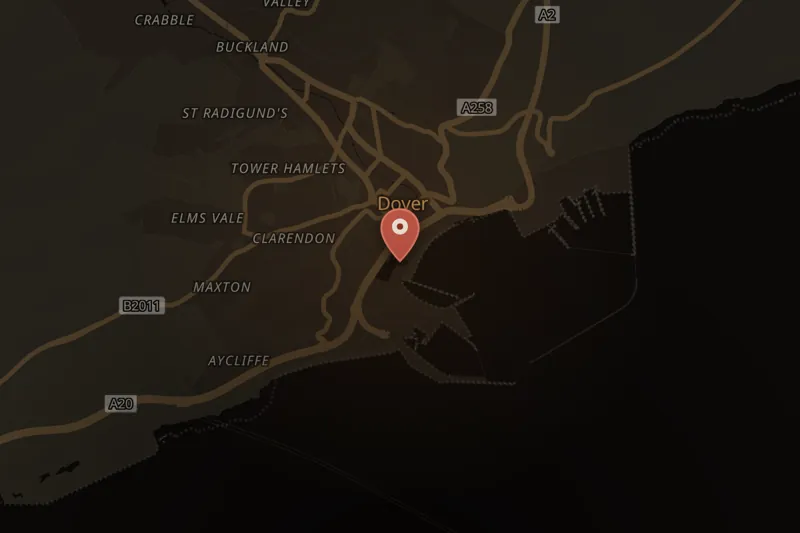
Just before midnight on 18 June 2000, 58 bodies were discovered inside a sealed lorry container at the port of Dover, United Kingdom. Two other occupants were found alive, though injured, and were taken to hospital. The lorry, of Dutch registration, had just arrived on a ferry from Zeebrugge, Belgium, and was selected for examination by officers from HM Customs & Excise, who then alerted police and ambulance services.
Investigators determined that the 60 people inside the container were illegal immigrants who had been trapped for more than 18 hours as outside temperatures reached 32°C (90°F). The victims are believed to have died of asphyxiation, although carbon monoxide poisoning was not ruled out as a contributing factor. The two survivors were found closest to the container doors. Police confirmed all of the deceased were Chinese nationals: 54 men and 4 women. At the time, it was described as one of the largest mass killings in British criminal history and the largest involving illegal immigrants entering the UK — a distinction later shared with the 2019 Essex lorry deaths, in which 39 Vietnamese nationals died. The 60 Chinese nationals had each paid £20,000 to be smuggled, having been flown from Beijing to Belgrade before being driven to Zeebrugge.
The trailer was found to be owned by a newly formed Dutch haulage company, "Van Der Spek Transporten," registered only days before the incident; a similarly named but legitimate Dutch haulage firm was not connected to the case. The driver of the lorry, Perry Wacker, 33, of Rotterdam, was arrested at the scene. In 2001, Wacker was convicted of manslaughter for his role in an organised people-smuggling operation coordinated by a Chinese snakehead gang, and was also found guilty of conspiracy to facilitate the entry of irregular immigrants into the UK. He was sentenced to 14 years in prison. In 2003, nine Chinese gang members connected to the smuggling operation were jailed in the Netherlands for their part in the deaths.
The two survivors of the incident were initially hospitalised with extreme dehydration. They were subsequently granted conditional leave to remain in Britain for four years.


 Credit: Nick SmithCC BY-SA 2.0SourceUNSOLVEDListen