Case file
Droppin Well bombing
Documents violence · ongoing investigation — written to inform, not to shock.

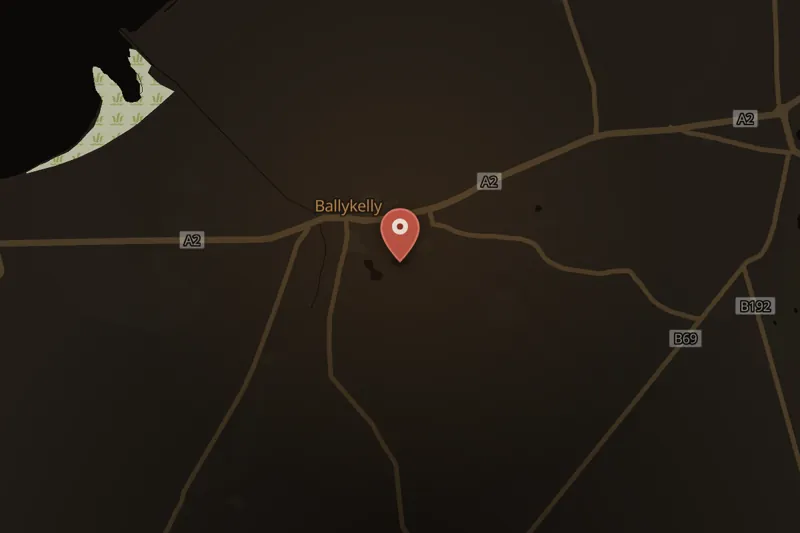
On the evening of 6 December 1982, a member of the Irish National Liberation Army (INLA) left a time bomb inside the Droppin Well disco in Ballykelly, County Londonderry, Northern Ireland. The venue was targeted because it was frequented by British Army soldiers stationed at the nearby Shackleton Barracks. According to a later account from someone involved, the INLA unit had carried out reconnaissance of the venue to assess whether enough soldiers were present to justify the risk of civilian casualties.
Around 150 people were inside the pub at the time. The Royal Ulster Constabulary (RUC) estimated the device contained 5 to 10 pounds (2.3 to 4.5 kg) of commercial Frangex explosives, small enough to fit into a handbag. It had been placed beside a support pillar, and when it exploded at approximately 23:15, the blast brought down the roof, crushing many of those killed and injured under fallen masonry. It took several hours to pull survivors from the rubble; the last survivor was freed at 04:00, and the last body was not recovered until 10:30 the following day.
In total, 17 people died — 11 soldiers and six civilians — and around 30 others were injured, some seriously. Five of the civilian victims were young women, three of whom (Alan Callaghan, Valerie McIntyre and Angela Maria Hoole) were teenagers. Angela Hoole had been celebrating her engagement to one of the soldiers who survived. Of the 11 soldiers killed, eight belonged to the 1st Battalion Cheshire Regiment, two to the Army Catering Corps, and one to the Light Infantry. Bob Stewart, then a company commander in the Cheshire Regiment, was present at the scene, lost six soldiers from his company, and assisted with the dead and injured.
Suspicion initially fell on the Provisional IRA, which denied involvement. By 8 December, the British Army attributed the attack to the INLA, reasoning that the IRA would have been more cautious about civilian casualties in a mixed community. The INLA subsequently issued a statement claiming responsibility, describing the civilians killed as "consorts," and stating that attacks of this nature had greater impact on British public opinion than the killing of individual soldiers. The bombing drew criticism from parties on both sides of the conflict due to the high civilian toll. The government of the Republic of Ireland banned the INLA shortly afterward. INLA leader Dominic McGlinchey stated in an interview that the disco's owner had been warned six times to stop serving British soldiers, a threat first issued publicly during an Easter Rising commemoration in Derry in April 1982.
Six days after the bombing, RUC officers shot and killed two unarmed INLA members, Seamus Grew and Roddy Carroll, near a vehicle checkpoint in Armagh, stating they believed the men were transporting McGlinchey, who was not in the vehicle.
In June 1986, four INLA members — sisters Anna Moore and Helena Semple, Eamon Moore, and Patrick Shotter — received life sentences for the attack. Anna Moore's daughter, Jacqueline Moore, received a ten-year sentence for manslaughter after the court determined she had been coerced into involvement; she gave birth while in custody. All four convicted for life were from Derry.

Key facts
- Victims
- Valerie McIntyre, Roddy Carroll, Angela Maria Hoole, Seamus Grew, Alan Callaghan
- Date
- 1982
- Location
- Droppin Well disco, Ballykelly, County Londonderry, Northern Ireland
- Case status
- solved
Case timeline
1982-04
During an Easter Rising commemoration in Derry, the INLA read a statement warning that public houses serving British security forces would be bombed.
1982-12-06
An INLA member left a time bomb inside the Droppin Well disco in Ballykelly; it exploded at approximately 23:15, bringing down the roof and killing 17 people.
1982-12-08
The British Army publicly attributed the bombing to the INLA rather than the Provisional IRA.
1982-12-12
RUC officers shot and killed unarmed INLA members Seamus Grew and Roddy Carroll near a checkpoint in Armagh.
1986-06
Four INLA members — Anna Moore, Helena Semple, Eamon Moore, and Patrick Shotter — received life sentences for the bombing; Jacqueline Moore received ten years for manslaughter.
Best coverage
No approved coverage links are attached yet.
People
Jacqueline Moore
CONVICTEDConvicted of manslaughter and sentenced to ten years; court found she had been coerced into involvement in the attack
citation on file
Dominic McGlinchey
LAW ENFORCEMENTNamed INLA leader who spoke publicly about warnings issued to the disco's owner; not listed as charged or convicted in connection with this attack in the source
citation on file
Anna Moore
CONVICTEDINLA member; received a life sentence in June 1986 for the bombing
citation on file
Helena Semple
CONVICTEDINLA member; received a life sentence in June 1986 for the bombing
citation on file
Valerie McIntyre
VICTIMTeenage civilian killed in the bombing
citation on file
Eamon Moore
CONVICTEDINLA member; received a life sentence in June 1986 for the bombing
citation on file
Roddy Carroll
VICTIMUnarmed INLA member shot and killed by RUC officers six days after the bombing
citation on file
Angela Maria Hoole
VICTIMTeenage civilian killed in the bombing; had been celebrating her engagement to a surviving soldier
citation on file
Seamus Grew
VICTIMUnarmed INLA member shot and killed by RUC officers six days after the bombing
citation on file
Alan Callaghan
VICTIMTeenage civilian killed in the bombing
citation on file
Patrick Shotter
CONVICTEDINLA member; received a life sentence in June 1986 for the bombing
citation on file
Places
Common questions
- What happened to the victim?
- On 6 December 1982, the Irish National Liberation Army detonated a time bomb at the Droppin Well disco in Ballykelly, County Londonderry, killing 17 people — 11 soldiers and six civilians — in one of the deadliest bombings of the Troubles.
- Where did the bombing happen?
- Droppin Well disco, Ballykelly, County Londonderry, Northern Ireland.
- Who was convicted?
- Jacqueline Moore (Convicted of manslaughter and sentenced to ten years; court found she had been coerced into involvement in the attack), Anna Moore (INLA member; received a life sentence in June 1986 for the bombing), Helena Semple (INLA member; received a life sentence in June 1986 for the bombing), Eamon Moore (INLA member; received a life sentence in June 1986 for the bombing), and Patrick Shotter (INLA member; received a life sentence in June 1986 for the bombing).
- What is the current status of the case?
- Status: solved.
Sources
- Droppin Well bombingwikipedia · Wikipedia · 2026-07-07
- Contemporaneous coverage — nuzhound.comnews · nuzhound.com · 2026-07-07
- Contemporaneous coverage — cain.ulst.ac.uknews · cain.ulst.ac.uk · 2026-07-07