Skip to content
Casepin

Solved case · 1933

Kansas City massacre

Also known as Union Station massacre

SOLVEDCONVICTEDCHARGED
Updated
Updated Jul 7, 2026
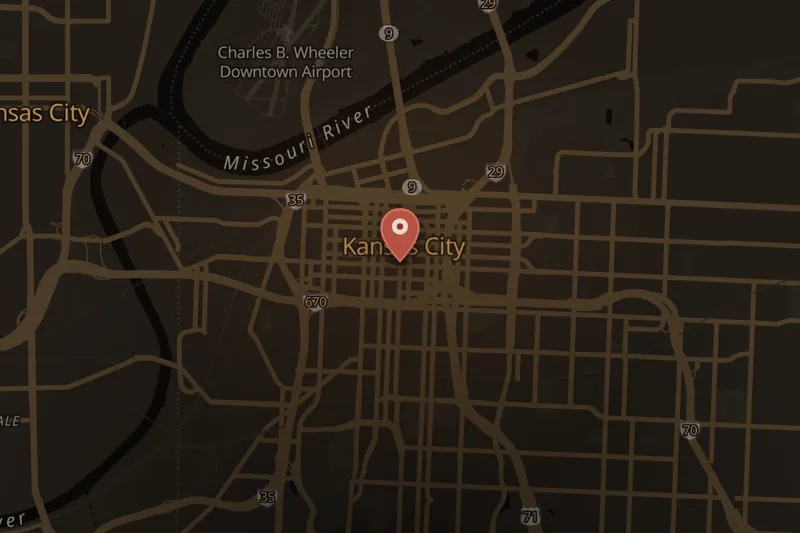
Union Station, Kansas City, MissouriView on the map

The short answer

Kansas City massacre in brief

On June 17, 1933, gunmen opened fire outside Union Station in Kansas City, Missouri, killing federal prisoner Frank Nash and four law enforcement officers in an attempted rescue that went fatally wrong.

Key facts

Year
1933
Place
Union Station, Kansas City, Missouri
Status
SOLVEDSolved
Victims
Otto Reed, Frank Hermanson, Frank "Jelly" Nash, Raymond J. Caffrey and W. J. Grooms
Outcome
Convicted: Adam Richetti, Richard Tallman Galatas, "Doc" Louis Stacci, Herbert Farmer and Frank B. Mulloy; Charged: Charles "Pretty Boy" Floyd and Vernon C. Miller

The coverage index

Where to watch & listen

No one's coverage is attached to this file yet.

Know great coverage of this case?

A documentary, a podcast episode, a careful long-form video. Suggest it and an editor will review it before it appears here.

Suggest coverage for Kansas City massacre

The case file

What happened

On the morning of June 17, 1933, a shootout at the Union Station railroad depot in Kansas City, Missouri, left four law enforcement officers and a criminal fugitive dead. The violence occurred during an attempt by a gang led by Vernon C. "Verne" Miller to free Frank "Jelly" Nash, a federal prisoner who had escaped from the U.S. Penitentiary at Leavenworth, Kansas, in 1930. Nash had been recaptured in Hot Springs, Arkansas, on June 16, 1933, by FBI agents Frank Smith and Francis Joseph "Joe" Lackey and McAlester, Oklahoma Police Chief Otto Reed, and was being returned to Leavenworth by train.

According to the FBI's account, the rescue scheme was conceived by Richard Tallman Galatas, Herbert Farmer, "Doc" Louis Stacci, and Frank B. Mulloy, with Vernon Miller designated to carry it out. Charles "Pretty Boy" Floyd and Adam Richetti were reported to have joined Miller in Kansas City the night before the shooting after an unrelated incident in Bolivar, Missouri, in which they held a sheriff and garage attendants at gunpoint.

When the train carrying Nash arrived at Union Station, he was escorted by seven officers — Agents Lackey, Smith, Raymond J. Caffrey, Special Agent in Charge Reed E. Vetterli, Chief Otto Reed, and Kansas City police officers W. J. Grooms and Frank Hermanson — toward a waiting car. As Nash was being seated, gunmen emerged from near a parked Plymouth and opened fire. Officers Grooms and Hermanson were killed instantly; Agent Caffrey was fatally shot in the head; Chief Reed and Nash were killed inside the car; Vetterli and Lackey were wounded, and Agent Smith was unharmed. Survivors estimated the assault lasted about 30 seconds.

The FBI's investigation concluded that Vernon Miller, Adam Richetti, and Charles "Pretty Boy" Floyd carried out the shooting, citing fingerprint evidence tying Richetti to Miller's Kansas City residence. Floyd's involvement has since been disputed by several authors, who argue he and Richetti were framed, while other researchers maintain the evidence against them, though contested, supports FBI conclusions.

Miller's mutilated body was found near Detroit, Michigan, in November 1933; some writers have suggested his death indicated the massacre may have been a syndicate hit rather than a rescue attempt. Richetti was captured after a 1934 car crash and shootout in Wellsville, Ohio; he was convicted of the murders on June 17, 1935, and executed on October 7, 1938. Floyd was killed in a shootout with law enforcement near Clarkson, Ohio, on October 22, 1934, denying involvement in the massacre as he died. The four men accused of engineering the escape plot — Galatas, Farmer, Stacci, and Mulloy — were convicted of conspiracy in January 1935 and each sentenced to two years in federal prison and a $10,000 fine.

The massacre is credited with prompting Congress to grant FBI agents statutory authority to carry firearms and make arrests in 1934, marking a significant shift in the bureau's law-enforcement powers.

10 dated entries · 1930–1938

Timeline

  1. Frank Nash escapes from the United States Penitentiary, Leavenworth, Kansas.

  2. Nash is recaptured in Hot Springs, Arkansas, by FBI agents and a police chief; the group departs by train for Kansas City.

  3. Shootout at Union Station, Kansas City, Missouri, kills Frank Nash and four law enforcement officers.

  4. Vernon Miller's body is found near Detroit, Michigan.

  5. Richetti and Floyd are involved in a car crash and shootout in Wellsville, Ohio; Richetti is captured.

  6. Charles 'Pretty Boy' Floyd is killed in a shootout with law enforcement near Clarkson, Ohio.

  7. Galatas, Farmer, Stacci, and Mulloy are indicted by a federal grand jury for conspiracy.

  8. Galatas, Farmer, Stacci, and Mulloy are found guilty of conspiracy to cause the escape of a federal prisoner.

  9. Adam Richetti is convicted of the Kansas City massacre murders and sentenced to death.

  10. Adam Richetti is executed.

15 named in this file

People

Victims first. Every legal label is set from public records and court outcomes, not from the prose.

  • Frank "Jelly" Nash

    VICTIM

    Federal prisoner killed in the shootout while in custody.[3]

  • Frank Hermanson

    VICTIM

    Kansas City Police Department officer killed in the shootout.[3]

  • Otto Reed

    VICTIM

    McAlester, Oklahoma Police Chief killed in the car during the shootout.[3]

  • Raymond J. Caffrey

    VICTIM

    FBI agent fatally shot in the head during the massacre.[3]

  • W. J. Grooms

    VICTIM

    Kansas City Police Department officer killed in the shootout.[3]

  • "Doc" Louis Stacci

    CONVICTED

    Convicted January 4, 1935 of conspiracy to cause the escape of a federal prisoner; sentenced to two years and a $10,000 fine.[3]

  • Adam Richetti

    CONVICTED

    Convicted on June 17, 1935 of the massacre murders and executed October 7, 1938.[3]

  • Frank B. Mulloy

    CONVICTED

    Convicted January 4, 1935 of conspiracy to cause the escape of a federal prisoner; sentenced to two years and a $10,000 fine.[3]

  • Herbert Farmer

    CONVICTED

    Convicted January 4, 1935 of conspiracy to cause the escape of a federal prisoner; sentenced to two years and a $10,000 fine.[3]

  • Richard Tallman Galatas

    CONVICTED

    Convicted January 4, 1935 of conspiracy to cause the escape of a federal prisoner; sentenced to two years and a $10,000 fine.[3]

  • Charles "Pretty Boy" Floyd

    CHARGED

    Identified by the FBI as a gunman in the massacre; his involvement has been disputed by several authors; killed by law enforcement in 1934 before trial.[3]

  • Vernon C. Miller

    CHARGED

    FBI investigation identified him as the gang leader who planned the rescue attempt; found dead in November 1933 before trial.[3]

  • Francis Joseph "Joe" Lackey

    LAW ENFORCEMENT

    FBI agent wounded in the shootout while escorting Nash.[3]

  • Frank Smith

    LAW ENFORCEMENT

    FBI agent present during the shootout who survived unharmed.[3]

  • Reed E. Vetterli

    LAW ENFORCEMENT

    Special Agent in Charge of the FBI's Kansas City office; wounded in the shootout.[3]

From the record

Quick answers

Who were convicted?
Adam Richetti: Convicted on June 17, 1935 of the massacre murders and executed October 7, 1938. Richard Tallman Galatas: Convicted January 4, 1935 of conspiracy to cause the escape of a federal prisoner; sentenced to two years and a $10,000 fine. "Doc" Louis Stacci: Convicted January 4, 1935 of conspiracy to cause the escape of a federal prisoner; sentenced to two years and a $10,000 fine. Herbert Farmer: Convicted January 4, 1935 of conspiracy to cause the escape of a federal prisoner; sentenced to two years and a $10,000 fine. Frank B. Mulloy: Convicted January 4, 1935 of conspiracy to cause the escape of a federal prisoner; sentenced to two years and a $10,000 fine.

3 cited

Sources

Coverage is not a source: every fact in this file rests on the records below.

  • 2 Official / agency
  • 1 Encyclopedic
  1. Contemporaneous coverage — FBI

    Official / agencyFBIAccessed Jul 7, 2026

  2. Contemporaneous coverage — archives.fbi.gov

    Official / agencyarchives.fbi.govAccessed Jul 7, 2026

  3. Kansas City massacre

    EncyclopedicWikipediaAccessed Jul 7, 2026

Trust

Record history

First published
Jul 7, 2026
Corrections
None

Are you family of someone named in this file? Corrections and removal requests from victims’ families are prioritized.