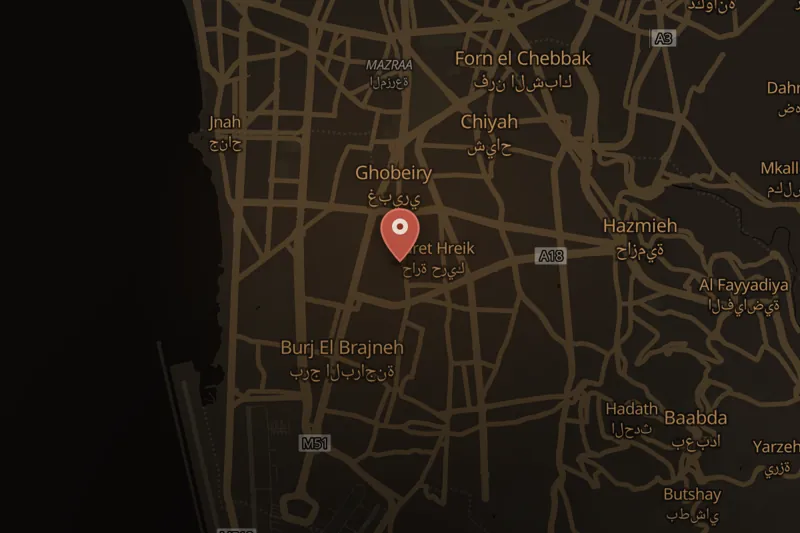
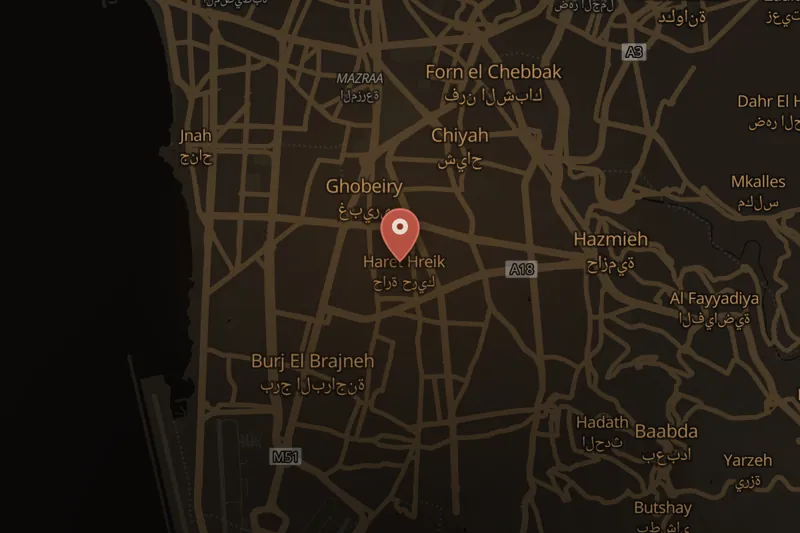
On the evening of 30 July 2024, at around 7:40 PM local time, an explosion struck an apartment building in the Haret Hreik district of Dahieh, southern Beirut, an area with a significant Hezbollah presence. Lebanon's state National News Agency (NNA) reported that the attack was carried out by a drone that fired three missiles, causing part of the building to collapse and minor damage to a nearby hospital. The strike targeted Fuad Shukr, a senior Hezbollah military commander who served as a top adviser to Hezbollah secretary-general Hassan Nasrallah and sat on Hezbollah's highest military body, the Jihad Council. Shukr had been designated a Specially Designated Global Terrorist by the United States, which had offered a $5 million reward for information on him in 2017, citing his alleged involvement in the 23 October 1983 bombing of the U.S. Marine Corps barracks in Beirut that killed 241 U.S. military personnel.
Israel said the strike was carried out in response to a rocket attack three days earlier, on 27 July 2024, on a football pitch in the Druze town of Majdal Shams in the Israeli-occupied Golan Heights, which killed 12 Syrian Druze children and young people. Israel and the United States attributed that attack to Hezbollah, identifying the weapon as an Iranian-made Falaq-1 rocket; Hezbollah denied responsibility.
Early reports suggested Shukr had survived the Beirut strike, but Israeli officials later said he had been killed, while Hezbollah said it was still assessing the damage. The following day, Lebanese security sources said his body had been found under the rubble, and Hezbollah formally confirmed his death. The Lebanese Health Ministry reported that two women — including Shukr's wife — and two children were among the civilians killed, with 80 others wounded. Milad Bidi, an Iranian military adviser in Lebanon, was also killed, raising the overall death toll to seven.
The strike drew immediate reactions. Lebanese Prime Minister Najib Mikati condemned it as a violation of international law, while Israeli Defense Minister Yoav Gallant said "Hezbollah crossed the red line." Hezbollah MP Ali Ammar signaled the group was prepared for confrontation. Internationally, U.S. Vice President Kamala Harris said Israel had a right to defend itself; Iran's Foreign Ministry called the attack "vicious"; and Russia's Foreign Ministry described it as a "gross violation of international law."
On 25 August 2024, Hezbollah launched a large rocket barrage into Israel, saying it was retaliation for Shukr's killing; the group said 320 rockets were fired. Israel conducted preemptive airstrikes against Hezbollah rocket launchers it said were aimed at Tel Aviv, and Israeli officials, including Gallant and Prime Minister Benjamin Netanyahu, took emergency measures across northern Israel.