
Start here
WHO TOOK GRÉGORY VILLEMIN? | MIDWEEK MYSTERY

Georgia Marie's 28-minute breakdown, the fullest single telling on file.
Watch on YouTubeBefore you continue
This case involves crimes against children. Casepin presents the record in neutral, non-graphic language. Choose whether to continue.
Unsolved case · 1980s
Also known as Affaire Grégory · Grégory Villemin case
 Grégory VilleminCredit: Family/press photo (copyright holder unknown), via English Wikipedia·Editorial use·Source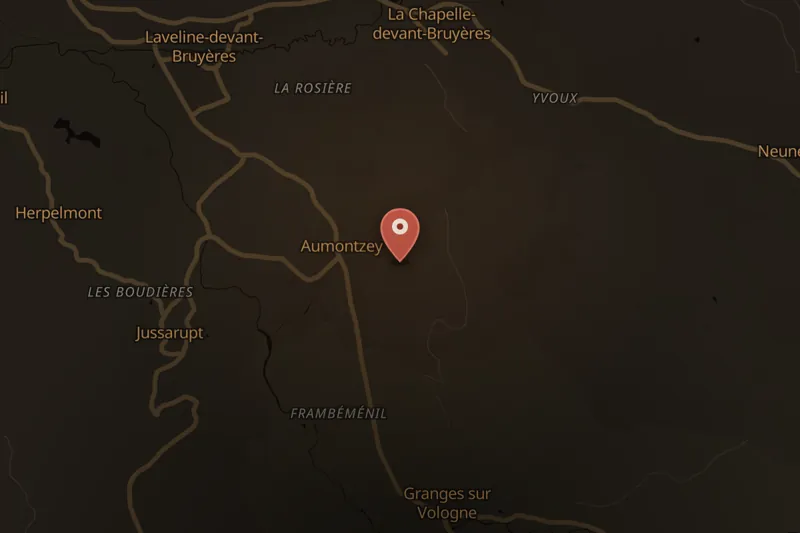
The short answer
Four-year-old Grégory Villemin was found bound and gagged in the Vologne River in Lépanges-sur-Vologne, France, in October 1984, shortly after an anonymous caller told his family the boy had been taken. Decades of investigation, arrests, an acquittal, and a fatal vigilante shooting followed, but the killing remains officially unsolved.
Start hereWHO TOOK GRÉGORY VILLEMIN? | MIDWEEK MYSTERYGeorgia Marie · 28 minThe coverage index
1 piece from 1 creator: ranked, with duplicates removed and short clips set aside.
Start here
Video · YouTube · 28 min · 2019
Georgia Marie's 28-minute breakdown, the fullest single telling on file.
Watch on YouTubeTitles and descriptions are the creators’ own and may not reflect current legal status. The sourced facts are in the file below. Players load only when you press play. Suggest coverage we’re missing.
The case file
On 16 October 1984, an anonymous caller telephoned the home of the Villemin family in Lépanges-sur-Vologne, France, and told them that Grégory Villemin, aged four, had been taken. Grégory had been playing unsupervised in front of the family's house. A search was launched, and the boy's body was found bound and gagged in the Vologne River approximately 7 km (4.3 mi) away, where he had apparently been drowned. The autopsy, however, suggested the drowning had actually occurred in a different body of water, complicating the investigation from the outset.
The case, which has continued to receive extensive national media attention in France, took a series of dramatic turns. An anonymous note suggesting that its writer had killed the boy led investigators to arrest Bernard Laroche, a cousin of the Villemin family. Laroche was suspected of having written a long string of threatening anonymous letters to members of the family, who were described as socially and economically prominent in that area of the Vosges region.
Several months after Laroche's arrest, Grégory's father, Jean-Marie Villemin, shot and killed Laroche. Jean-Marie Villemin would go on to serve several years in prison as a result of that killing. Subsequently, handwriting experts linked Grégory's mother, Christine Villemin, to the threatening notes, and she was charged with the murder of her son. After seven years and two trials, she was acquitted.
The case remained active in the decades that followed. Efforts to recover DNA evidence from the principal physical evidence in the early 21st century failed to yield conclusive results. In 2017, three of Grégory's other relatives were charged in connection with the case, although police stated they did not yet know who actually killed him. The case remains unsolved as to the identity of Grégory's killer.
8 dated entries · 1984–2017
An anonymous caller told the Villemin family in Lépanges-sur-Vologne, France, that four-year-old Grégory Villemin, who had been playing unsupervised outside the house, had been taken.
A search following the call found Grégory's body, bound and gagged, in the Vologne River about 7 km (4.3 mi) away; he had apparently been drowned, though autopsy findings suggested the drowning occurred in a different body of water.
An anonymous note suggesting the writer had killed the boy led to the arrest of Bernard Laroche, a cousin of the Villemin family, who was also suspected of writing prior threatening anonymous letters to the family.
Grégory's father, Jean-Marie Villemin, shot and killed Bernard Laroche; Jean-Marie later served several years in prison for the killing.
Handwriting experts linked Grégory's mother, Christine Villemin, to the threatening notes, and she was charged with the murder of her son.
After seven years and two trials, Christine Villemin was acquitted of the murder charge.
Efforts to recover DNA from the principal physical evidence in the case failed.
Three other relatives of Grégory Villemin were charged in connection with the case, with police stating they did not yet know who had actually killed him.
4 named in this file
Victims first. Every legal label is set from public records and court outcomes, not from the prose.
Four-year-old boy found bound and gagged, drowned, in the Vologne River in October 1984.[3]
Grégory's father; shot and killed suspect Bernard Laroche and served several years in prison as a result.[3]
Charged with the murder of Grégory Villemin by a French investigating judge in November 1984; released in February 1985, he was shot dead by Jean-Marie Villemin in March 1985 before any trial.[3]
Grégory's mother; charged with the murder after handwriting experts linked her to threatening notes, and acquitted after seven years and two trials.[3]
From the record
3 cited
Coverage is not a source: every fact in this file rests on the records below.
PressThe New York TimesAccessed Jul 5, 2026
PressLos Angeles TimesAccessed Jul 5, 2026
EncyclopedicWikipediaAccessed Jul 5, 2026
Trust
Are you family of someone named in this file? Corrections and removal requests from victims’ families are prioritized.
Near this case
 Credit: EinDao·CC BY-SA 4.0·SourceCOLDListen
Seewen, Solothurn, Switzerland · 1970s
Five members of the Siegrist and Westhäuser families were shot dead in a weekend house near Seewen, Switzerland, on 5 June 1976. Despite an extensive investigation, no one was ever charged, and the case became time-barred in 2006.
 SOLVEDListen
Freiburg im Breisgau, Baden-Württemberg, Germany · 2010s
Maria Ladenburger, a 19-year-old medical student, was raped and drowned in the river Dreisam in Freiburg, Germany, after leaving a university party in the early hours of 16 October 2016. Hussein Khavari, a recent asylum seeker with an undisclosed prior conviction in Greece, was convicted of aggravated rape and murder on 22 March 2018 and sentenced to life imprisonment with preventive detention.
 SOLVEDListen
Gray-la-Ville, Haute-Saône, France · 2010s
A French woman reported missing by her husband while out jogging in October 2017 was found beaten and strangled two days later in a nearby forest; after a three-month investigation her husband confessed and was convicted of her murder in 2020.
Sainte-Geneviève-des-Bois, France (where Ilan Halimi was found) · 2000s
Ilan Halimi, a young Frenchman of Moroccan Jewish descent, was kidnapped in Paris in January 2006 by a group calling itself the "Gang of Barbarians," held captive and tortured for three weeks over a ransom demand based on the belief that Jewish people are wealthy, and died of his injuries after being found near a rail line in Sainte-Geneviève-des-Bois in February 2006.
 SOLVEDListen
Nice, France (near L'Archet Hospital) · 2014
Monégasque heiress Hélène Pastor and her driver were fatally shot in a 2014 ambush in Nice, France. Her daughter's long-term partner, Wojciech Janowski, was convicted of ordering the contract killing and sentenced to life imprisonment, a verdict upheld on appeal in 2021.
 Credit: Jove·CC0·SourceSOLVEDListen
Knoll's apartment, 11th arrondissement, Paris, France · 2018
An 85-year-old Holocaust survivor, Mireille Knoll was stabbed eleven times and set on fire in her Paris apartment in March 2018 in a killing French authorities classified as an antisemitic hate crime; one of two assailants was convicted of her murder in 2021, the other acquitted of murder but convicted of a related theft charge.
Also covered by
 Credit: Family handout via Suffolk News·Editorial use·SourceCOLDListen
Bury St Edmunds, Suffolk, England · 2016
Royal Air Force gunner Corrie McKeague disappeared after a night out in Bury St Edmunds in September 2016, and a 2022 inquest concluded he died after climbing into a waste bin that was tipped into a bin lorry, though his remains were never found.
El Pianista trail, near Boquete, Panama · 2014
Two Dutch students, Kris Kremers and Lisanne Froon, disappeared while hiking a jungle trail in Panama in April 2014, and their remains were recovered along a riverbank months later, but no official cause of death has ever been established.
 Credit: Argonne National Laboratory / Wikimedia Commons, c.1922–23·Public domain·SourceSOLVEDListen
Orange, New Jersey · 1917
Beginning in 1917, factory workers who came to be known as the Radium Girls were poisoned after being instructed to shape radium-paint brushes with their lips; the resulting illnesses, deaths, and lawsuits against the United States Radium Corporation and the Radium Dial Company reshaped U.S. occupational health and labor law.

