Skip to content
Casepin

Unsolved case · 1922

Lynching of John Glover

Also known as murder of John Glover · killing of John Glover

UNSOLVED
Updated
Updated Jul 14, 2026
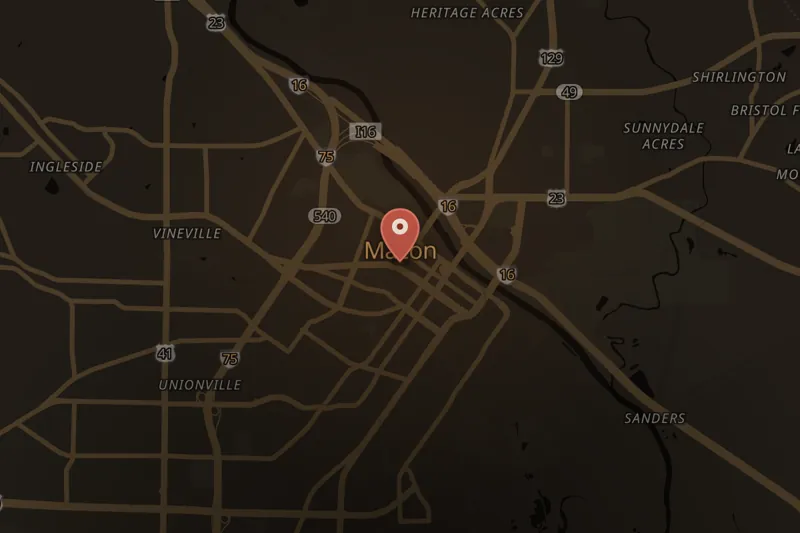
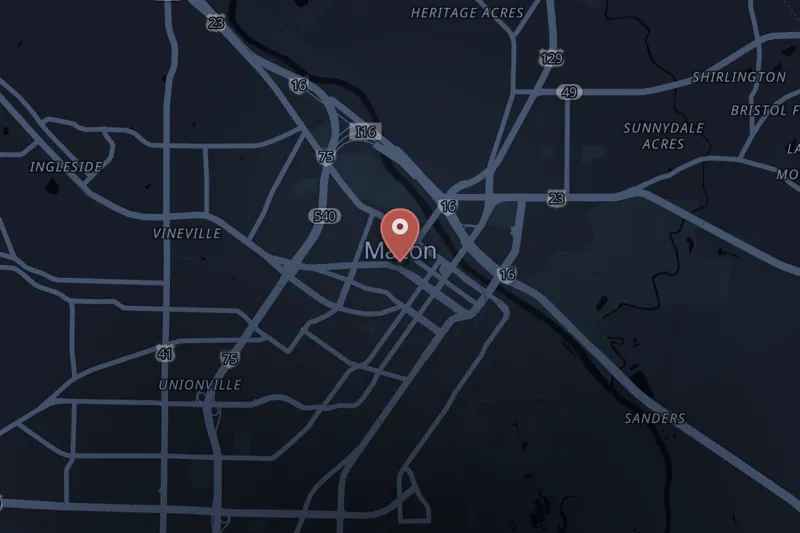
Near Holton, Bibb County, Georgia, United StatesView on the map

The short answer

Lynching of John Glover in brief

John "Cockey" Glover, a 35-year-old Black man, was seized by a mob of roughly 300 white men and lynched near Holton in Bibb County, Georgia, on August 2, 1922, days after he shot and killed a deputy sheriff in self-defense during a scuffle at a Macon pool hall.

Key facts

Year
1922
Place
Near Holton, Bibb County, Georgia, United States
Status
UNSOLVEDUnsolved
Victims
Samuel Brooks, John "Cockey" Glover, Walter C. Byrd and George Marshall
Outcome
No conviction on file

The coverage index

Where to watch & listen

No one's coverage is attached to this file yet.

Know great coverage of this case?

A documentary, a podcast episode, a careful long-form video. Suggest it and an editor will review it before it appears here.

Suggest coverage for Lynching of John Glover

The case file

What happened

John "Cockey" Glover was a 35-year-old African-American man lynched in Holton, Bibb County, Georgia, by a mob of approximately 300 white men on August 2, 1922. His death was recorded as the 43rd of 61 documented lynchings in the United States that year.

The events leading to his death began on July 29, 1922, just after 6:00 p.m., when Deputy Sheriff Walter C. Byrd entered Hatfield's Pool Hall on Hollywood Avenue in Macon. The pool hall was owned by Charles Henry Douglass, described as the wealthiest Black man in Macon. Byrd, who had previously worked at the local prison before being transferred to the Sheriff's department due to brutality toward inmates, had developed a reputation for racial brutality. A scuffle broke out inside the pool hall, and Glover, claiming self-defense, shot and killed Byrd. Another deputy present, Romas Raley, shot and killed George Marshall and mortally wounded Samuel Brooks, two Black men who were playing pool at the time and were not otherwise connected to the altercation.

Glover fled the scene. Police responded by stopping all trains in the area and issuing a bulletin offering a $300 reward (equivalent to roughly $5,800 in 2025) for his capture, describing him by physical appearance and clothing. The following day, Macon police conducted door-to-door warrantless searches in the majority-Black neighborhoods of Pleasant Hill, Tindall Field, Unionville, and other areas of the city.

Glover was ultimately arrested by police officers T.F. Phelps and Jim Huckabee in Griffin, Georgia, as he attempted to flee by train toward Chicago. News of the arrest reached Macon, and a mob of about 300 white people traveled to Griffin. Police attempted to transport Glover back to Macon secretly, but the convoy was intercepted by the mob on the road approximately 2 miles from Holton in Bibb County.

Glover was tied to a tree, shot repeatedly, and set on fire. Members of the mob then took his mutilated body and paraded it through Black neighborhoods of Macon, attempting to display it at C.H. Douglass's theatre. Police eventually took custody of the body but left it on the curb outside the theatre rather than removing it entirely. Thousands of Macon residents came to view the body, and some reportedly fought over souvenirs taken from the corpse.

Glover's case is among those commemorated at the National Memorial for Peace and Justice, which opened in Montgomery, Alabama, on April 26, 2018, and displays hanging steel monuments representing U.S. counties where documented lynchings occurred, including Macon–Bibb County.

4 dated entries · 1922–2018

Timeline

  1. Deputy Sheriff Walter C. Byrd entered Hatfield's Pool Hall in Macon; a scuffle broke out and John Glover, claiming self-defense, shot and killed Byrd. Deputy Romas Raley shot and killed George Marshall and mortally wounded Samuel Brooks, two Black men playing pool at the scene.

  2. Macon police began door-to-door warrantless searches of Black neighborhoods including Pleasant Hill, Tindall Field, and Unionville while searching for Glover.

  3. Glover was arrested by police in Griffin, Georgia, while attempting to flee to Chicago by train; a mob of about 300 white people intercepted police transporting him back to Macon near Holton, Bibb County, and lynched him by tying him to a tree, shooting him, and setting him on fire.

  4. The National Memorial for Peace and Justice opened in Montgomery, Alabama, commemorating documented lynchings including that of John Glover in Macon–Bibb County.

4 named in this file

People

Victims first. Every legal label is set from public records and court outcomes, not from the prose.

  • George Marshall

    VICTIM

    Black man shot and killed by Deputy Romas Raley while playing pool at Hatfield's Pool Hall during the scuffle in which Walter C. Byrd was killed.[4]

  • John "Cockey" Glover

    VICTIM

    35-year-old African-American man lynched by a mob of approximately 300 white men on August 2, 1922, near Holton, Bibb County, Georgia, after shooting Deputy Sheriff Walter C. Byrd in self-defense.[4]

  • Samuel Brooks

    VICTIM

    Black man mortally wounded by Deputy Romas Raley while playing pool at Hatfield's Pool Hall during the scuffle in which Walter C. Byrd was killed.[4]

  • Walter C. Byrd

    VICTIM

    Deputy Sheriff known for brutality toward inmates and racial brutality, shot and killed by John Glover in a scuffle at Hatfield's Pool Hall on July 29, 1922.[4]

4 cited

Sources

Coverage is not a source: every fact in this file rests on the records below.

  • 1 Official / agency
  • 2 Press
  • 1 Encyclopedic
  1. Contemporaneous coverage — chroniclingamerica.loc.gov

    Official / agencychroniclingamerica.loc.govAccessed Jul 10, 2026

  2. Georgia Lynching Victims Memorial — Glover, John (Holton/Macon, Aug 2, 1922)

    PressAmerica's Black Holocaust MuseumAccessed Jul 11, 2026

  3. Contemporaneous coverage — The New York Times

    PressThe New York TimesAccessed Jul 10, 2026

  4. Lynching of John Glover

    EncyclopedicWikipediaAccessed Jul 10, 2026

Trust

Record history

Corrections
None

Are you family of someone named in this file? Corrections and removal requests from victims’ families are prioritized.