Active case
Makkah Masjid bombing
Documents violence · ongoing investigation — written to inform, not to shock.

On 18 May 2007, at approximately 1:15 pm, a pipe bomb exploded inside the Makkah Masjid, a 400-year-old mosque in the old city of Hyderabad, India, located close to the Charminar. The device, containing cyclotol (a 60:40 mixture of RDX and TNT) packed into a 10-inch by 3-inch pipe, was triggered by a cellphone and placed near the ablution area under a heavy marble platform, which absorbed much of the blast and reportedly limited casualties. More than 10,000 people were present for Friday prayers at the time. Two additional live IEDs were found nearby and defused roughly three hours later by police. Sixteen people were reported dead in the immediate aftermath; of these, five were killed by police gunfire during rioting that followed the blast, as police attempted to control mobs attacking buses, an ATM, a petrol pump, and other public property. Police officials, including commissioner Balwinder Singh and an inspector later removed from his post over the firing, said water cannons, tear gas, and baton charges had failed to disperse the crowds before firing orders were given.
Two separate police cases were opened, one of which was transferred to the Central Bureau of Investigation (CBI) in June 2007. Early in the investigation, Hyderabad police's Special Investigation Team arrested two young men as suspects; one was later shot dead in Karachi, and a third suspect was arrested in December 2008. Differing assessments emerged between Indian and American investigators, with the U.S. National Counterterrorism Center reportedly linking the attack to Harkat-ul-Jihad al-Islami before the CBI took over.
The investigation shifted substantially after preacher Swami Aseemanand was produced before a court by the CBI in November 2010 and confessed in December 2010 to a magistrate, implicating the group Abhinav Bharat and describing guilt over the arrest of innocent Muslim youths. His confession, along with related material, connected the Makkah Masjid case to other bombings including Malegaon, the Samjhauta Express, and Ajmer Dargah. He was subsequently charged as the alleged mastermind. In early 2011, a related unsent letter from Aseemanand was made public, and families of men earlier arrested in the case demanded their release. In March 2011, Aseemanand sought to withdraw his confession, alleging he had been coerced by investigators.
The National Investigation Agency (NIA) took over the probe in April 2011, following chargesheets filed by the CBI. The trial examined 226 witnesses and around 411 documents. On 16 April 2018, a special NIA court acquitted all 11 accused, including Aseemanand, citing lack of evidence; the presiding judge resigned after delivering the verdict. Later developments included allegations of torture raised by Aseemanand in a 2011 petition, and a 2013 political dispute after a government minister linked the bombing to Hindu nationalist organizations, a claim he later withdrew. Separately, in 2013 a member of Indian Mujahideen said his group had bombed two other Hyderabad sites in 2007 in reprisal for the Makkah Masjid blast.

Key facts
- Victims
- On file
- Date
- 2007
- Location
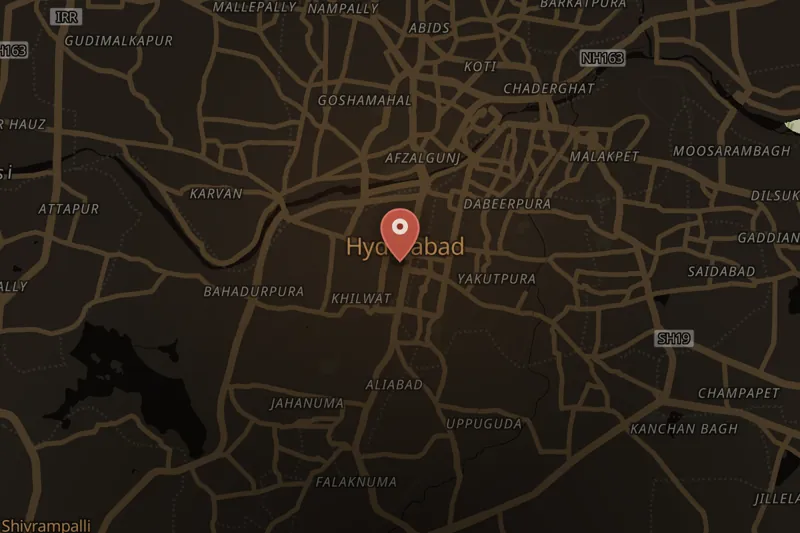
- Makkah Masjid, Hyderabad, Telangana, India
- Case status
- unsolved
Case timeline
2007-05-18
Bomb explodes inside Makkah Masjid in Hyderabad during Friday prayers; 16 killed overall, including 5 shot by police during subsequent rioting.
2007-06-09
CBI takes over investigation into the exploded bomb case.
2007-06-15
Hyderabad police SIT arrests a 27-year-old suspect.
2007-07-15
A second suspect, a 26-year-old watch repair worker, is arrested.
2007-08
One of the earlier suspects is shot dead by unknown gunmen in Karachi.
2008-12-03
A third suspect is arrested.
2010-09
Reports emerge that the US National Counterterrorism Center had earlier considered Harkat-ul-Jihad al-Islami a possible perpetrator.
2010-11-19
CBI produces Swami Aseemanand before court in connection with the bombing.
2010-12-18
Aseemanand confesses before a magistrate, implicating Abhinav Bharat.
2010-12
ATS and CBI charge Aseemanand as alleged mastermind of the bombing.
2011-01
An unsent letter written by Aseemanand on 20 December 2010 is revealed; families of arrested youths demand their release.
2011-01-15
Full court confession of Aseemanand published by Tehelka and CNN-IBN.
2011-03
Aseemanand attempts to withdraw his confession, alleging coercion by investigators.
2011-04
NIA begins its probe following CBI chargesheet.
2011
Aseemanand petitions the President of India alleging torture during confinement; Punjab and Haryana high courts direct NIA to investigate the allegations.
2013-01
Indian Home Minister Sushilkumar Shinde accuses RSS and BJP of running training camps and involvement in several bombings, including Makkah Masjid.
2013-02
Shinde apologises for his remarks after BJP threatens to boycott parliament.
2013-09
Yasin Bhatkal confesses Indian Mujahideen bombed two other Hyderabad sites in August 2007 in reprisal for the Makkah Masjid blast.
2018-04-16
Special NIA court acquits all 11 accused, including Aseemanand, citing lack of evidence; presiding judge resigns after the verdict.
Best coverage
No approved coverage links are attached yet.
People
Swami Aseemanand
ACQUITTEDPreacher charged by CBI/ATS in December 2010 as alleged mastermind of the bombing; confessed in December 2010, later sought to withdraw the confession citing coercion; acquitted along with 10 others by NIA court on 16 April 2018 due to lack of evidence.
citation on file
Places
Common questions
- What happened to the victim?
- A bomb exploded inside the Makkah Masjid in Hyderabad, India, on 18 May 2007 during Friday prayers, killing 16 people, five of them shot by police during subsequent rioting. In 2018 an NIA court acquitted all 11 accused, including Hindu preacher Swami Aseemanand, citing lack of evidence.
- Where did the bombing happen?
- Makkah Masjid, Hyderabad, Telangana, India.
- What is the current status of the case?
- Status: unsolved.
Sources
- Makkah Masjid bombingwikipedia · Wikipedia · 2026-07-07
- Contemporaneous coverage — BBC Newsnews · BBC News · 2026-07-07
- Contemporaneous coverage — CNNnews · CNN · 2026-07-07